


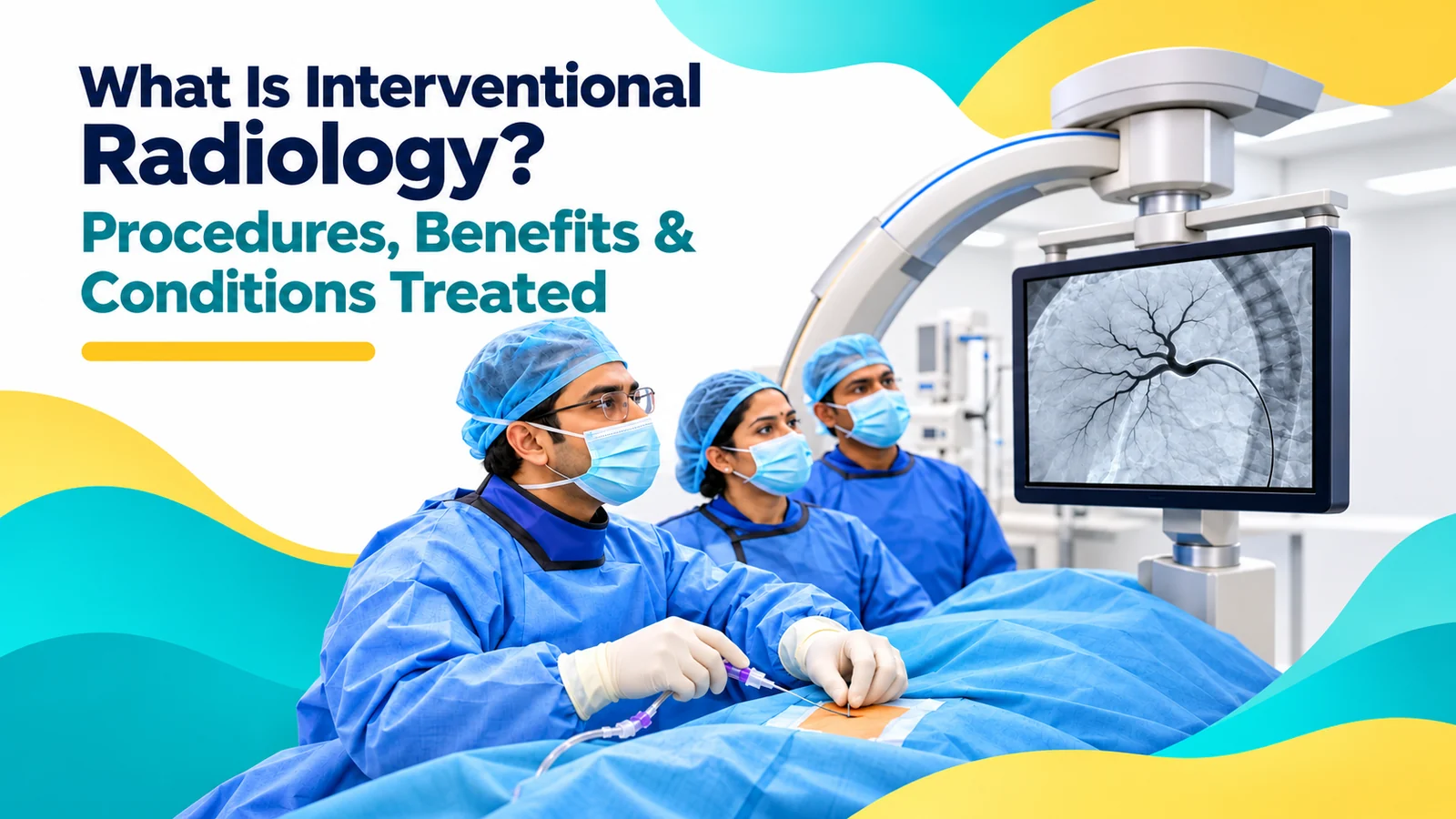
Not every medical problem needs open surgery. Many conditions can now be diagnosed and treated through a tiny needle puncture, guided by images such as ultrasound, X-ray or CT. This is called interventional radiology (IR).
This guide explains what interventional radiology is, the procedures it covers, its benefits and risks, and when you might ask whether IR is an option for you.
What Is Interventional Radiology?
Interventional radiology is a medical speciality that uses imaging to guide minimally invasive procedures. Instead of large cuts, doctors pass needles, thin wires and tubes (catheters) through the skin or blood vessels to reach the problem area.
It is used both to diagnose conditions, for example by taking a biopsy, and to treat them, for example by blocking a bleeding vessel or shrinking fibroids.
How Imaging Guides Treatment
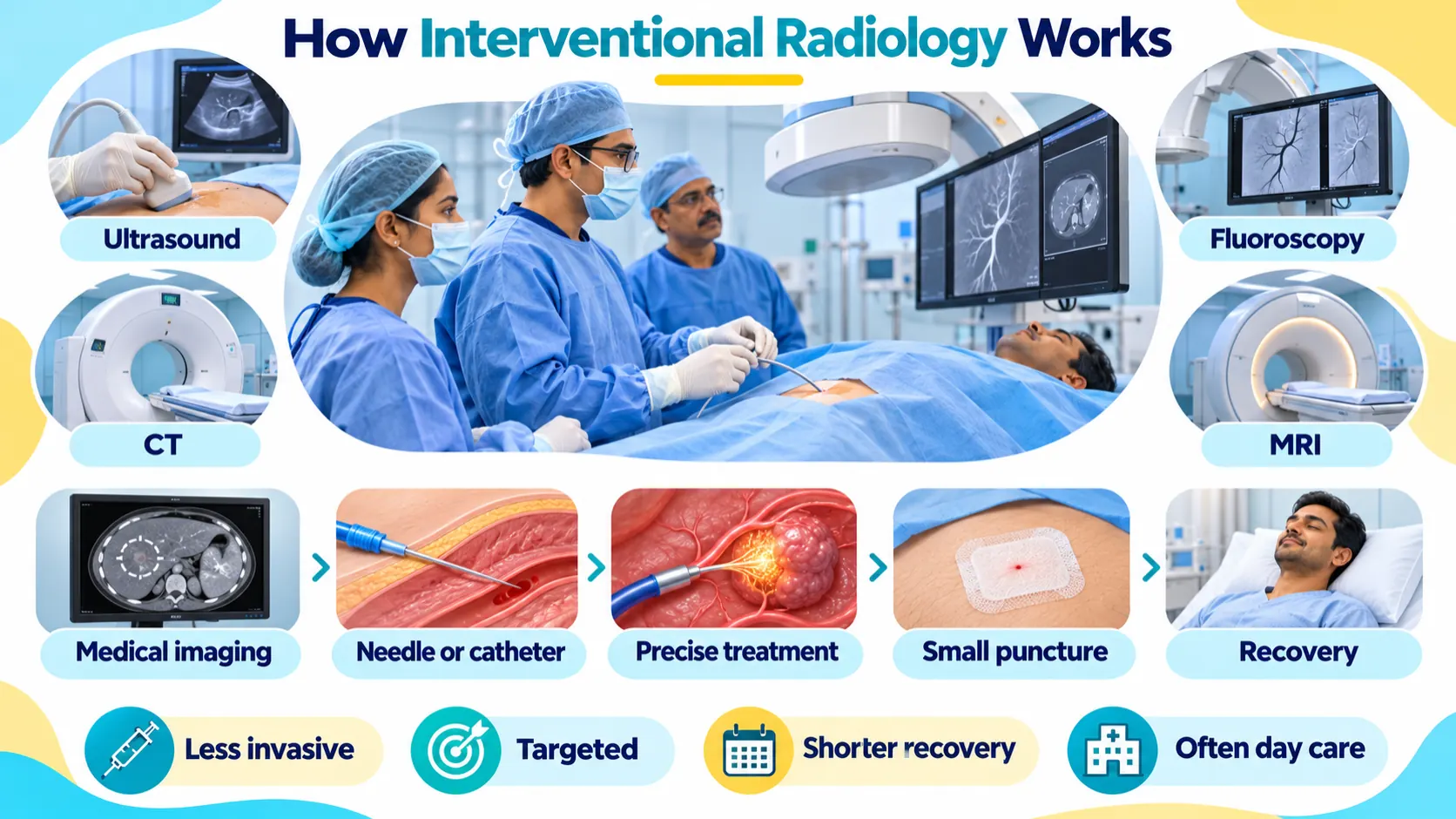
Imaging lets the doctor see inside the body in real time during the procedure:
- Ultrasound: live images without radiation, ideal for organs near the surface and for guiding needles
- Fluoroscopy (live X-ray): shows blood vessels when contrast dye is injected, used for catheter procedures
- CT: detailed cross-sectional images, useful for deep or hard-to-reach areas
- MRI: used for planning and, in some centres, for guiding certain procedures
What Does an Interventional Radiologist Do?
An interventional radiologist is a doctor trained in radiology with further specialist training in image-guided procedures. They assess patients, review scans, explain options, perform procedures and follow up afterwards, often working closely with surgeons, gynaecologists, urologists and other specialists.
Vascular IR Procedures
Vascular procedures are performed inside blood vessels:
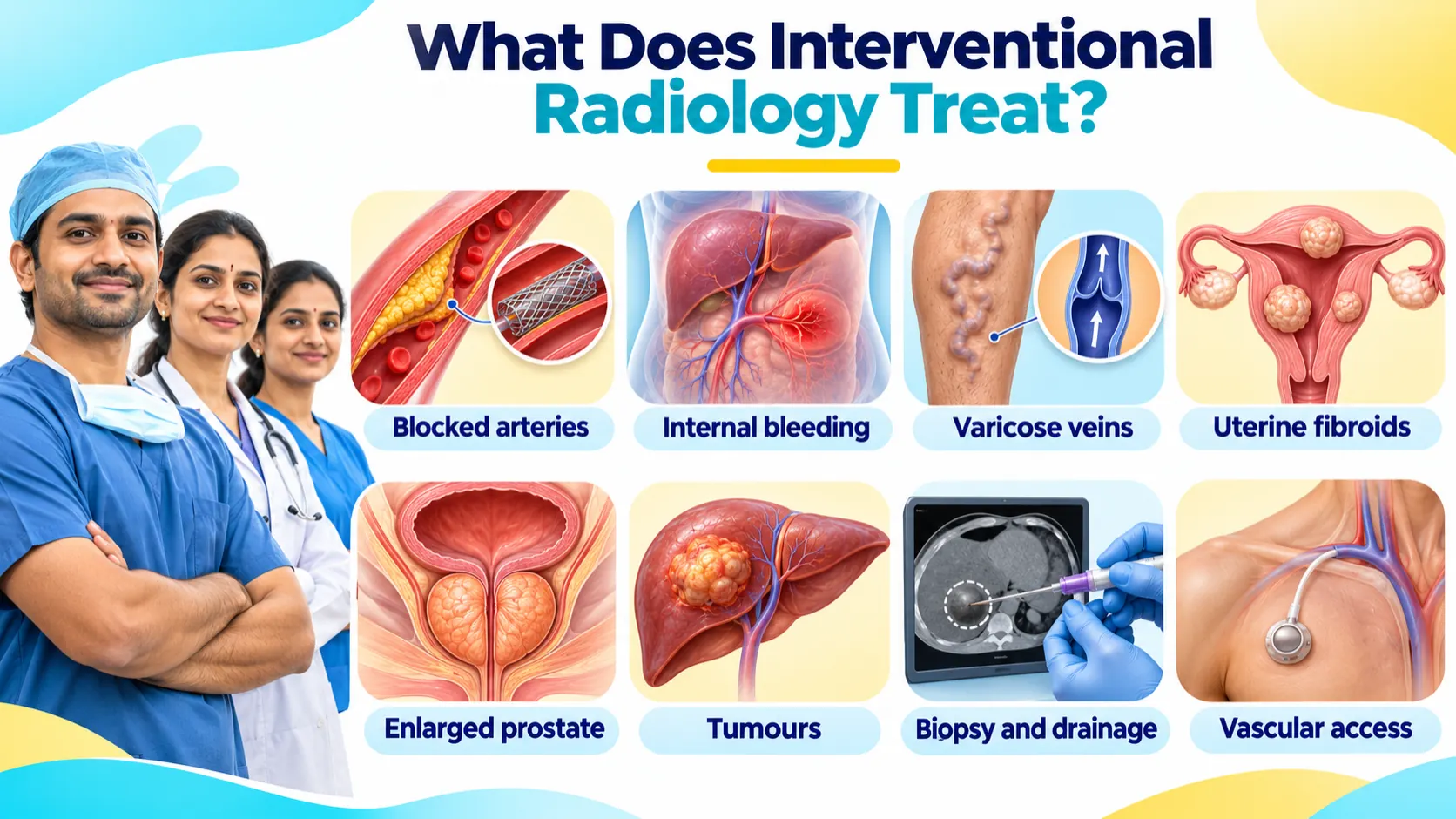
- Angioplasty and stenting: opening narrowed or blocked arteries
- Embolization: blocking blood vessels to stop bleeding or shrink growths
- Vein treatments: laser, radiofrequency or other treatments for varicose veins
- Prostate artery embolization: for an enlarged prostate
- Varicocele embolization: for enlarged veins in the scrotum
- Clot treatment: removing or dissolving blood clots in selected cases
Non-Vascular IR Procedures
These procedures reach organs and tissues without going through blood vessels:
- Draining blocked kidneys or bile ducts
- Joint and soft tissue injections for pain
- Treating benign thyroid nodules with ablation
- Strengthening fractured spinal bones with bone cement
Women's Health Procedures
- Uterine artery embolization for fibroids
- Breast biopsies and treatment of some benign breast lumps
- Embolization for pelvic vein problems
- Controlling heavy bleeding after childbirth
Cancer-Related Procedures
- Biopsies to diagnose cancer
- Ablation, which destroys small tumours with heat or cold
- Delivering treatment directly into tumours through their blood supply
- Placing ports for chemotherapy
Emergency IR Procedures
Interventional radiologists often provide life-saving emergency care, such as stopping internal bleeding after injury or childbirth, and draining serious infections without open surgery.
Biopsies, Drainages and Vascular Access
- Image-guided biopsy: taking a small tissue sample from a lump or organ
- FNAC: fine needle aspiration for cells, for example from the thyroid or lymph nodes
- Drainage: removing fluid collections, cysts or abscesses
- Fluid tapping: draining fluid from around the lungs or in the abdomen
- Vascular access: placing lines and ports for long-term medicines or dialysis
Benefits Compared with Open Surgery
For many suitable procedures, IR can offer:
- A small puncture instead of a large cut
- Less pain and less blood loss
- Local anaesthesia and sedation instead of general anaesthesia, in many cases
- A shorter hospital stay, often same-day discharge
- Faster recovery and return to normal life
- A lower risk of some complications, such as wound infection
These benefits depend on the procedure and the patient, and IR is not the better option for every condition.
Anaesthesia and Hospital Stay
Many IR procedures are done under local anaesthesia, sometimes with sedation to help you relax; others may need general anaesthesia. Many are day-care procedures, so you go home the same day. Some, such as embolization, may need an overnight stay.
Risks and Radiation Safety
IR procedures are generally safe, but risks can include:
- Bruising or bleeding at the puncture site
- Infection
- Reaction to contrast dye, or effects on the kidneys
- Rarely, injury to a nearby organ or blood vessel
Procedures using X-ray or CT involve radiation. Interventional radiologists use the lowest dose needed. Ultrasound-guided procedures use no radiation. Always tell your doctor if you are or might be pregnant.
What Patients Can Expect
- Consultation: the doctor reviews your symptoms, scans and options
- Preparation: blood tests, and instructions on fasting and medicines such as blood thinners
- The procedure: often under local anaesthesia, with imaging guidance
- Recovery: a short rest for observation before going home
- Follow-up: a review of results and any follow-up scans
IR vs Diagnostic Radiology vs Surgery
Diagnostic radiology focuses on taking and interpreting scans, while interventional radiology uses those images to treat.
When to Ask Whether IR Is an Option
Ask your doctor or an interventional radiologist about IR if you have been told you need surgery for fibroids, an enlarged prostate, varicose veins, a varicocele or a benign thyroid nodule, or if you need a biopsy or drainage of a fluid collection.
IR is not always the right choice, but it is worth knowing whether a less invasive option exists.
Image-Guided Procedures at Docube
At Docube, our interventional radiologists offer ultrasound-guided FNAC and core-needle biopsy, cyst aspiration and abscess drainage, pleural and ascitic fluid tapping, ultrasound-guided joint and soft tissue injections, and varicose vein treatments, along with consultations on procedures such as uterine fibroid embolization, prostate artery embolization and thyroid ablation. Other procedures described in this article are examples from the wider speciality and may not be available at Docube.

