

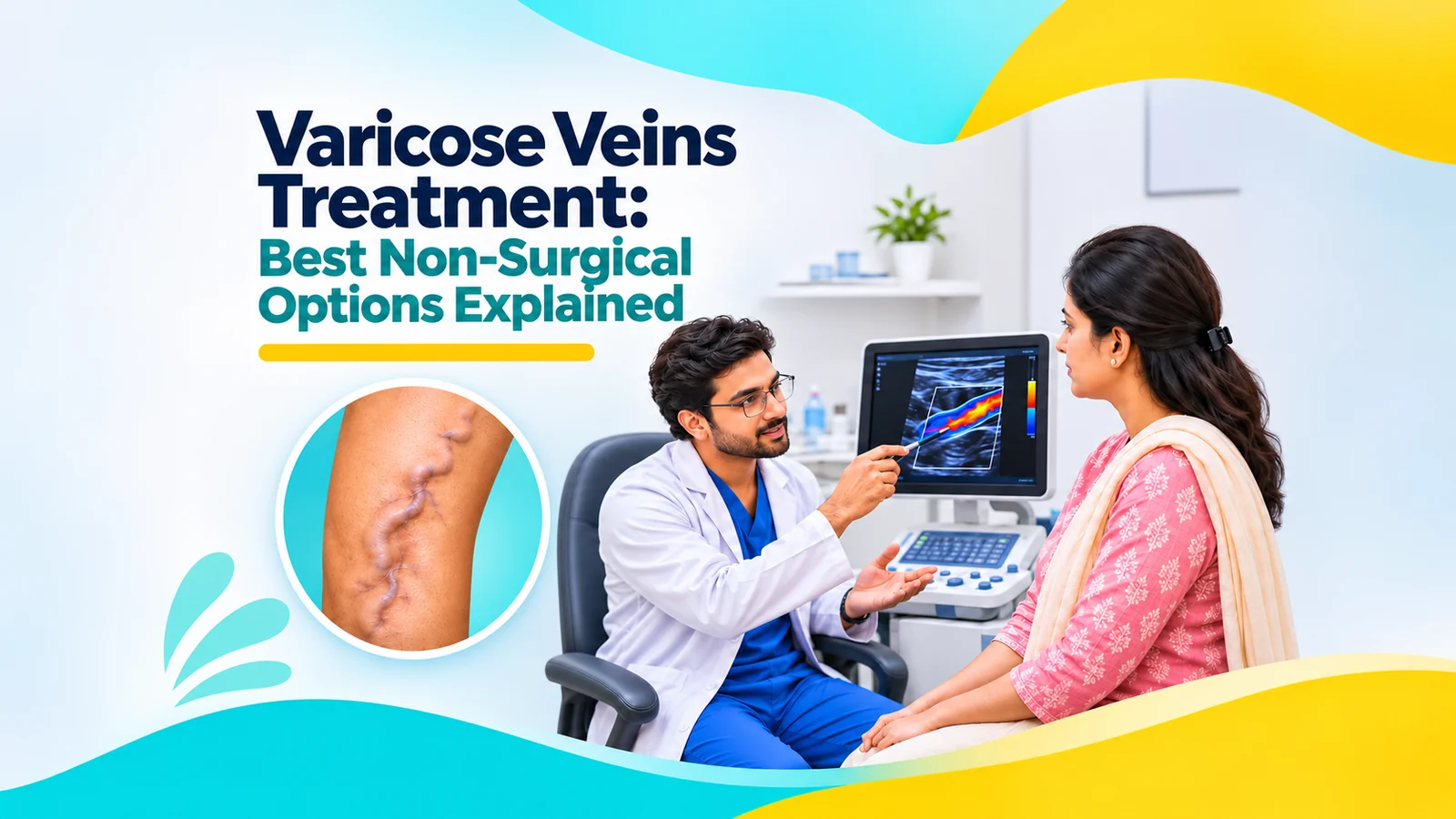
If you have varicose veins, you may have heard that surgery is the only real fix. Today, that is rarely true. Modern varicose treatment usually involves minimally invasive procedures done under local anaesthesia, often as day-care treatments, with a quick return to normal life.
But there is no single "best" treatment for everyone. The right option depends on which veins are affected, their size and shape, and your symptoms. This guide explains the main non-surgical options and how doctors choose between them.
Can Varicose Veins Be Treated Without Surgery?
Yes. Modern treatments close the faulty vein from the inside, instead of removing it through cuts. Once the vein is sealed, blood naturally reroutes through healthy veins, and the bulging veins gradually shrink.
These treatments are performed through a needle puncture under ultrasound guidance, usually by an interventional radiologist or vascular specialist.
For confirmed reflux in a main (truncal) vein, guidelines such as those from NICE generally recommend endothermal ablation (laser or radiofrequency) first. If that is unsuitable, ultrasound-guided foam sclerotherapy is usually offered, and surgery is considered if neither is suitable. Other techniques, such as vein glue or MOCA, depend on vein anatomy, availability and the clinician's experience.
Why a Doppler Ultrasound Is Needed Before Treatment
The visible veins are often just the surface of the problem. The real cause is usually a leaking valve in a main vein deeper in the leg.
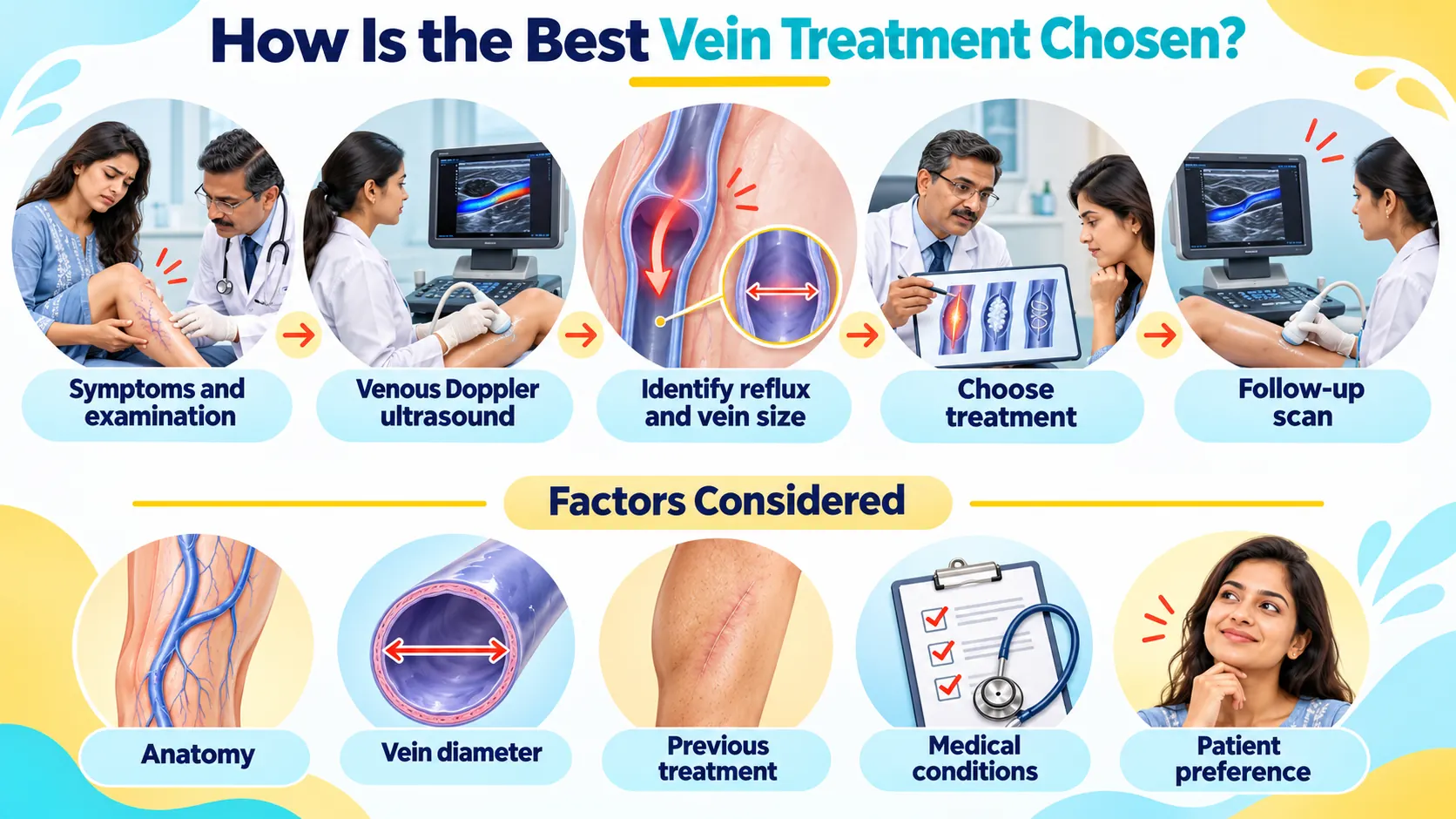
A venous Doppler ultrasound maps which veins leak, how wide they are, how deep they lie and whether there are any clots. Without this map, treatment may miss the real cause, and symptoms may come back. You can read how to prepare for a Doppler scan.
Conservative Symptom Management
These measures ease symptoms and may be all that is needed for mild cases, but they do not remove varicose veins:
- Walking and calf exercises: activate the calf muscle pump that pushes blood upwards
- Leg elevation: raising your legs above heart level for short periods eases swelling
- Weight management: reduces pressure on leg veins
- Compression stockings: support the veins and relieve aching and swelling while worn
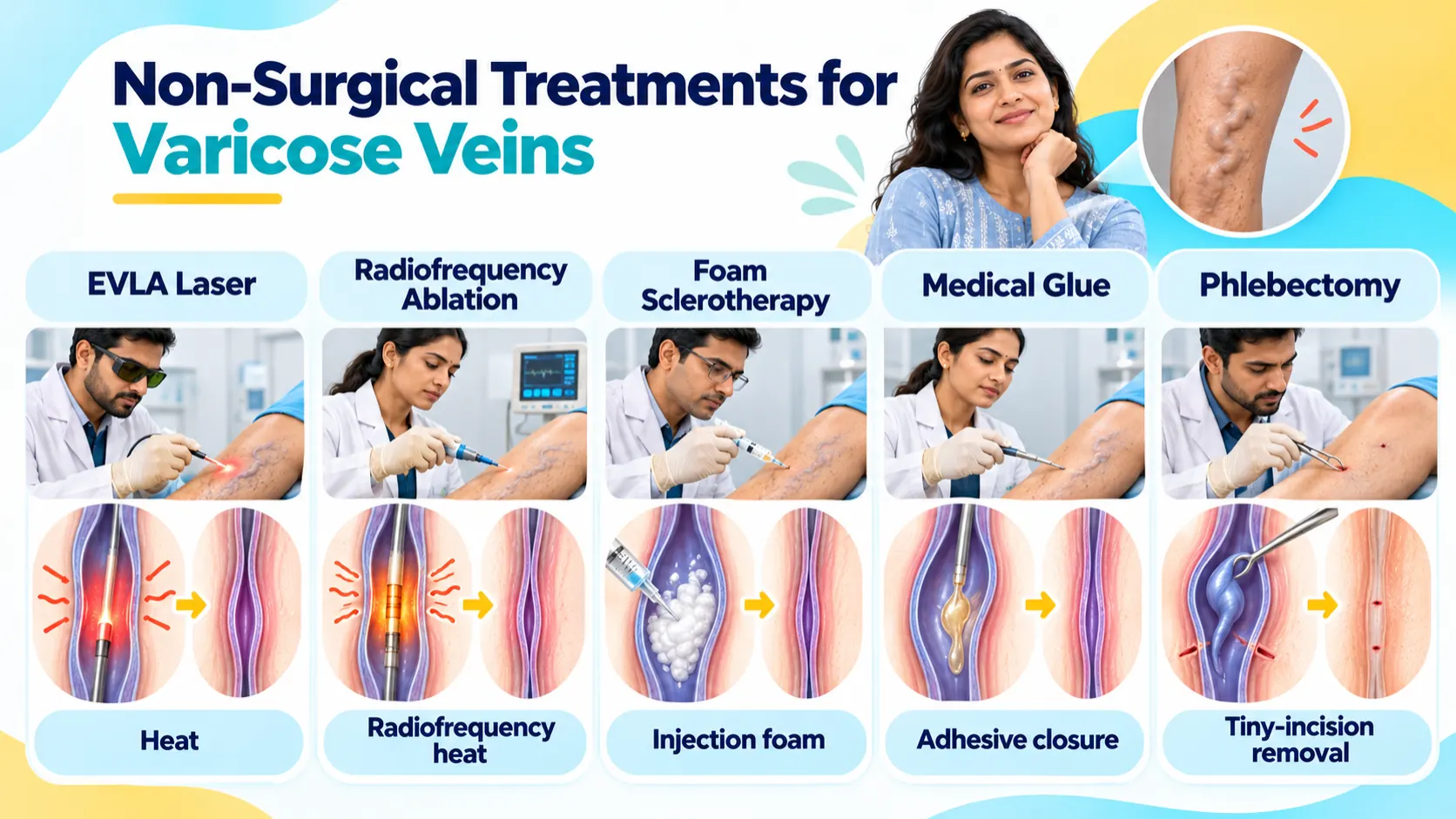
Endovenous Laser Ablation (EVLA)
A thin laser fibre is passed into the faulty vein through a needle puncture, guided by ultrasound. After the area is numbed, the fibre is slowly withdrawn while laser energy heats and seals the vein. EVLA is commonly used for the main leaking veins of the thigh and calf. Read more about laser treatment.
Radiofrequency Ablation (RFA)
RFA works in the same way as EVLA, but uses radiofrequency energy instead of laser to heat and close the vein. Both are effective, and the choice often depends on the vein and the doctor's experience.
Foam Sclerotherapy
A medicine (sclerosant) mixed into a foam is injected into the vein under ultrasound guidance. It irritates the vein lining so that the vein closes and is gradually absorbed. Foam sclerotherapy is useful for smaller, twisted or recurrent veins, and some people need more than one session.
Medical Adhesive (Vein Glue) Treatment
A small amount of medical adhesive is placed inside the vein through a catheter, sealing it shut. It does not use heat, so it needs fewer numbing injections, and compression may be needed for a shorter time.
Mechanochemical Ablation (MOCA)
MOCA uses a rotating wire tip to irritate the vein lining while a sclerosant is released. It also avoids heat and is an option for selected veins.
Ambulatory Phlebectomy
Bulging surface veins are removed through tiny cuts, a few millimetres long, under local anaesthesia. It is often combined with ablation to treat visible branches.
Comparison of Non-Surgical Treatments
All procedure times, recovery times and relative costs in this table are estimates only. They vary by vein, centre and patient, and your doctor will explain what applies to you.
How Doctors Select the Best Treatment
An interventional radiologist considers:
- Doppler findings: which veins leak and how badly
- Vein size, depth and shape: straight veins suit ablation, while twisted veins may suit foam or phlebectomy
- Your symptoms and skin changes
- Previous vein treatment
- Your general health and preferences
Many people benefit from a combination, such as ablation for the main vein plus sclerotherapy or phlebectomy for the branches.
Recovery and Follow-Up
- You can usually walk immediately after treatment, and walking is encouraged
- Compression stockings may be advised for a short period
- Most people return to desk work within a day or two
- Avoid heavy exercise and lifting for about a week, or as advised
- A follow-up Doppler scan may be arranged, depending on the procedure, your symptoms and your clot risk
Mild bruising, tightness and tenderness along the treated vein are common and settle over a few weeks.
Can Treated Veins Return?
A vein that has been properly closed usually stays closed. However, new varicose veins may develop over time, because the tendency to weak valves remains. Follow-up allows any new veins to be checked and treated if needed.
When Open Surgery May Still Be Considered
Traditional surgery, such as vein ligation and stripping, is now used much less often. It may still be considered when a vein is too twisted or too large for a catheter, when minimally invasive options are not suitable or have failed, or for certain unusual vein patterns.

