


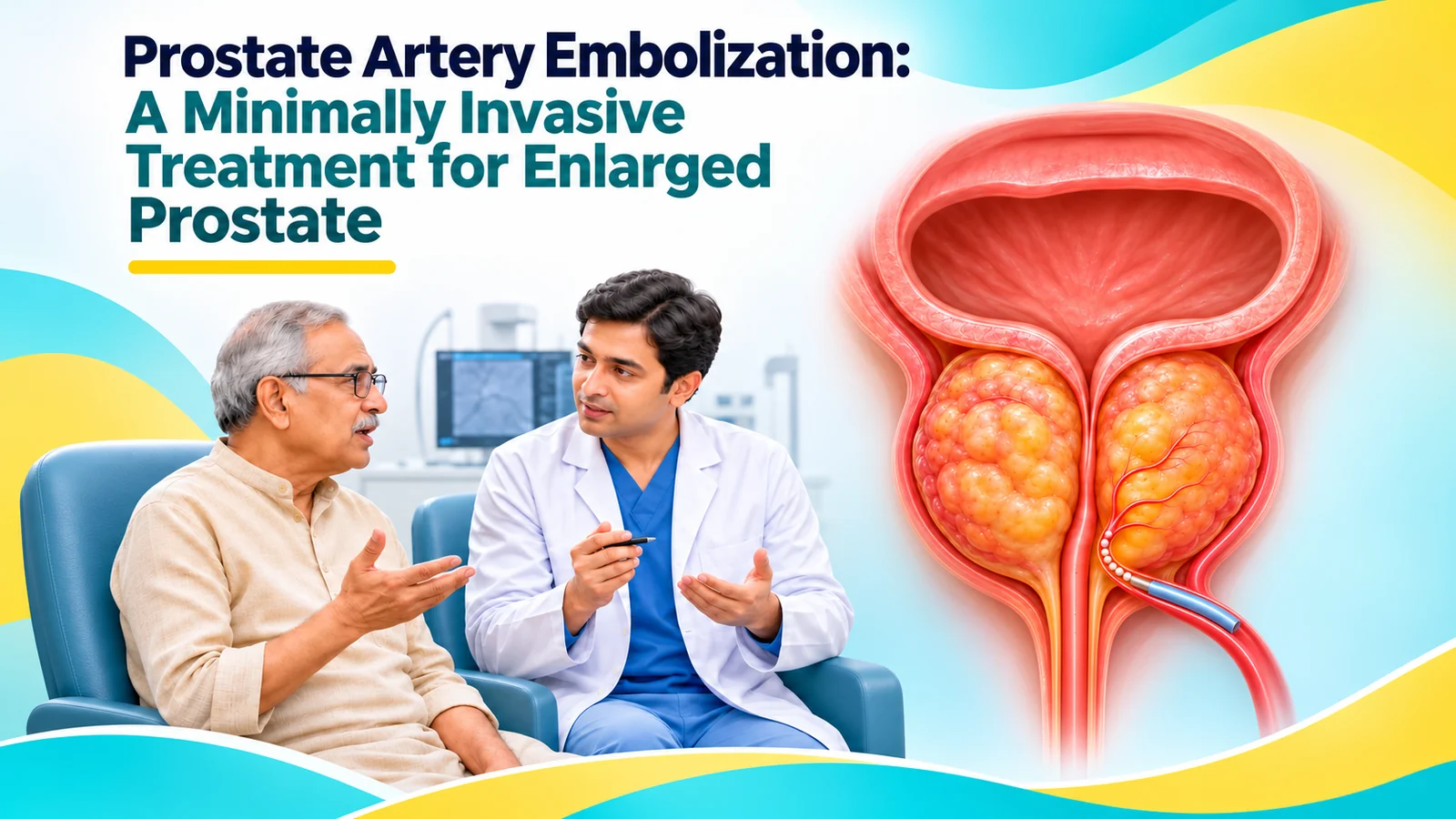
An enlarged prostate is very common in men over 50. It can cause a weak urine stream, frequent trips to the toilet and waking up several times at night. When medicines are not enough, surgery has usually been the next step. Prostate artery embolization (PAE) offers a less invasive option for many men.
This guide explains what PAE is, who it may suit, what to expect, and how it compares with other treatments.
What Is Benign Prostate Enlargement?
The prostate is a small gland below the bladder that surrounds the tube carrying urine (the urethra). With age, it often grows larger. This is called benign prostatic hyperplasia (BPH) or benign prostate enlargement. It is not cancer.
As the prostate enlarges, it can squeeze the urethra and cause:
- A weak or slow urine stream
- Difficulty starting to urinate
- Frequent urination, especially at night
- A sudden, urgent need to urinate
- A feeling that the bladder has not emptied fully
What Is Prostate Artery Embolization?
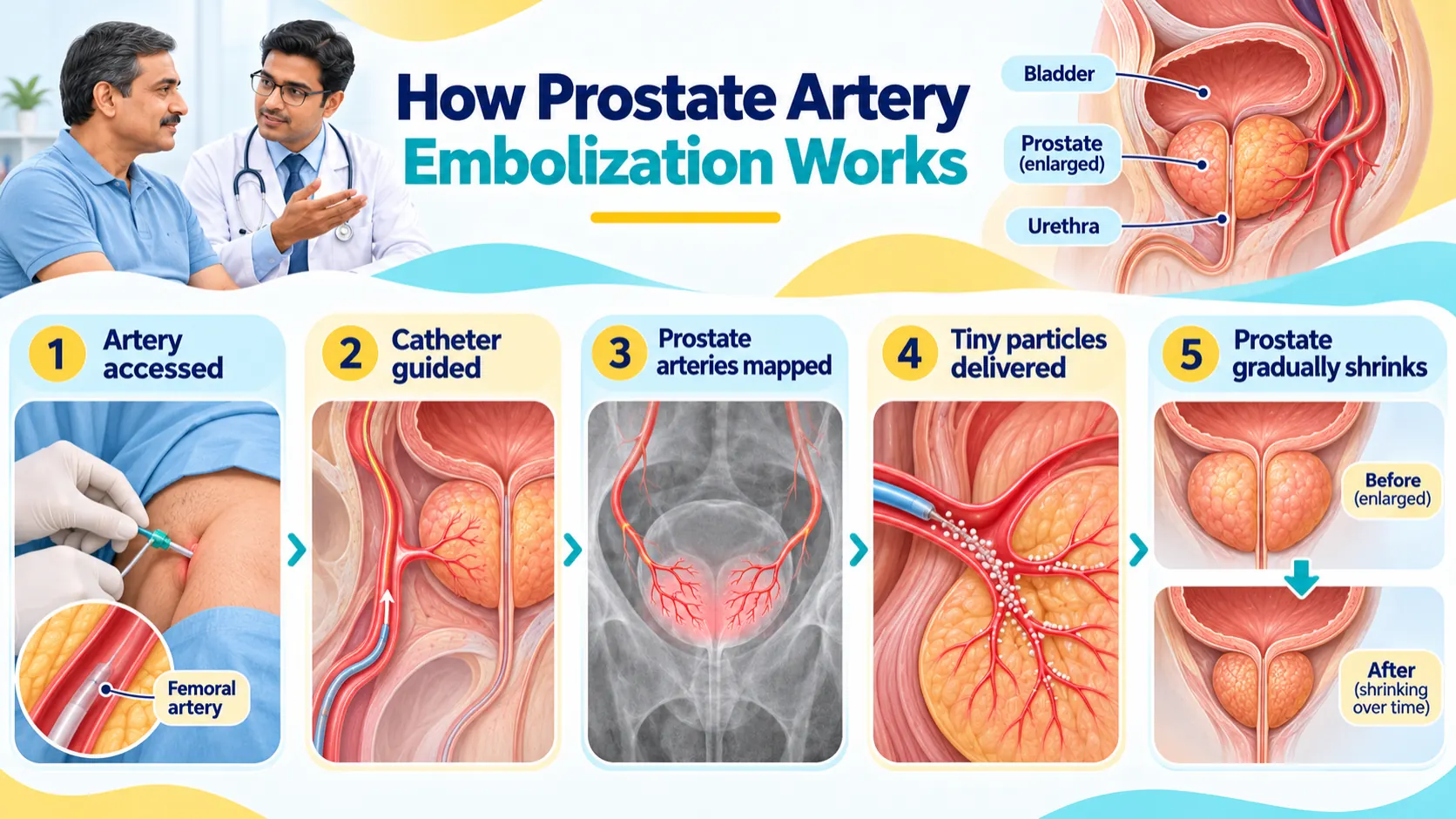
PAE is a minimally invasive procedure performed by an interventional radiology specialist. A thin tube is guided through an artery in the wrist or groin to the arteries that supply the prostate. Tiny particles are then injected to reduce the blood supply.
How PAE Shrinks the Prostate
With less blood supply, parts of the prostate shrink and soften over the following weeks. This eases pressure on the urethra, so urine flows more easily and symptoms improve.
Symptoms That May Improve
- Weak urine stream
- Frequent urination and waking at night to urinate
- Urgency
- Incomplete bladder emptying
- In some men, the need for a long-term urinary catheter
Who May Be Suitable for PAE?
PAE may suit men who:
- Have moderate to severe urinary symptoms caused by BPH
- Have not improved with medicines, or have side effects from them
- Wish to avoid surgery or are not fit for it
- Want to lower the risk of sexual side effects linked with surgery
- Have a prostate of a suitable size: the 2026 American Urological Association (AUA) guideline says PAE with particle embolics may be offered to appropriately selected men with a prostate of at least 50 cc (a conditional recommendation)
Evaluation Before PAE
Evaluation should involve a urologist, and PAE should be performed by an interventional radiologist with specific training in the procedure. The assessment confirms that BPH is the cause and that PAE is suitable:
- Symptom score: a questionnaire to measure how much your symptoms affect you
- Urine tests: to check for infection or blood (blood and urine tests)
- PSA test and cancer exclusion: a blood test, and sometimes MRI or biopsy, to rule out prostate cancer
- Imaging: an ultrasound scan to measure prostate size and how well the bladder empties; planning may also include MRI or CT angiography to map the prostate arteries
- Flow test: measures the strength of your urine stream
Procedure Step by Step
- You are given a sedative, and the skin at the wrist or groin is numbed.
- A thin catheter is passed into the artery through a tiny puncture.
- Using X-ray guidance, it is steered to the small arteries supplying the prostate.
- Tiny particles are injected to reduce blood flow, usually on both sides.
- The catheter is removed, and the puncture is sealed with pressure or a closure device.
The procedure usually takes one to three hours, because the prostate arteries are small and vary between people. Most men go home the same day or the next.
Benefits
- No cutting or surgical instruments passed through the penis
- Many men do not need a urinary catheter afterwards, although some need one temporarily
- Lower risk of sexual side effects, such as dry ejaculation, compared with several surgical treatments
- Usually done under sedation and local anaesthesia
- Quick return to normal activities for most men
- Can treat very large prostates
Risks and Possible Side Effects
- Common and temporary: burning or discomfort when urinating, frequency, mild pelvic pain or low fever for a few days
- Temporary bleeding: small amounts of blood in urine, semen or stool
- Urinary retention: occasionally, temporary difficulty passing urine that needs a catheter
- Urinary tract infection
- Bruising at the puncture site
- Radiation exposure: PAE uses X-ray guidance, and the dose depends on how long the procedure takes. This is discussed during consent.
- Rare: particles reaching nearby organs such as the bladder or rectum
In some men, PAE cannot be completed or does not help enough, often because of the shape of their arteries.
Recovery Timeline
- First few days: mild discomfort and urinary symptoms; rest and drink plenty of fluids
- First week: most men return to light normal activities
- One to two weeks: avoid heavy lifting and strenuous exercise, as advised
When Improvement Usually Begins
Many men notice improvement within a few weeks. Symptoms often continue to improve over the following one to three months as the prostate shrinks.
PAE vs TURP, HoLEP and Medication
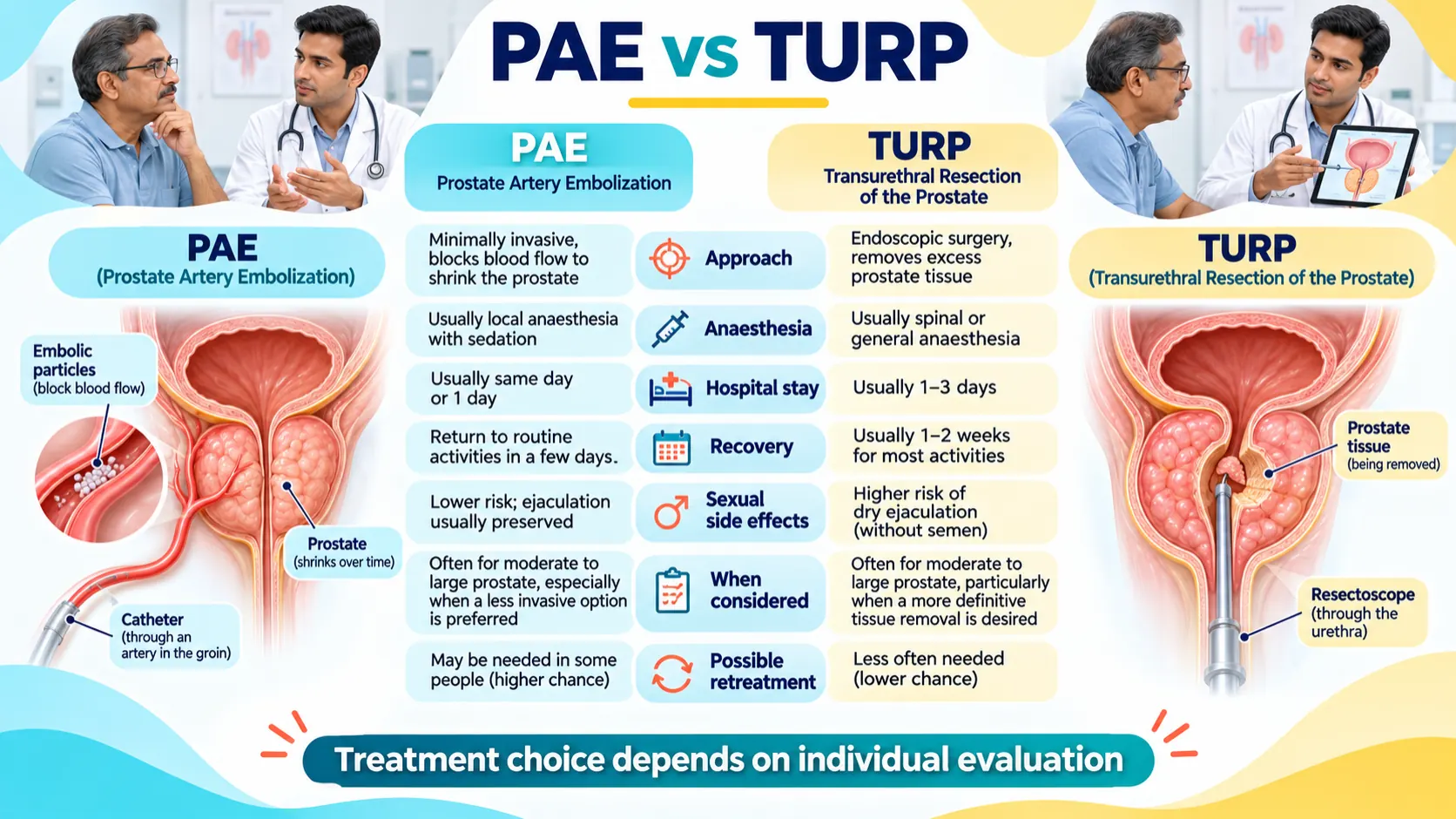
Retreatment and Durability
For many men, the benefits of PAE last for several years. However, symptoms return in some men over time, and some may need repeat PAE or surgery later. Your doctor will discuss the likely balance of benefits and durability for your prostate.
Cost Variables in India
The cost of PAE varies, so ask for an itemised estimate. Factors include:
- Pre-procedure tests and imaging, such as MRI or CT angiography
- The type and amount of embolization particles
- Sedation, procedure time and length of stay
- Medicines and follow-up visits
- The hospital or centre
Check with your insurer whether PAE is covered.
When PAE May Not Be Appropriate
- Prostate cancer, or cancer that has not been ruled out
- Bladder stones or other problems that need surgery anyway
- Severe narrowing or twisting of the arteries
- Serious kidney problems or a severe allergy to contrast dye
- A weak bladder muscle, where symptoms are not due to blockage
- An active urinary tract infection

