


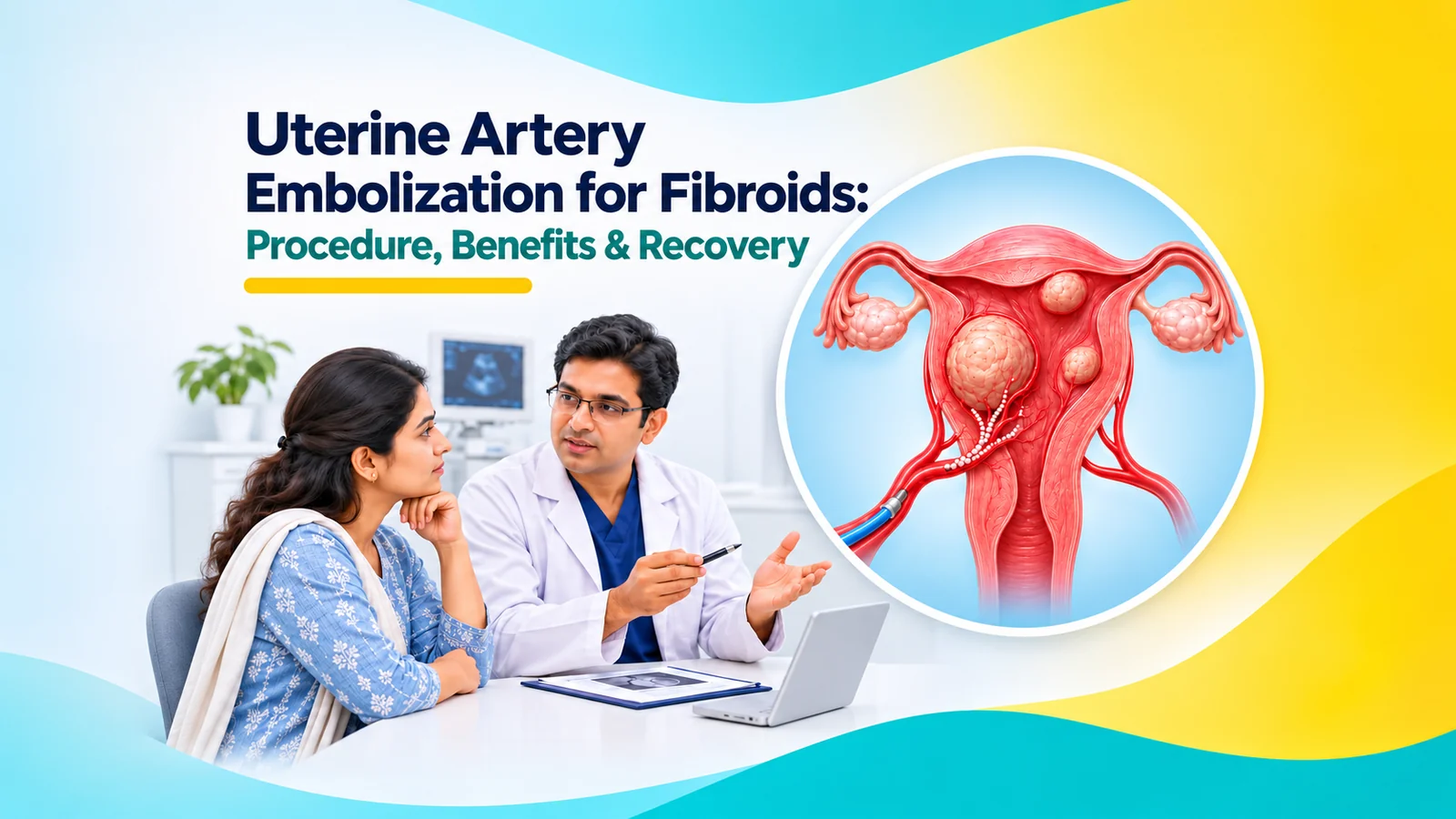
Uterine fibroids are very common and can cause heavy periods, pain and pressure that affect daily life. For many years, surgery was the main treatment. Today, many women have another option: uterine artery embolization (UAE), a minimally invasive procedure that shrinks fibroids without removing the uterus.
This guide explains how UAE works, who it may suit, what recovery involves, and what you should know about fertility before deciding.
What Is Uterine Artery Embolization?
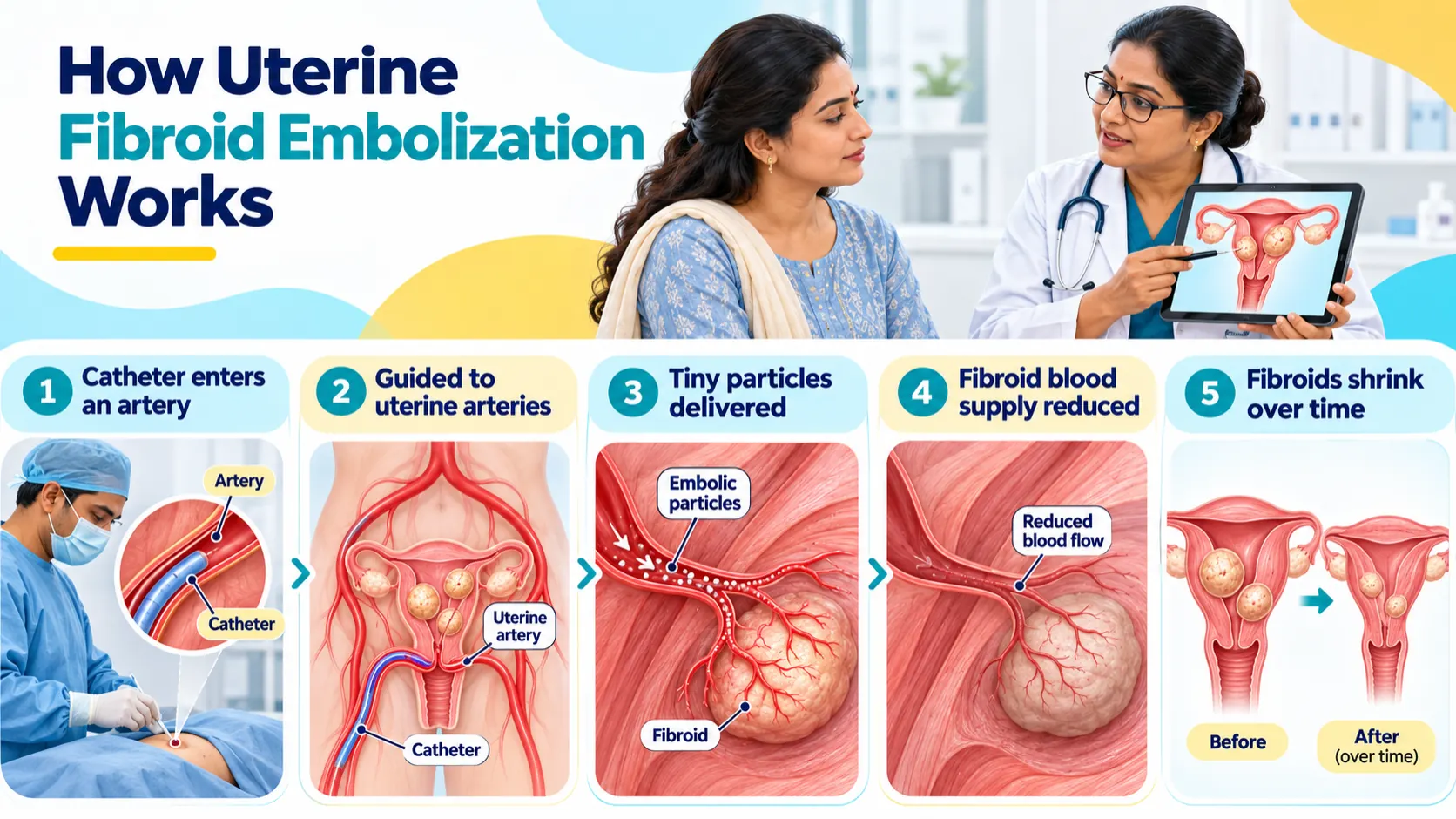
UAE is a procedure that blocks the blood supply to fibroids. Without blood, the fibroids shrink and soften, and symptoms usually improve. It is performed by an interventional radiology specialist through a tiny puncture in the wrist or groin, with no abdominal cuts.
UAE vs UFE: Are They Different?
When used for fibroids, uterine artery embolization (UAE) and uterine fibroid embolization (UFE) describe the same procedure. UAE is the broader term, because the same technique can also be used for other conditions, such as heavy bleeding after childbirth.
Fibroid Symptoms UAE May Improve
- Heavy or prolonged periods
- Anaemia caused by heavy bleeding
- Pelvic pain or pressure
- Frequent urination or pressure on the bladder
- Bloating or a swollen lower abdomen
- Back or leg pain caused by large fibroids
Who May Be a Suitable Candidate?
UAE may suit you if you:
- Have fibroids causing troublesome symptoms
- Wish to keep your uterus or avoid surgery
- Are not well enough for surgery, or prefer a faster recovery
- Have several fibroids that would be difficult to remove surgically
Who May Need a Different Treatment?
UAE may not be suitable if you:
- Are pregnant
- Have, or may have, cancer of the uterus or ovaries
- Have an active pelvic infection
- Are planning a pregnancy (surgery to remove the fibroids may be preferred; see the fertility section below)
- Have a fibroid attached by a narrow stalk, or certain fibroid types and sizes
- Have serious kidney problems or a severe allergy to X-ray contrast dye
Tests and Imaging Before UAE
- Assessment by a gynaecologist to confirm that fibroids are causing your symptoms
- A pelvic ultrasound, and usually a pelvic MRI to map the size, number and position of fibroids
- Blood tests, including haemoglobin, kidney function and clotting
- A pregnancy test
- An endometrial biopsy or cervical screening, if needed, to rule out other causes of bleeding
Procedure Step by Step
- You are given a sedative to relax, and the skin at the wrist or groin is numbed.
- The interventional radiologist inserts a thin tube (catheter) into an artery through a tiny puncture.
- Using X-ray guidance, the catheter is guided to the arteries that supply the uterus.
- Tiny particles are injected to block the blood vessels feeding the fibroids.
- Both sides are treated, and the catheter is removed. Pressure or a closure device seals the puncture.
The procedure usually takes about one to two hours.
Benefits
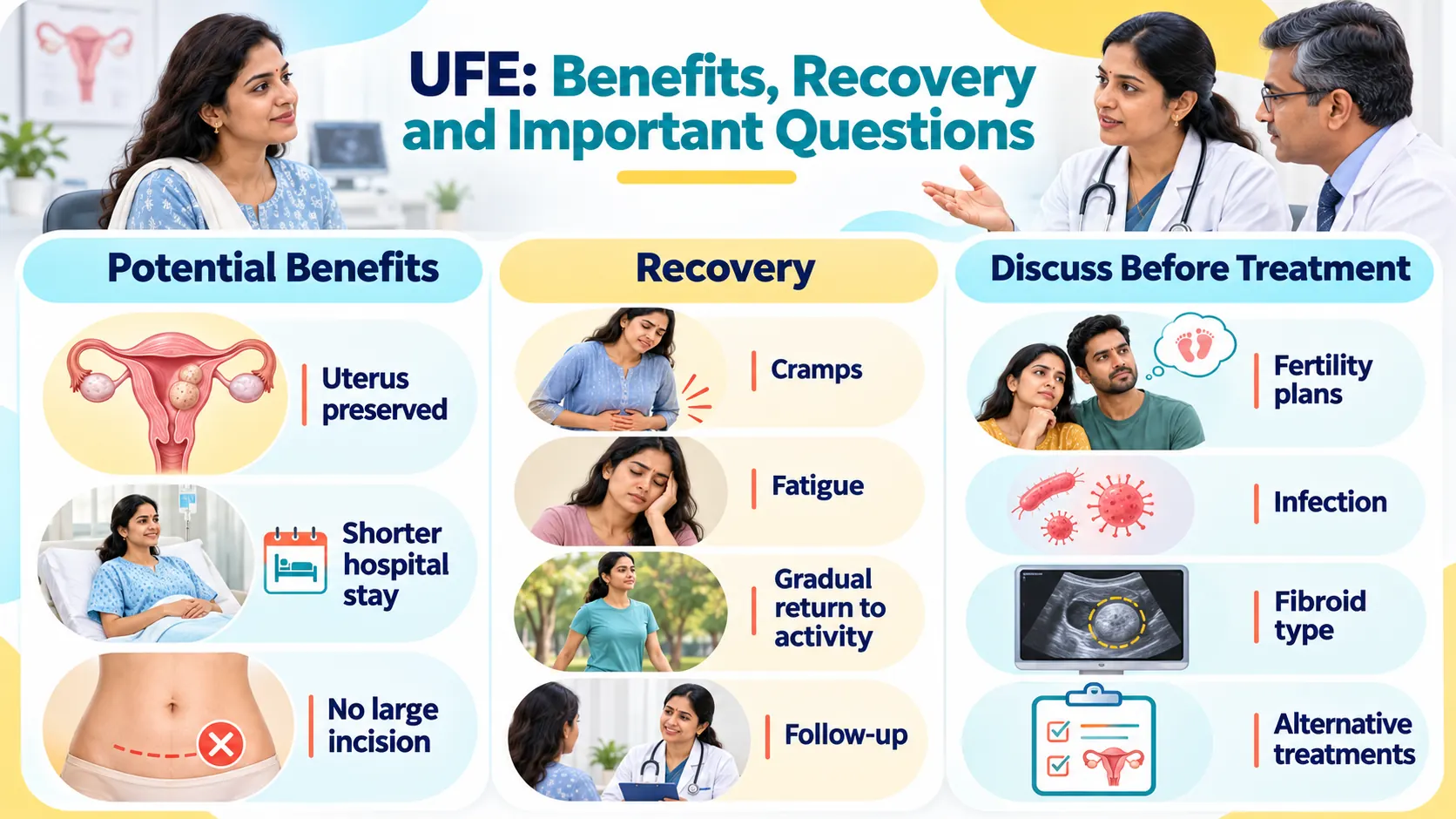
- The uterus is kept
- No abdominal cuts, and usually no general anaesthesia
- Multiple suitable fibroids can often be treated in the same session
- Shorter hospital stay, often one night
- Faster recovery than hysterectomy or open surgery
Risks and Post-Embolization Syndrome
Most women have cramping pain for the first day or two, which is controlled with strong pain relief. Many also have post-embolization syndrome: tiredness, mild fever, nausea and general discomfort for a few days. This is expected and not an infection.
Other risks include:
- Infection of the uterus, which is uncommon
- Vaginal discharge, or passing fibroid tissue
- Early menopause, which is more likely in women over 45
- Bruising or bleeding at the puncture site
- Need for further treatment if symptoms return
- Rarely, serious complications that may require hysterectomy
Recovery Timeline
- First one to two days: cramping is strongest; you may stay in hospital overnight
- First week: tiredness and mild discomfort; rest at home
- One to two weeks: most women return to work and normal activities
When Symptom Improvement Occurs
Heavy bleeding often improves within the first few menstrual cycles. Pressure and bulk symptoms improve more gradually, as the fibroids shrink over several months.
According to the American College of Obstetricians and Gynecologists (ACOG), about 3 in 4 women have relief of symptoms after UAE, and about 1 in 5 need additional treatment later. Results vary from person to person.
UAE vs Myomectomy vs Hysterectomy
Fertility and Pregnancy Considerations
This is one of the most important questions to discuss before UAE.
Women have become pregnant after UAE, and some go on to have healthy pregnancies. However, research on pregnancy after UAE is limited. Some studies suggest a higher risk of miscarriage and pregnancy complications compared with women who have myomectomy.
For this reason, if you are planning a pregnancy, myomectomy is often recommended first. UAE may still be considered if surgery is not suitable or carries high risk. Discuss your plans openly with your gynaecologist and interventional radiologist before deciding.
Cost Variables in India
The cost of UAE varies, so ask for a clear estimate. It depends on:
- The hospital and room type
- Pre-procedure imaging, such as MRI
- The type and amount of embolization particles
- Sedation, medicines and length of stay
- Follow-up scans and visits
Check with your insurer whether UAE is covered under your policy.
When to Contact the Hospital Urgently
- Fever above 38°C after the first few days
- Pain that is getting worse or not controlled by medicines
- Foul-smelling vaginal discharge
- Heavy vaginal bleeding
- Swelling, bleeding or pain at the puncture site
- Coldness, numbness or colour change in the hand or leg used for access

