


Do you start sneezing, with itchy eyes and a runny nose, at certain times of the year or whenever you visit a particular place? You may have hay fever. Despite its name, hay fever is not caused by hay and does not cause a fever.
This guide will help you recognise hay fever, tell it apart from a cold, understand common triggers and find practical ways to reduce flare-ups.
What Is Hay Fever?
Hay fever is the common name for allergic rhinitis, an allergic reaction inside the nose, often affecting the eyes too. It happens when your immune system overreacts to something in the air, such as pollen. The term “hay fever rhinitis” means the same thing.
The name dates back to the 1800s, when farm workers noticed symptoms during hay-cutting season. Hay fever is not an infection and is not contagious.
Hay Fever Symptoms or a Common Cold?
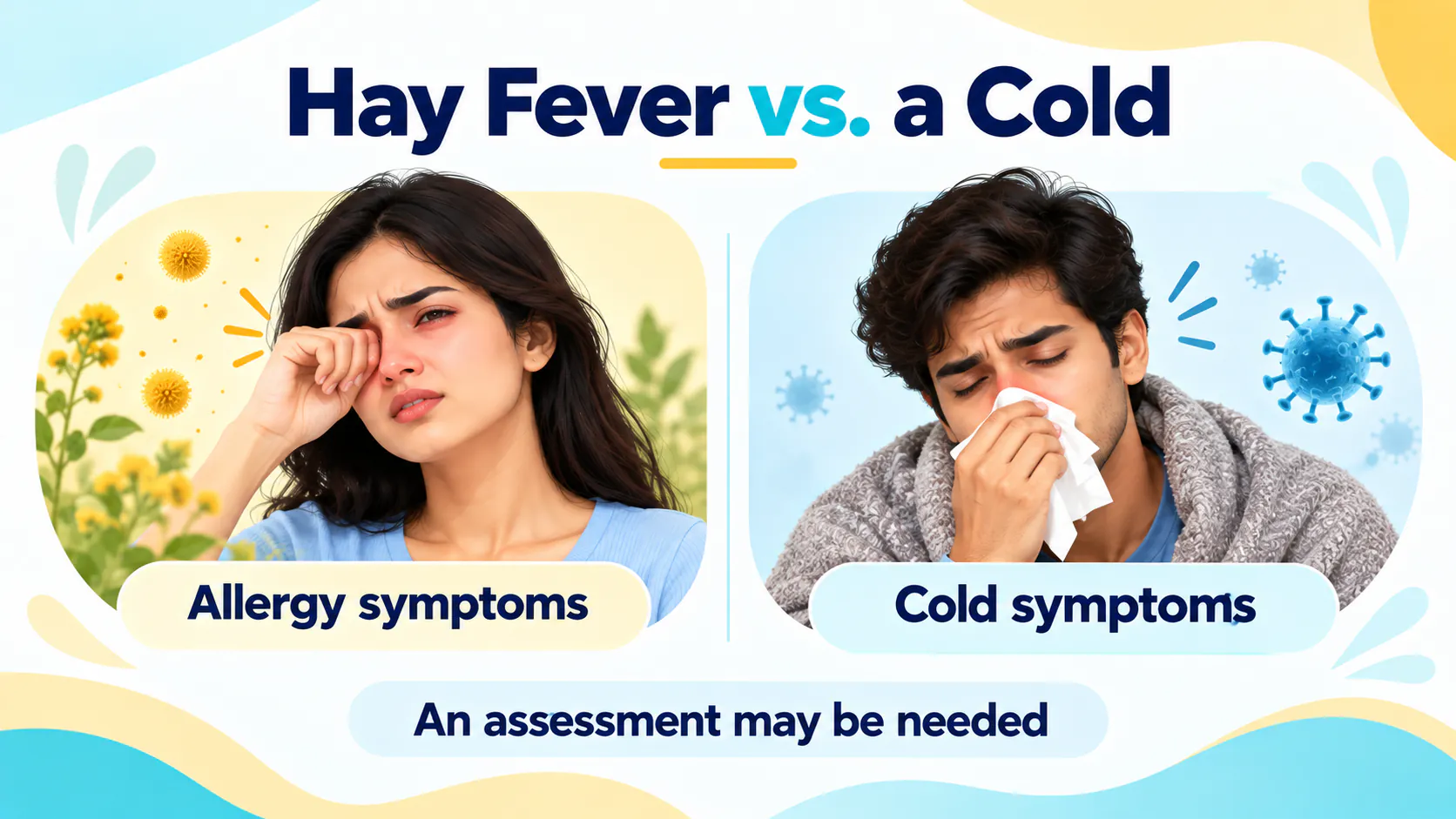
Hay fever allergies and a cold can feel similar, but there are some differences:
- Fever: no fever with hay fever; sometimes with a cold
- Itchy eyes, nose or throat: common with hay fever; uncommon with a cold
- Mucus: clear and watery with hay fever; may become thicker with a cold
- Body aches: none with hay fever; sometimes with a cold
- How long it lasts: hay fever lasts as long as you are exposed to the trigger, sometimes weeks or months; a cold usually lasts 7 to 10 days
- Pattern: hay fever returns in the same season or place each time; a cold often follows contact with someone who is sick
These differences are a general guide, and symptoms can overlap. If you have a fever, thick discoloured mucus with facial pain, or symptoms that do not fit this pattern, see a doctor. These could point to a sinus infection or another cause. Facial pressure alone may also be a sinus headache or migraine.
What Triggers Hay Fever?
- Pollen: from trees, grasses and weeds. Pollen seasons vary a lot across India depending on the region, climate and local plants, so there is no single “hay fever season” for everyone.
- Mould spores: more common in damp weather and during the monsoon.
- Indoor allergens: house dust mites, pet dander and cockroaches can cause symptoms all year round.
Irritants such as smoke, pollution and strong smells do not cause hay fever, but they can make symptoms worse. Many people have both seasonal and year-round triggers.
How Is Hay Fever Treated?
Treatment aims to control symptoms so they do not affect daily life:
- Antihistamines: tablets, nasal sprays or eye drops that relieve sneezing, itching and a runny nose
- Steroid nasal sprays: best for regular symptoms and a blocked nose. If your symptoms come at a predictable time, starting the spray shortly before that period may help, as advised by your doctor.
- Decongestant nasal sprays: for short-term relief only, for no more than three days
- Saline rinses: to wash pollen out of the nose, using only distilled, sterile, or boiled and cooled water
If symptoms are not controlled, your doctor may suggest allergy testing or immunotherapy. Our allergic rhinitis guide explains these in more detail. Check with a doctor before using any medicine for children or during pregnancy.
How to Reduce Hay Fever Flare-Ups

Managing Outdoor Exposure
- Check local air quality or pollen reports where available, and limit time outdoors when levels are high
- Wear wraparound sunglasses to protect your eyes, and a mask on dusty or windy days
- Keep car windows closed and use the AC with a clean filter
- Shower, wash your hair and change clothes after coming indoors
- Avoid drying clothes outside on high-pollen days
Reducing Indoor Triggers
- Keep windows closed during peak pollen times
- Wash bedding every week in hot water
- Damp-dust and vacuum regularly instead of dry sweeping
- Fix damp patches to reduce mould
- Keep pets out of the bedroom
Tracking Your Own Symptom Pattern
Keep a simple diary of when and where your symptoms start, which symptoms you have and what helps. Note the season, the places you visit, your activities and any medicines you take. Sharing this with your doctor helps identify your triggers and choose the right treatment or tests.
When Should You See a Doctor?
See a doctor if:
- Symptoms affect your sleep, work or school
- Medicines from the pharmacy do not help
- Symptoms continue all year round
- You have wheezing or chest tightness, or your asthma is getting worse
- You have a blockage on one side, nosebleeds or a fever, which suggest another cause
Get emergency care right away if you have difficulty breathing or swelling of the lips, face or throat.

