



Do you get pain or pressure in your forehead, cheeks or around your eyes and assume it is a sinus headache? You are not alone. But research shows that many people who believe they have sinus headaches actually have migraine.
Getting the cause right matters, because sinus problems and migraine are treated very differently. This guide explains what a sinus headache is, how it differs from migraine, how the cause is assessed and what treatment can help.
What Do People Mean by a Sinus Headache?
A “sinus headache” usually means pain or pressure in the forehead, cheeks, around the eyes or behind the nose.
Your nasal sinuses are air-filled spaces in the bones of your face:
- Frontal sinuses: in the forehead
- Maxillary sinuses: behind the cheekbones, the largest sinuses
- Ethmoid sinuses: between the eyes
- Sphenoid sinuses: deep behind the nose
When the lining of these sinuses becomes inflamed and blocked, it can cause pressure and pain. However, a true sinus headache usually comes with other sinus symptoms, not on its own.
Sinus Headache or Migraine?
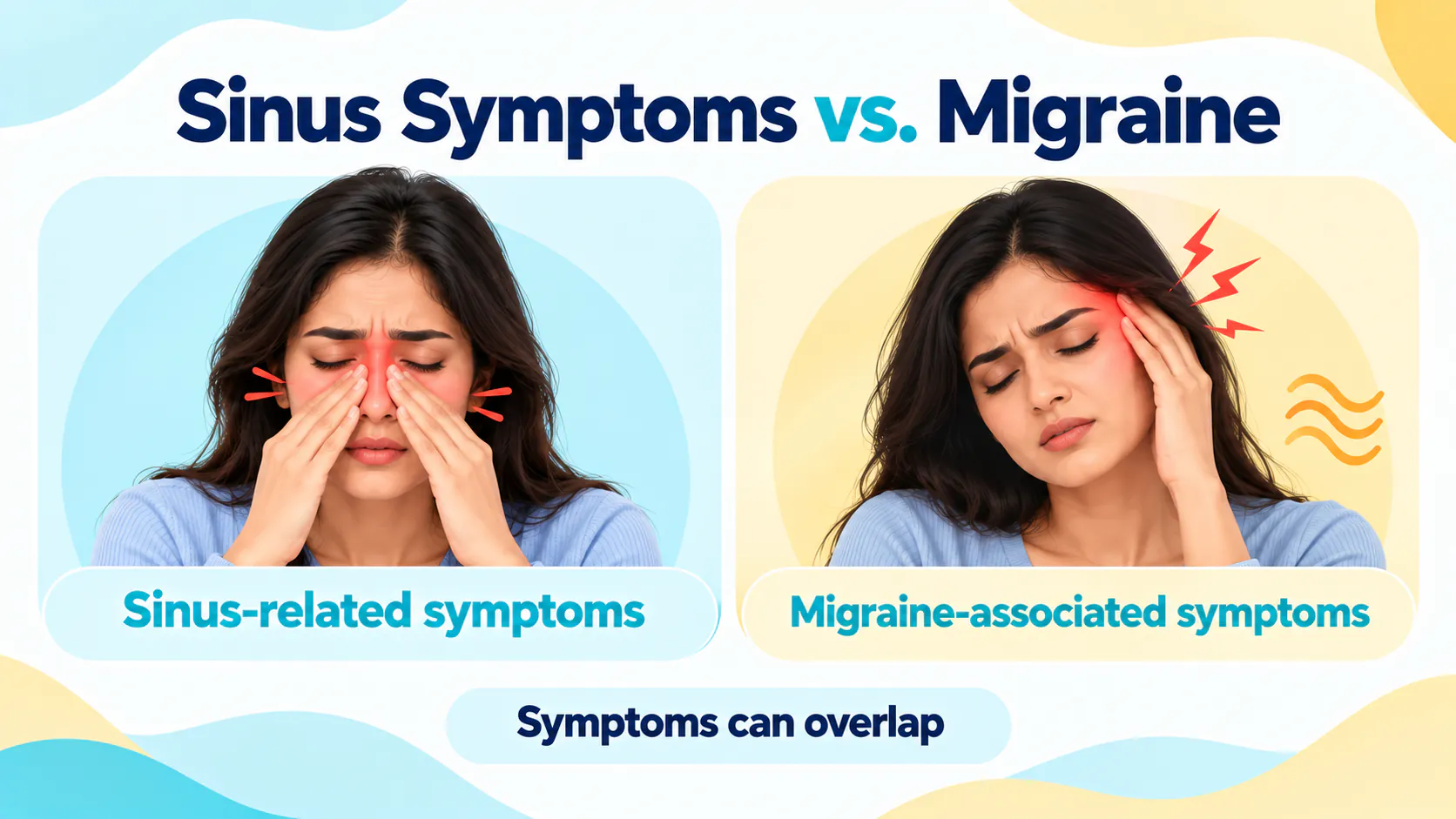
Symptoms That Can Overlap
Sinus problems and migraine can feel very similar. Both can cause:
- Pain in the forehead or around the eyes
- A feeling of pressure in the face
- Pain that gets worse when bending forward
Migraine can also cause a blocked or runny nose and watery eyes. This is why facial pressure, pain on bending forward or nasal symptoms alone do not prove a sinus problem.
Clues That Help Guide Assessment
More typical of sinusitis:
- Nose symptoms: blocked nose, thick discoloured mucus, reduced smell
- Timing: starts with or after a cold and lasts for days
- Other symptoms: may have fever and tiredness
- Pattern: occasional, often with infections
More typical of migraine:
- Nose symptoms: clear runny nose, if any
- Timing: attacks that come and go, often lasting hours to a few days
- Other symptoms: nausea, sensitivity to light or sound, throbbing pain, worse with activity
- Pattern: repeated attacks, often with triggers such as stress, missed meals or poor sleep
These clues are a guide to discuss with your doctor, not a test. Some people have both conditions.
When Can Sinus Problems Cause Headache?
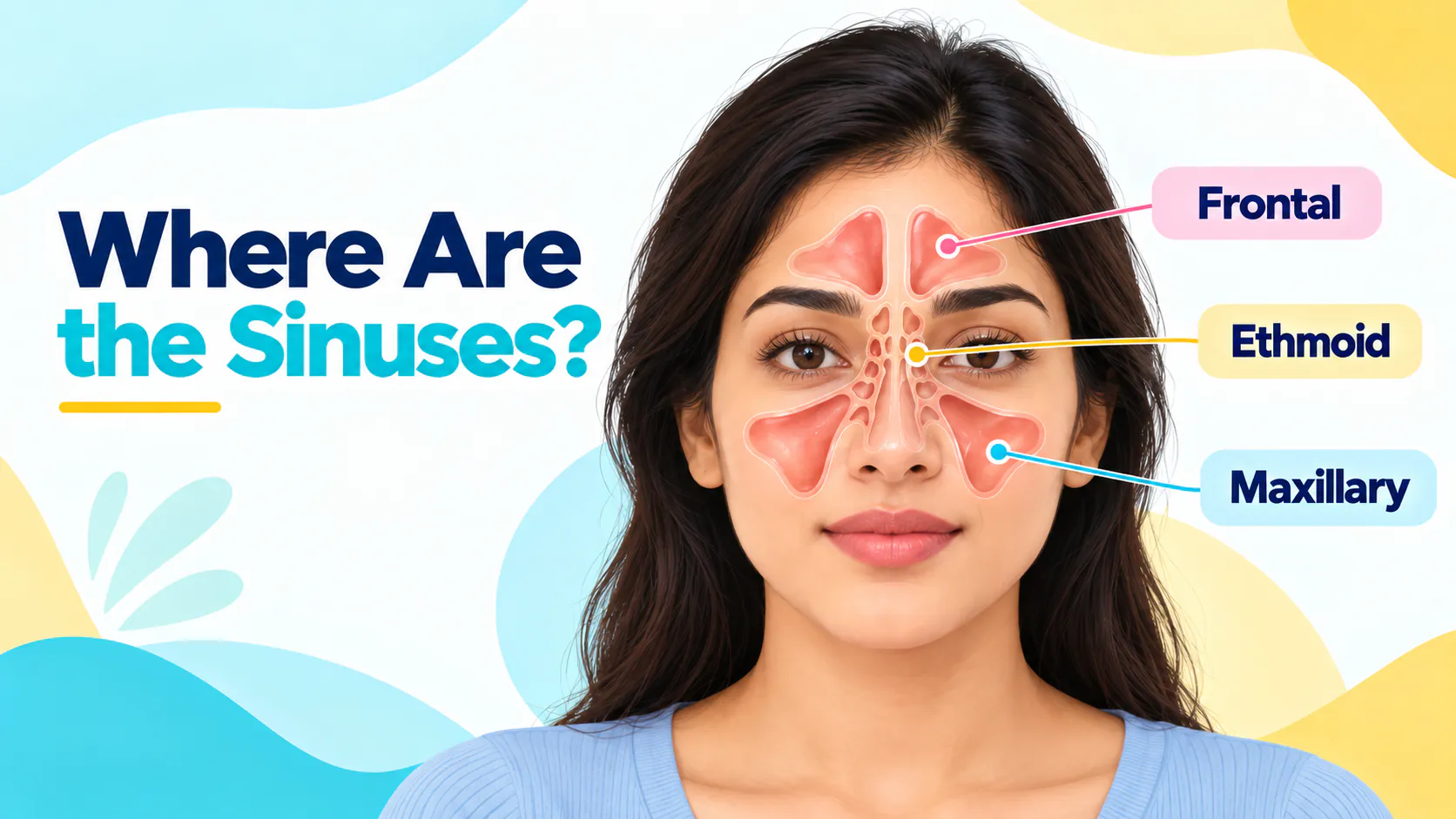
A sinus headache is most likely during an acute sinus infection, usually after a cold. The pain or pressure is over the affected sinus and comes with a blocked nose, thick mucus, reduced sense of smell and sometimes fever. Problems in the maxillary sinus can cause cheek pain and an ache in the upper teeth.
Long-term (chronic) sinusitis more often causes congestion, facial pressure and loss of smell than severe headaches. Nasal swelling from allergic rhinitis can also add to facial pressure.
A headache without any nose symptoms is rarely caused by the sinuses.
How Is the Cause of the Headache Assessed?
Your doctor will ask about the pattern of your headaches, possible triggers, nose symptoms and the medicines you use. They will examine your nose and face.
An ENT specialist may look inside your nose with a thin camera (nasal endoscopy). A CT scan of the sinuses is needed only in selected cases, such as long-lasting sinus symptoms or suspected complications. Not everyone needs a scan.
If migraine or another headache type seems likely, your doctor may refer you to a neurologist.
How Is a Sinus Headache Treated?
If Sinus Inflammation Is the Cause
- Saline nasal sprays or rinses, using only distilled, sterile, or boiled and cooled water
- Steroid nasal sprays to reduce swelling, as prescribed
- Pain relief at an age-appropriate dose, as advised by your doctor or pharmacist
- Decongestant nasal sprays for no more than three days
- Treating allergies if they play a part
Antibiotics are needed only when a doctor finds a bacterial sinus infection likely. They do not help migraine or most sinus headaches.
If Migraine or Another Headache Is the Cause
Migraine is treated differently. Your doctor may suggest:
- Taking pain relief early in an attack
- Specific migraine medicines, prescribed by a doctor
- Preventive medicines if attacks are frequent
- Identifying and avoiding triggers, such as poor sleep, skipped meals, stress, dehydration or long screen time
- Keeping a headache diary
Taking painkillers too often can itself cause more headaches, known as medication-overuse headache. Repeated courses of sinus medicines or antibiotics will not help migraine.
When Should You Seek Medical Care?
Get emergency care right away if you have:
- A sudden, very severe headache
- Headache with fever and a stiff neck, or with confusion
- Weakness, numbness, difficulty speaking, or vision loss or double vision
- Swelling or redness around the eye
- A headache after a head injury
Book an ENT assessment or see your doctor if:
- You get frequent “sinus headaches”
- Sinus medicines are not helping
- You need painkillers often
- Sinus symptoms last more than 10 days
- Your headache pattern has changed, especially after age 50

