


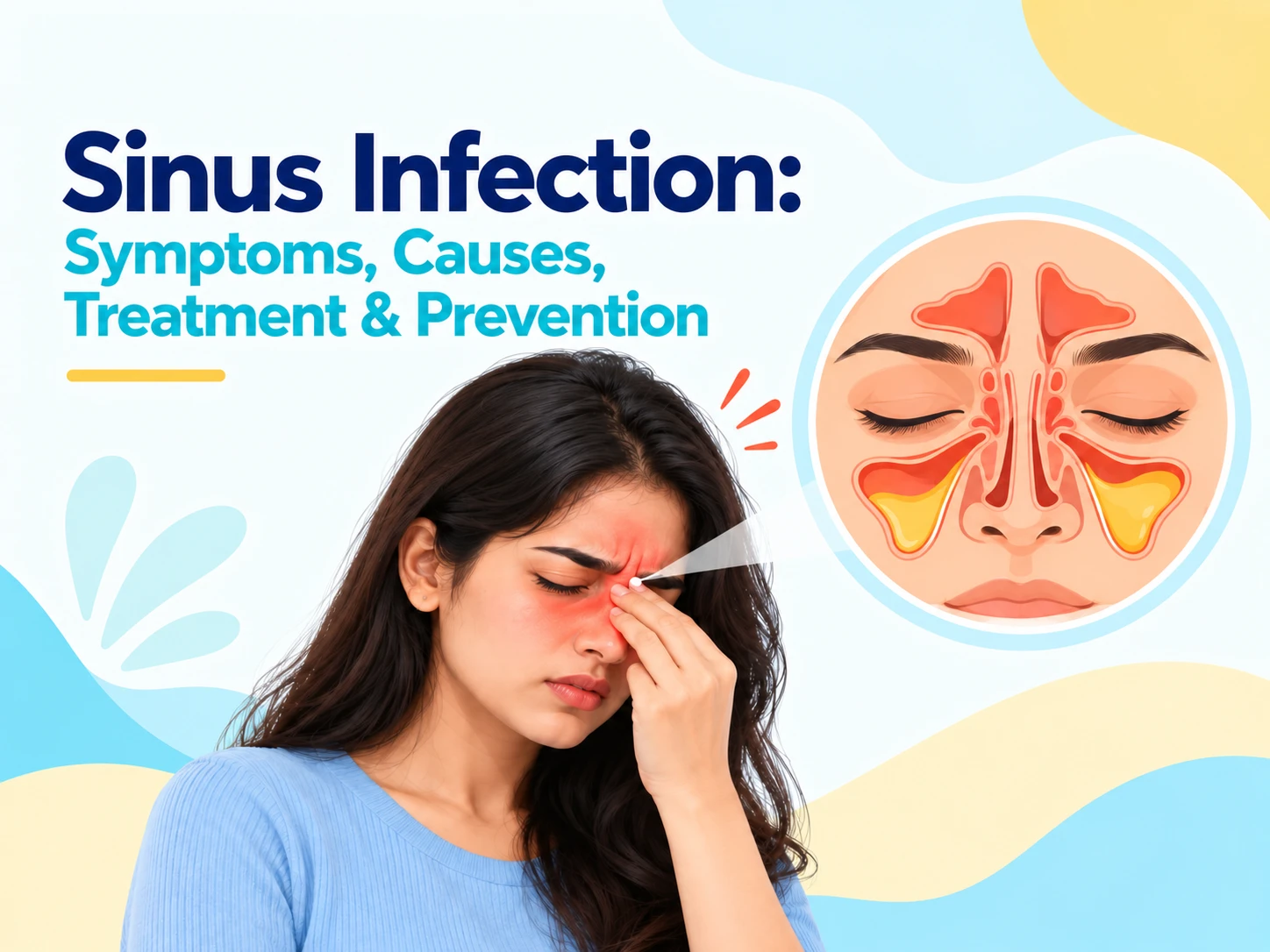
A sinus infection, commonly called sinusitis, occurs when the lining of the sinuses becomes inflamed. It often develops after a cold, although allergies and other conditions can also cause sinus inflammation. It commonly causes a stuffy nose, thick mucus and pressure around the face.
Most sinus infections get better on their own with simple home care. However, some last longer or keep coming back and need a doctor's help. This guide explains the symptoms, causes, treatment and prevention of a sinus infection, and when to see an ENT specialist.
What Is a Sinus Infection (Sinusitis)?
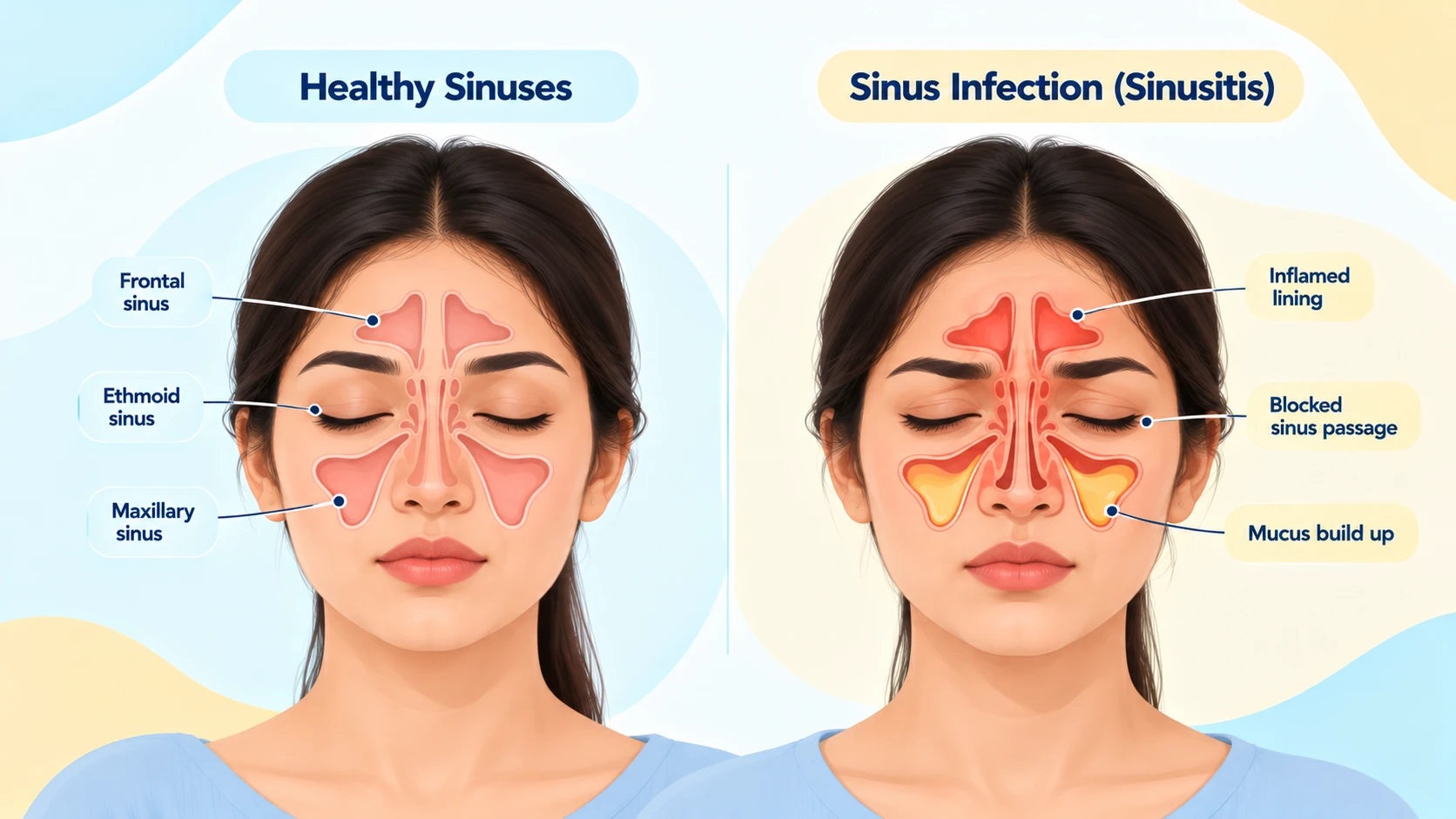
Your sinuses are small, air-filled spaces in the bones of your face: in your forehead, in your cheeks, between your eyes and behind your nose. They are lined with a thin layer that makes mucus. Normally, this mucus drains into your nose and keeps it moist and clean.
Sinusitis is inflammation of this lining. When the lining swells, mucus cannot drain properly. It builds up inside the sinuses and causes pressure and pain, and germs can grow in it.
Doctors describe sinusitis by how long it lasts:
- Acute sinusitis: symptoms last less than four weeks. This is the most common type.
- Subacute sinusitis: symptoms last between four and 12 weeks.
- Chronic sinusitis: symptoms last 12 weeks or longer, even with treatment.
What Causes a Sinus Infection?
Anything that causes swelling in the nose or blocks the sinuses can lead to a sinus infection. Common causes include:
- Viruses: most sinus infections start with a common cold or flu virus.
- Bacteria: less often, bacteria grow in the trapped mucus, sometimes after a cold.
- Allergies: dust, pollen or pet allergies can make the nasal lining swell and block the sinuses.
- Nasal blockages: nasal polyps (soft growths inside the nose) or a deviated septum (a bent wall between the nostrils) can stop mucus from draining.
- Irritants: smoking, secondhand smoke and air pollution can irritate the nose and sinuses.
People with asthma, frequent allergies or a weak immune system are more likely to get sinus problems. Sinusitis itself is not contagious, but the cold and flu viruses that often trigger it can spread to others.
Common Symptoms of a Sinus Infection
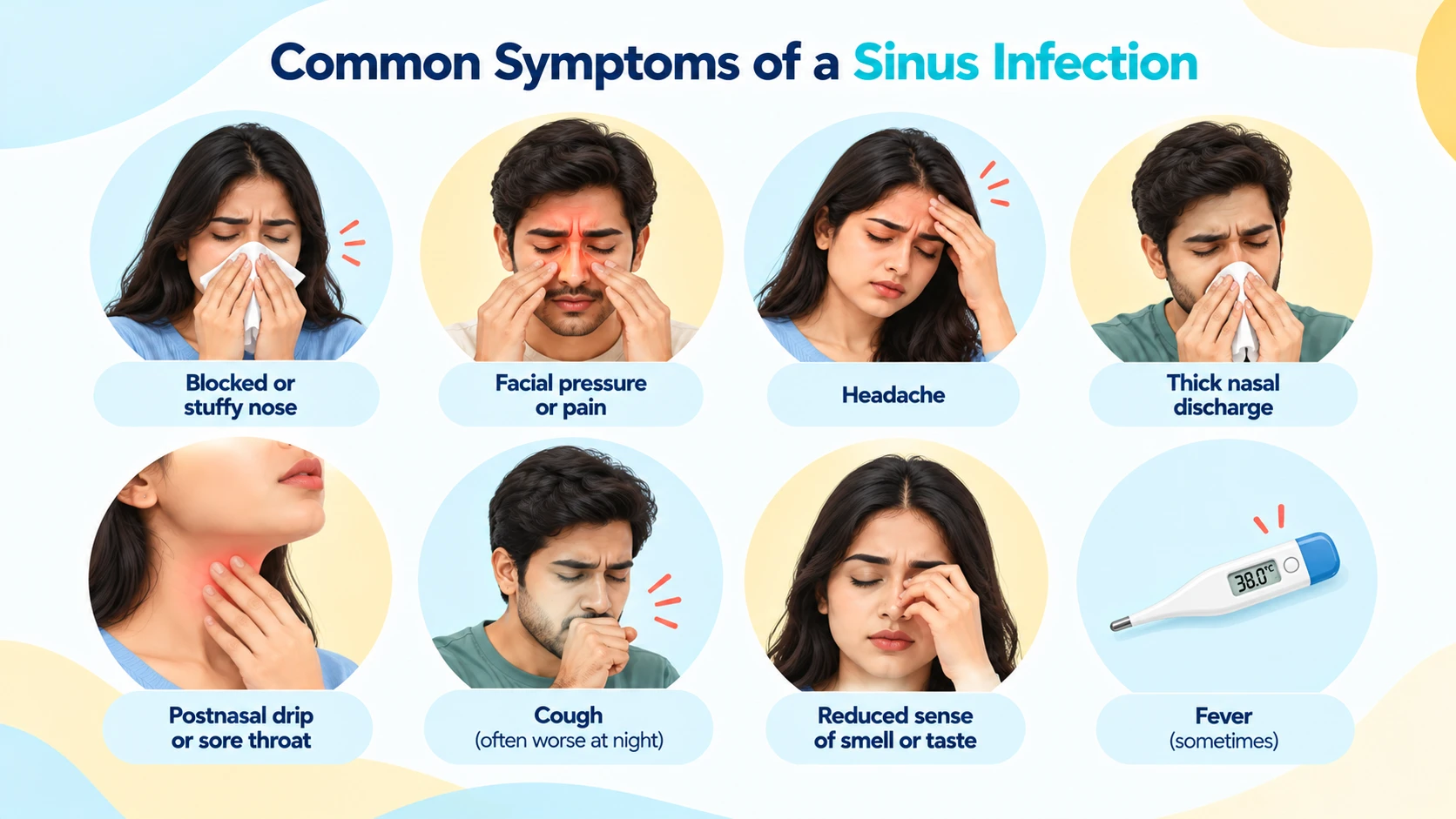
The most common symptoms of a sinus infection are:
- Blocked or stuffy nose
- Thick yellow or green mucus from the nose
- Mucus dripping down the back of the throat (postnasal drip)
- Pain, pressure or tenderness around the eyes, cheeks or forehead, often worse when bending forward
- Reduced sense of smell or taste
- Headache
- Cough, often worse at night
Some people also have a sore throat from postnasal drip, bad breath, tiredness, fever, or pain in the upper teeth or ears.
Yellow or green mucus does not always mean a bacterial infection, and mucus colour alone cannot determine whether antibiotics are needed.
How Is a Sinus Infection Treated?
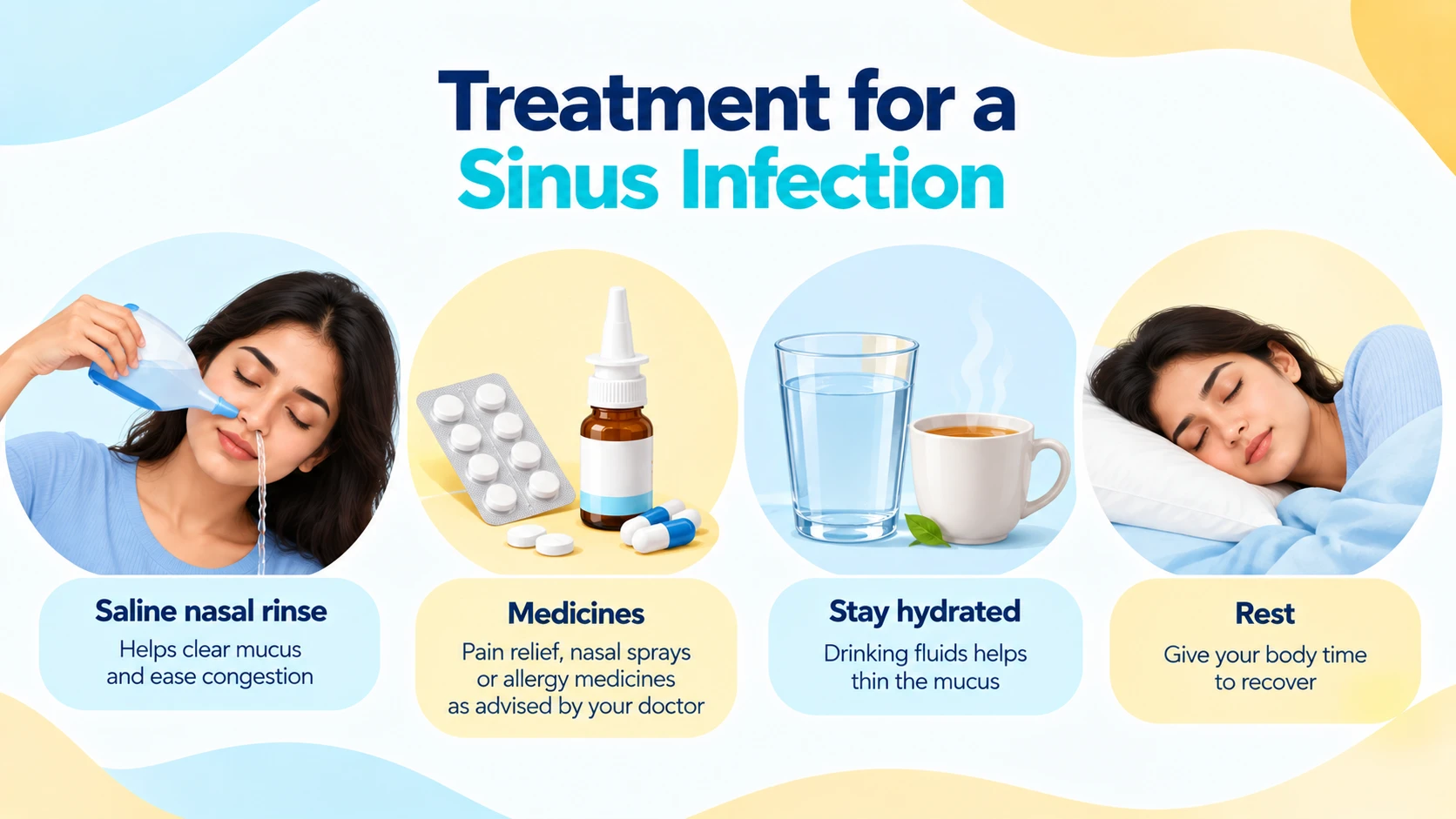
Most sinus infections are caused by viruses and get better on their own. Treatment focuses on easing symptoms and helping the sinuses drain.
Home Care for Symptom Relief
- Rest and drink plenty of fluids to thin the mucus.
- Use a saline nasal spray or rinse to clear mucus from the nose. If you use a rinse bottle or neti pot, use only sterile, distilled, or boiled and cooled water. Never use plain tap water.
- Take a warm shower or use a clean humidifier, which may help you feel more comfortable. Avoid inhaling steam over bowls of hot water.
- Place a warm, damp cloth over your cheeks and forehead to ease pressure.
- Sleep with your head slightly raised to help mucus drain.
Medical Treatment
Your doctor or pharmacist may suggest medicines to ease symptoms:
- Pain relief: paracetamol or ibuprofen at an age-appropriate dose for headache, facial pain or fever.
- Decongestant nasal sprays: these can relieve a blocked nose, but use them for no more than three days. Longer use can make the blockage worse.
- Steroid nasal sprays: a doctor may prescribe these to reduce swelling, especially if allergies play a part.
- Antihistamines: may help if allergies are triggering your symptoms.
Antibiotics: Most sinus infections get better without antibiotics, because they are usually caused by viruses. A doctor may consider bacterial sinusitis when symptoms persist for more than 10 days without improvement, become severe, or worsen after initially improving. Even then, antibiotics are not always necessary. If antibiotics are prescribed, take them exactly as directed and complete the course.
Treatment for Chronic or Recurrent Sinusitis
If sinusitis lasts 12 weeks or more, or keeps coming back several times a year, an ENT specialist can look for the underlying cause. They may examine the inside of your nose with a thin camera (nasal endoscopy) or recommend a CT scan of the sinuses.
Treatment usually includes regular saline rinses, steroid nasal sprays and managing allergies. If symptoms remain uncontrolled despite appropriate treatment, an ENT specialist may discuss surgery in selected cases, depending on examination findings.
How to Prevent Sinus Infections
You cannot prevent every sinus infection, but these steps lower your risk:
- Wash your hands often to avoid catching colds and flu
- Get your yearly flu vaccine
- Keep allergies under control with your doctor's advice
- Avoid smoking, secondhand smoke and polluted air where possible
- If indoor air is dry, a properly cleaned humidifier may improve comfort
- Your doctor may recommend saline rinses if you experience recurring nasal congestion
When Should You See a Doctor for a Sinus Infection?
Get urgent medical care right away if you have:
- Swelling or redness around one or both eyes
- Changes in vision, such as double or blurred vision
- A severe headache, stiff neck or confusion
- Swelling on the forehead
These signs are rare, but they can mean the infection has spread beyond the sinuses.
See a doctor if you have:
- Symptoms that last more than 10 days without getting better
- Symptoms that get worse after first starting to improve
- A high fever or severe facial pain
- Sinus infections several times a year
- Symptoms that last 12 weeks or longer
If your child has a cold that lasts more than 10 days, a high fever, or swelling around the eyes, see a doctor promptly.
Conclusion
A sinus infection is a common problem that usually starts after a cold. Many cases start improving within 7–10 days with rest, fluids and simple home care, and antibiotics are needed only in some cases. See a doctor if your symptoms last longer, get worse or keep coming back.
For long-lasting or repeated sinus problems, Docube's ENT specialists in Bengaluru can help. Book a consultation with a Docube ENT doctor today.
Disclaimer: This article is for general information only and does not replace professional medical advice. Please consult a qualified doctor for diagnosis and treatment.

