


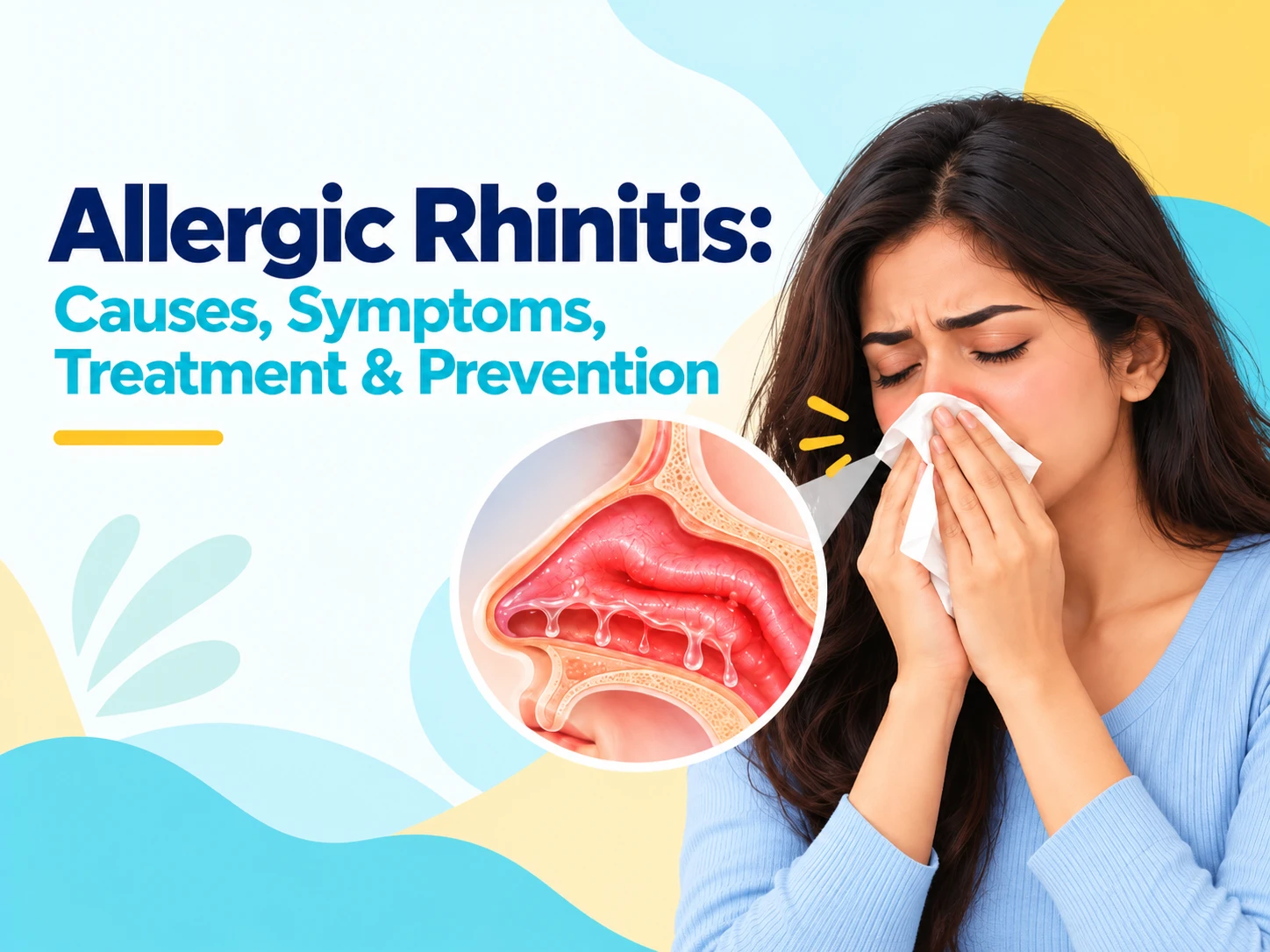
Do you sneeze again and again every morning, or feel that your nose is always blocked? If these symptoms keep coming back, especially around dust, pollen or pets, you may have allergic rhinitis. It is one of the most common nasal problems in India and affects both adults and children.
This guide explains what allergic rhinitis is, its symptoms and causes, how it is treated, how to reduce flare-ups, and when to see a doctor.
What Is Allergic Rhinitis?
Allergic rhinitis is inflammation inside the nose caused by an allergy. When you breathe in something you are allergic to (an allergen), your immune system overreacts and releases chemicals such as histamine. These cause sneezing, a runny nose and swelling inside the nose.
Not all rhinitis is allergic. Non-allergic rhinitis causes similar symptoms, but it is triggered by things like smoke, strong smells or weather changes, without an allergic reaction.
Allergic rhinitis can follow two patterns, and many people have both:
- Seasonal: symptoms appear at certain times of the year, usually because of pollen. This is often called hay fever.
- Perennial (year-round): symptoms continue through the year, usually because of indoor allergens such as dust mites or mould.
Allergic rhinitis is not an infection, and it is not contagious.
Common Symptoms of Allergic Rhinitis
Nose symptoms:
- Sneezing, often in bouts
- Runny nose with clear, watery mucus
- Blocked or stuffy nose
- Itchy nose
- Mucus dripping down the back of the throat (postnasal drip)
Eye and throat symptoms:
- Itchy, watery or red eyes
- Itchy throat or roof of the mouth
- Cough, often from postnasal drip
Effects on daily life: A blocked nose can disturb sleep, leading to tiredness and poor concentration the next day. Children may breathe through the mouth or snore. Allergic rhinitis can also make asthma harder to control, and long-term swelling in the nose can contribute to sinus infections.
What Causes Allergic Rhinitis?
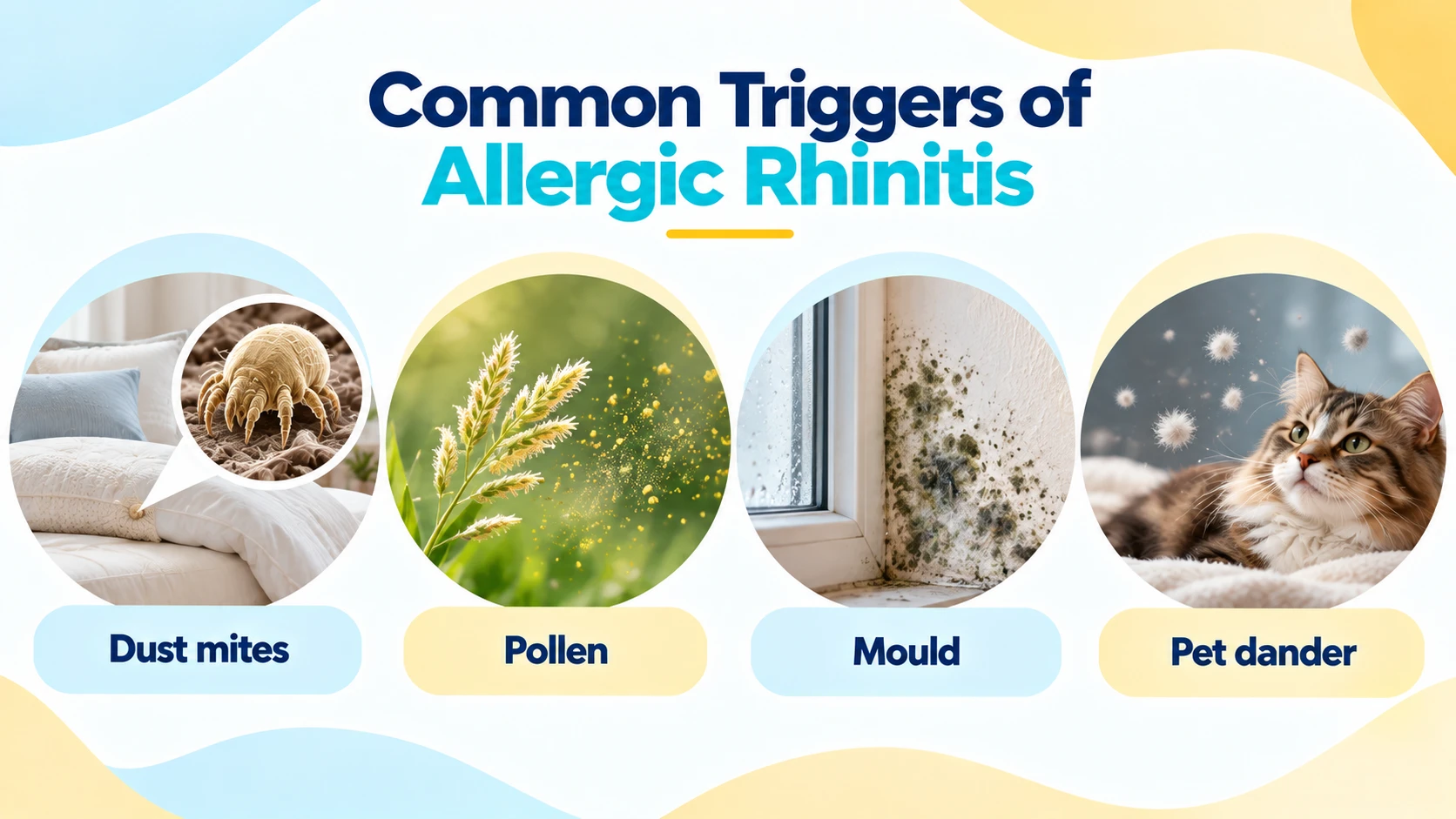
Allergic rhinitis is caused by allergens, which are harmless substances that your immune system reacts to. Common allergens include:
- House dust mites: tiny insects that live in bedding, mattresses, pillows and curtains. They are one of the most common indoor triggers.
- Pollen: from trees, grasses and weeds, usually causing seasonal symptoms.
- Mould: found on damp walls and in bathrooms, and often worse during the monsoon.
- Animal dander: tiny skin flakes and saliva from cats, dogs and other pets.
- Cockroaches: their droppings can trigger allergies in some homes.
Irritants are different from allergens. Cigarette smoke, incense smoke, perfumes, strong cleaning products and vehicle pollution do not cause an allergy, but they can make an irritated nose feel worse.
You are more likely to have allergic rhinitis if you have asthma or eczema, or if allergies run in your family.
How Is Allergic Rhinitis Treated?
A doctor usually diagnoses allergic rhinitis from your symptoms and history and by examining your nose. Treatment aims to control symptoms so they no longer affect daily life. Because allergy is not an infection, antibiotics do not treat it.
Medicines and Nasal Sprays
- Antihistamines: tablets or nasal sprays that relieve sneezing, itching and a runny nose. Newer types are less likely to cause drowsiness.
- Steroid nasal sprays: reduce swelling inside the nose and are often the most effective option for a blocked nose and persistent symptoms. They work best when used regularly, and the full effect may take several days.
- Decongestant nasal sprays: give quick relief for a blocked nose, but should not be used for more than three days. Longer use can make the blockage worse.
Use medicines as advised by your doctor or pharmacist, and check with a doctor before using them for children or during pregnancy.
Saline Care and Trigger Control
Saline nasal sprays or rinses wash allergens and mucus out of the nose. If you use a rinse bottle, use only distilled, sterile, or boiled and cooled water. Reducing your exposure to triggers is also an important part of treatment (see the next section).
When Allergy Testing or Immunotherapy May Help
If symptoms are not controlled, your doctor may suggest a skin prick test or blood test to identify your allergens. For some people, allergen immunotherapy may be an option. This involves taking small, regular doses of the allergen, as injections or tablets under the tongue, usually over several years, to reduce the body's reaction. It is given only under specialist supervision.
How Can You Reduce Allergy Flare-Ups?
These steps can lower your exposure to common triggers, although they may not prevent all symptoms:
- Wash bedsheets and pillow covers every week in hot water
- Damp-dust and vacuum instead of dry sweeping, which stirs up dust
- Fix damp patches and leaks, and keep bathrooms well ventilated
- Keep pets out of the bedroom
- Close windows on dusty or high-pollen days, and wash your face after coming indoors
- Avoid smoking, incense and strong perfumes indoors
- Wear a mask while cleaning or in heavy traffic
When Should You See a Doctor?
See a doctor if:
- Symptoms occur most days or affect your sleep, work or school
- Medicines from the pharmacy do not help
- You find yourself using decongestant sprays often
- Your asthma is getting worse
- You keep getting sinus or ear infections
- You have a blockage on one side only, nosebleeds or loss of smell, which are not typical of allergy
An ENT specialist can check for other causes of nasal blockage, such as nasal polyps or a deviated septum.
Get emergency care right away if you have difficulty breathing, wheezing that does not settle, or swelling of the lips, face or throat.
Conclusion
Allergic rhinitis is common, but it does not have to control your life. Understanding your triggers, reducing exposure and using the right treatment can bring real relief. If your symptoms are frequent, affect your sleep or do not respond to usual treatment, Docube's ENT specialists in Bengaluru can help find the right plan for you. Book a consultation with a Docube ENT doctor today.
Disclaimer: This article is for general information only and does not replace professional medical advice. Please consult a qualified doctor for diagnosis and treatment.

