



If you have psoriasis and your fingers have started to swell, your heels ache in the morning, or your joints feel stiff, it may be more than a coincidence. These can be early signs of psoriatic arthritis (PsA), a type of inflammatory arthritis linked to psoriasis.
PsA is often missed because its early signs appear in the skin, nails and tendons, not just the joints. This guide explains how to recognise psoriatic arthritis symptoms, how PsA is diagnosed and the treatment options available.
What Is Psoriatic Arthritis?
Psoriatic arthritis is a long-term inflammatory condition that affects the joints and the places where tendons and ligaments attach to bone. It is caused by an overactive immune system and is closely linked to psoriasis, a skin condition that causes red, scaly patches.
Up to about 1 in 3 people with psoriasis may develop PsA. It usually appears several years after psoriasis begins, but sometimes joint symptoms come first or at the same time.
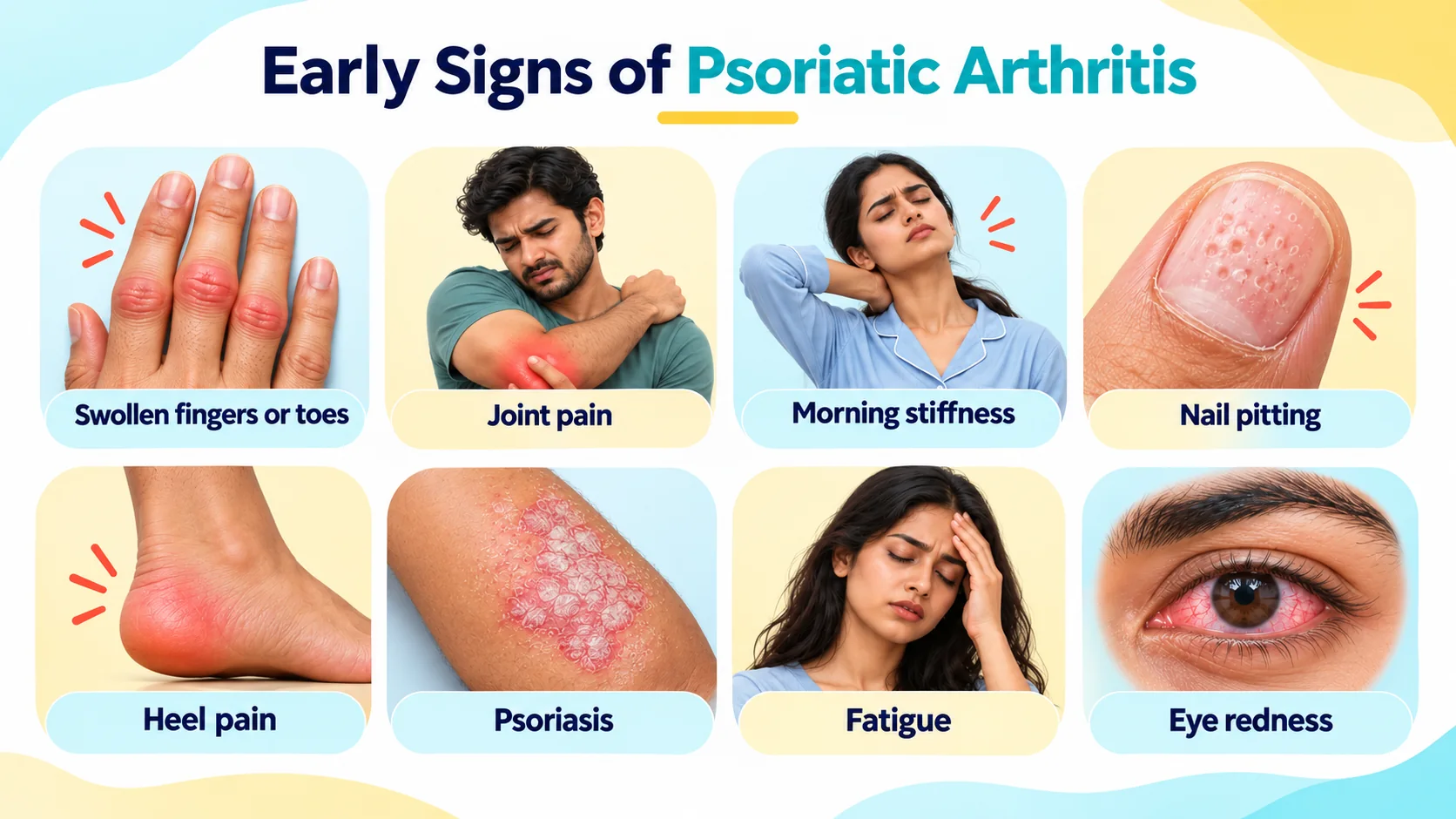
Early Signs That Are Easy to Miss
- Dactylitis: a whole finger or toe swells up like a sausage
- Heel or Achilles pain: pain at the back or bottom of the heel, especially in the morning
- Nail changes: small pits in the nails (nail pitting), nails lifting from the nail bed, or thickened, crumbly nails
- Morning stiffness: joints feel stiff for more than 30 minutes after waking
- Back or buttock pain: that improves with movement rather than rest
- Tiredness that does not improve with sleep
Psoriasis joint pain is often dismissed as ordinary aches, so it helps to look at these signs together.
Five Common Patterns of Joint Involvement
PsA can affect the body in different ways, and patterns can change over time:
- A few joints on one side: often a knee, ankle or a few fingers or toes
- Many joints on both sides: similar to rheumatoid arthritis
- The end joints of the fingers and toes: often with nail changes
- The spine and sacroiliac joints: causing back and buttock pain, similar to ankylosing spondylitis
- Severe, destructive arthritis (arthritis mutilans): rare, but can deform the fingers and toes
Skin, Nail, Eye and Tendon Symptoms
- Skin: red, scaly patches, often on the scalp, elbows, knees, lower back, or between the buttocks
- Nails: pitting, ridges, discolouration or separation from the nail bed
- Eyes: a painful red eye with blurred vision or sensitivity to light (uveitis), which needs urgent care
- Tendons and ligaments: pain and swelling where they attach to bone, such as the heel, sole of the foot or elbow
The severity of skin psoriasis does not always match the severity of joint disease.
Causes and Risk Factors
The exact cause is not known. A mix of genes, immune changes and triggers is thought to be involved. Risk factors include:
- Having psoriasis, especially affecting the nails, scalp or the area between the buttocks
- More severe or long-standing psoriasis
- A family history of psoriasis or PsA
- Excess weight
- Possibly, injury to a joint or certain infections
How Is PsA Diagnosed?
There is no single test for psoriatic arthritis. A rheumatologist makes the diagnosis based on:
- Your history and examination: joints, skin, nails, tendons and spine
- Blood tests: CRP and ESR for inflammation. Rheumatoid factor is usually negative, which helps tell PsA apart from rheumatoid arthritis.
- Imaging: X-rays, and joint ultrasound or MRI, which can show early inflammation in joints and tendons
Normal blood tests do not rule out PsA.
Treatment by Severity and Body Area
Psoriatic arthritis treatment aims to control inflammation, relieve pain, protect the joints and improve the skin. The choice depends on which areas are affected and how severe the disease is.
- Mild joint symptoms: anti-inflammatory painkillers (NSAIDs) and, for a single troublesome joint, a steroid injection
- Ongoing arthritis in the arms and legs: conventional disease-modifying medicines (DMARDs), such as methotrexate
- More active disease, spine involvement, or tendon and finger swelling: biologic medicines or other targeted treatments, which can also help the skin
Because PsA affects both skin and joints, care often involves a rheumatologist and a dermatologist working together. Medicines need regular follow-up and blood tests, so never start or stop them without medical advice.

Exercise, Weight Management and Joint Protection
- Stay active: regular, gentle exercise keeps joints flexible and muscles strong. A physiotherapist can create a safe plan.
- Manage your weight: excess weight adds stress to joints and may reduce how well some treatments work.
- Stop smoking: it can worsen both psoriasis and joint inflammation.
- Protect your joints: use supportive footwear, take breaks and pace your activities.
Complications and Monitoring
Without treatment, PsA can cause permanent joint damage. It is also linked with a higher risk of heart disease, high blood pressure, diabetes, fatty liver, eye inflammation and low mood. Regular check-ups help monitor the disease, adjust treatment and screen for these conditions.
When Should a Person with Psoriasis See a Rheumatologist?
See a rheumatologist if you have psoriasis, or a family history of it, and:
- A swollen finger or toe
- Joint pain or swelling
- Heel or Achilles pain
- Morning stiffness lasting more than 30 minutes
- Back pain that improves with movement
- Nail changes along with joint pain
Get urgent care for a painful red eye with vision changes, or a hot, swollen joint with fever.

