



Back pain is very common, and most of it comes from strain or posture. But if you are young, your back pain has lasted for months, and it is worst in the morning and better after exercise, it may be something different: ankylosing spondylitis (AS).
AS is often diagnosed years after symptoms begin, because it is mistaken for ordinary back pain. Recognising it early allows treatment that can ease pain and protect the spine. This guide explains the early symptoms, causes, diagnosis and treatment of ankylosing spondylitis.
What Is Ankylosing Spondylitis?
Ankylosing spondylitis is a long-term inflammatory arthritis that mainly affects the spine and the sacroiliac (SI) joints, where the spine meets the pelvis. It belongs to a group of conditions called axial spondyloarthritis.
Inflammation causes pain and stiffness. Over many years, in some people, it can lead to new bone forming between the vertebrae, making parts of the spine stiff or fused.
Early Symptoms and the Inflammatory Back-Pain Pattern
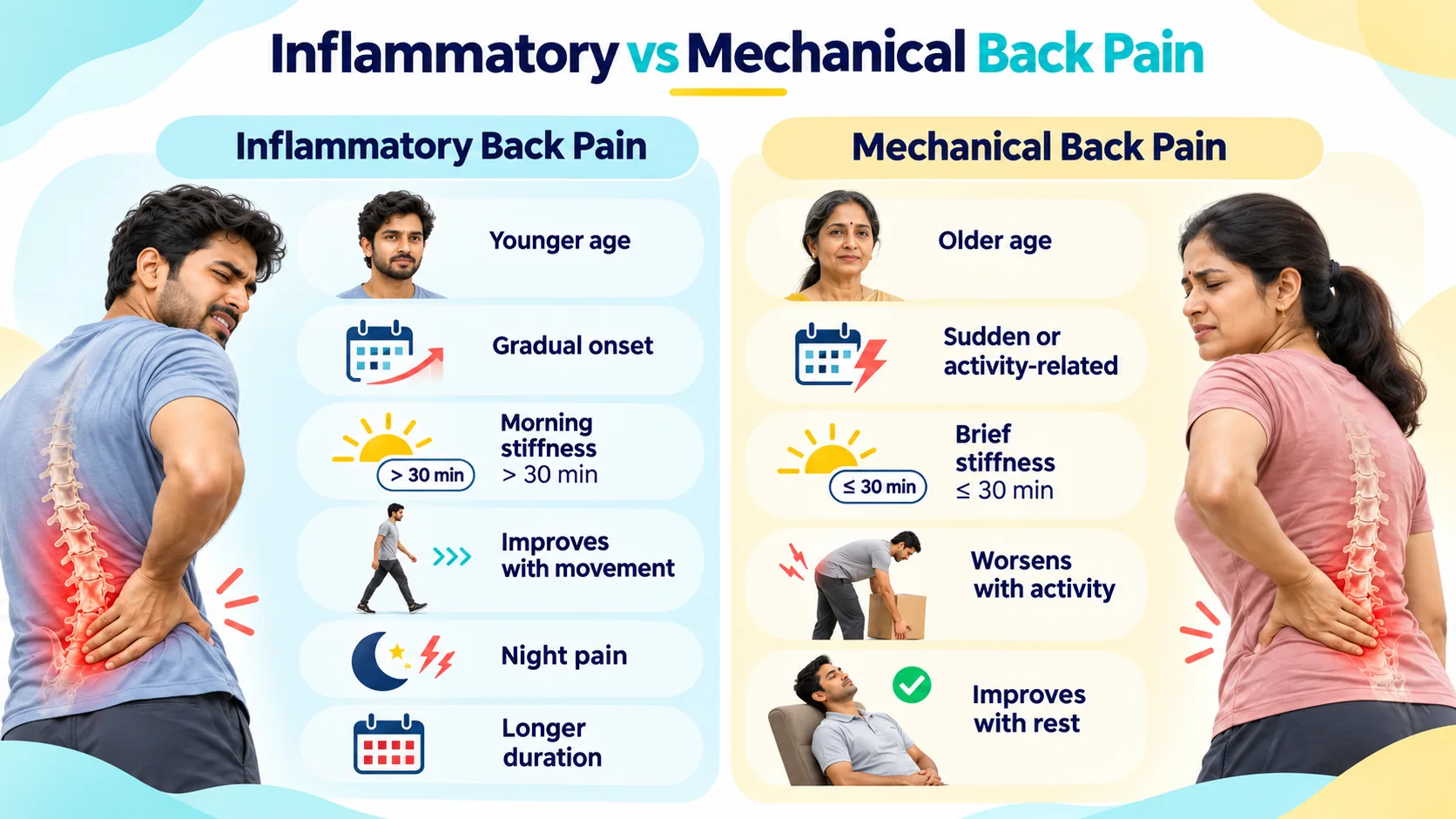
The main early symptom is inflammatory back pain, which is different from ordinary (mechanical) back pain:
| Feature | Inflammatory back pain (possible AS) | Mechanical back pain |
|---|---|---|
| Age it starts | Usually before 45, often in the teens to 30s | Any age |
| How it starts | Gradually, over weeks or months | Often suddenly, after strain |
| Duration | More than three months | Often improves in weeks |
| Morning stiffness | More than 30 minutes | Short or none |
| Effect of exercise | Improves | Often worsens |
| Effect of rest | Worsens | Improves |
| Night pain | Often wakes you in the second half of the night | Less common |
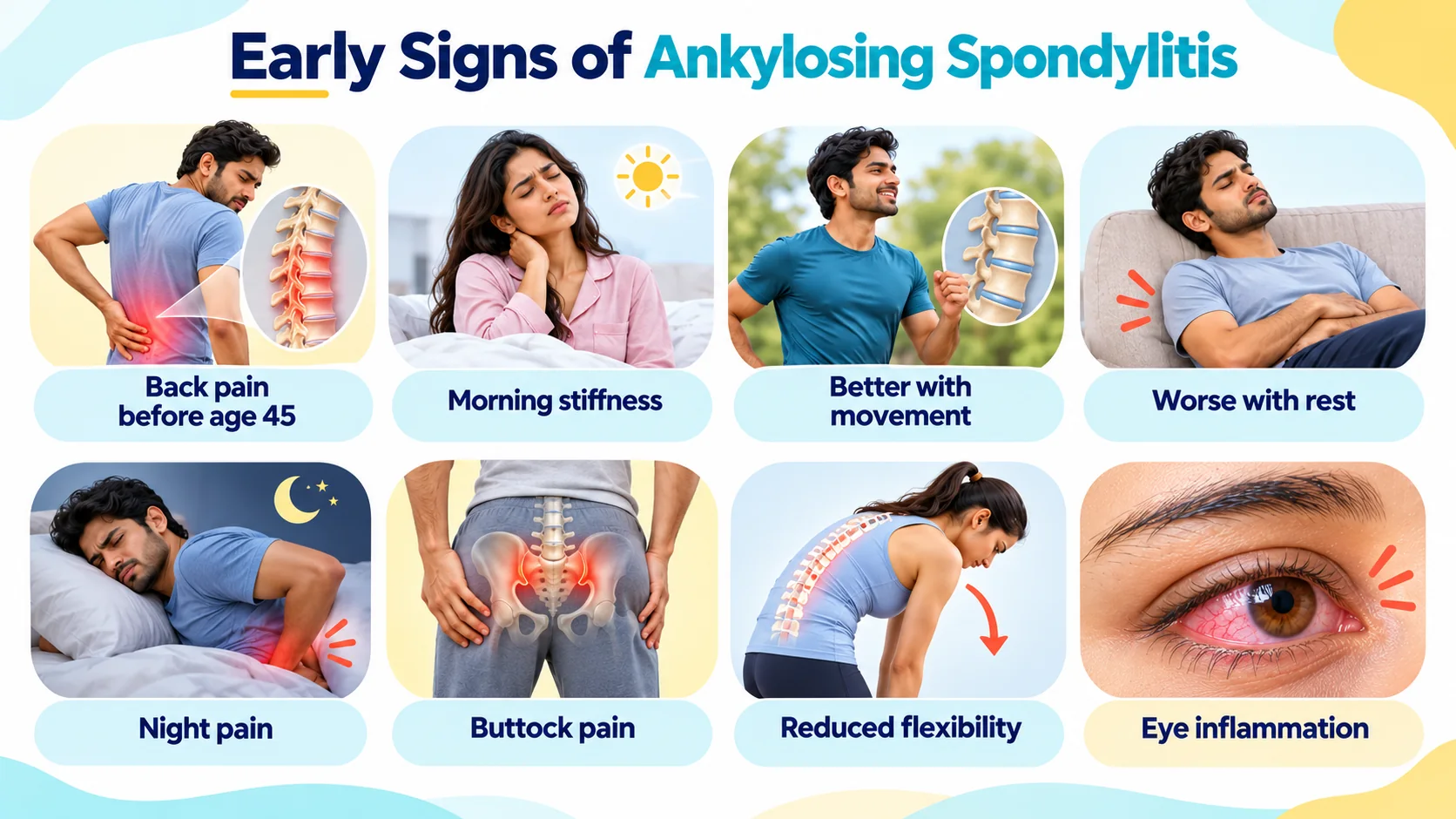
Pain in the buttocks, sometimes switching from one side to the other, is another common early sign.
Other Joints and Organs That May Be Affected
AS symptoms can go beyond the back:
- Heel or Achilles tendon pain, where tendons attach to bone (enthesitis)
- Pain and swelling in hips, knees, ankles or shoulders
- Eye inflammation (uveitis): a painful red eye with blurred vision and sensitivity to light. This needs urgent medical care.
- Fatigue
- Chest pain or reduced chest expansion
- Links with psoriasis and inflammatory bowel disease
Causes, Genetics and HLA-B27
The exact cause is not known, but genes play a strong role. Many people with AS carry a gene called HLA-B27. However, most people with HLA-B27 never develop AS, so the gene alone does not cause the disease.
Inflammation of the SI joint, called sacroiliitis, is often one of the first changes seen in AS.
Who Is at Risk?
- People with a family history of AS or related conditions
- People who carry HLA-B27
- Young adults, as AS usually begins before 45
- Men are more often diagnosed with the classic form, but women are also affected and are often diagnosed later
How Is AS Diagnosed?
There is no single test. A rheumatologist uses:
- Your history: especially the pattern of back pain
- Examination: of spine movement, posture, chest expansion and joints
- Blood tests: CRP and ESR for inflammation, and HLA-B27
- Imaging: X-rays of the SI joints, and MRI, which can detect early inflammation before X-ray changes appear
Treatment: Exercise, NSAIDs and Advanced Medicines
Treatment aims to reduce pain and stiffness, keep the spine flexible and prevent long-term damage.
- Regular exercise: the foundation of treatment
- Anti-inflammatory painkillers (NSAIDs): usually the first medicine used
- Biologic medicines and other targeted treatments: for people whose symptoms are not controlled by NSAIDs
- Other medicines: some help joints in the arms and legs, but not the spine
- Surgery: rarely needed, for example a hip replacement in severe damage
Your rheumatologist will choose medicines based on your symptoms and overall health.
Posture, Physiotherapy and Daily Movement
- Do daily stretching and back-extension exercises
- Try swimming, which moves the whole spine gently
- Practise deep-breathing exercises to keep the chest flexible
- Sit and stand upright, and avoid slouching for long periods
- Use a firm mattress and a thin pillow
- Stop smoking, which can worsen AS
A physiotherapist can create a safe exercise plan for you.
Complications and Long-Term Monitoring
Without treatment, AS can lead to spinal stiffness, a stooped posture, thinning bones (osteoporosis) and a higher risk of spinal fractures. It can also cause repeated eye inflammation and, rarely, affect the heart and lungs. Regular follow-ups help track the disease and adjust treatment.
When Does Back Pain Need Rheumatology Assessment?
See a rheumatologist if:
- Your back pain started before 45 and has lasted more than three months
- It is worse in the morning or at night and better with exercise
- You have buttock, heel or joint pain with back pain
- You have had eye inflammation, psoriasis or bowel problems with back pain
Get urgent care if you have a painful red eye with blurred vision, back pain after a fall, or new numbness, weakness or loss of bladder control.

