



Most joint aches come and go. But if your joints stay swollen, stiff and painful for weeks, and the stiffness is worst in the morning, it may be a sign of rheumatoid arthritis (RA).
RA is a long-term autoimmune condition, and early treatment makes a real difference. Starting the right medicines in the first few months can help protect your joints from lasting damage. This guide explains the early signs of rheumatoid arthritis, its causes, how it is diagnosed and treated, and when to see a rheumatologist.
What Is Rheumatoid Arthritis?
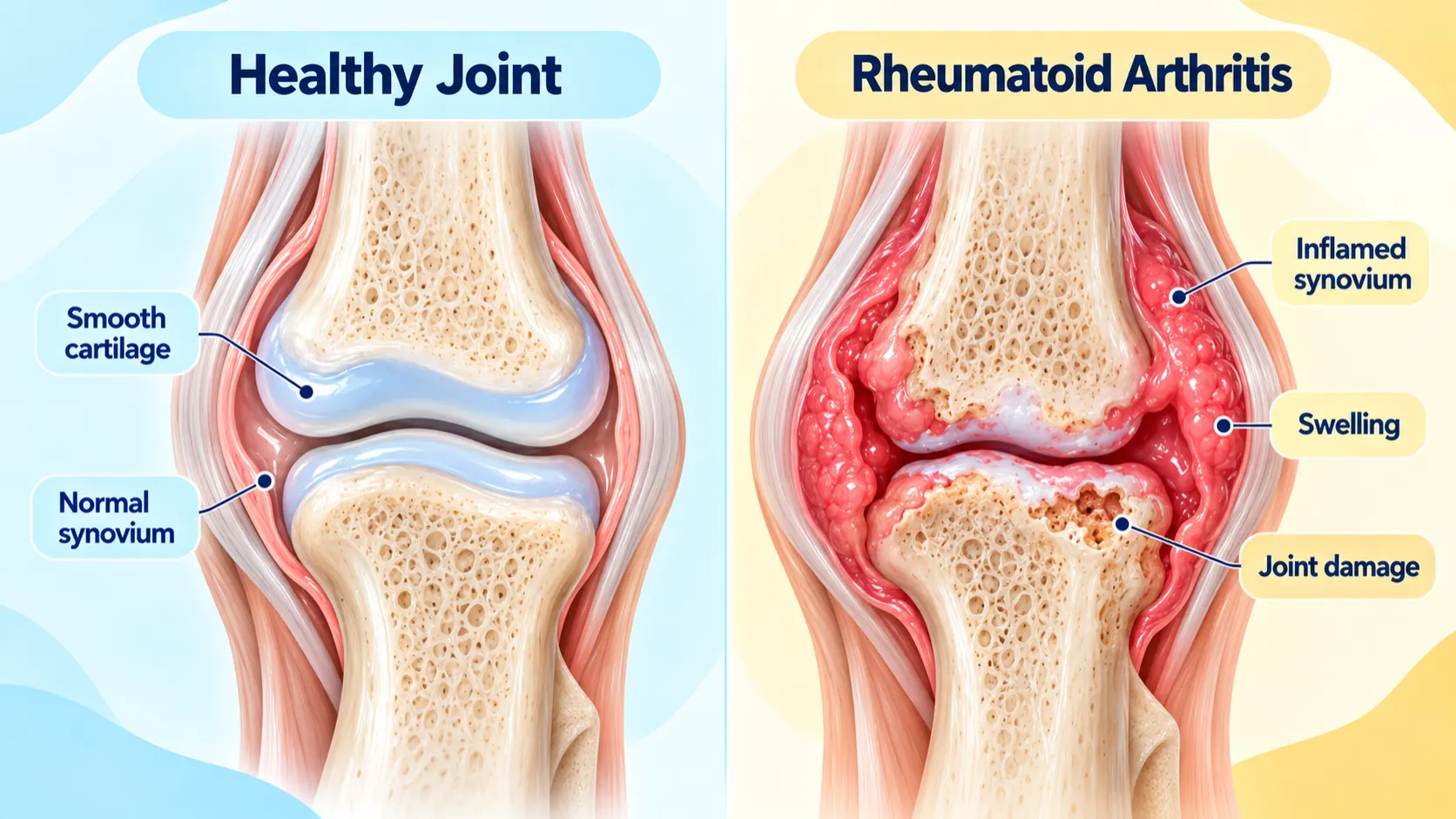
Rheumatoid arthritis is an autoimmune arthritis. This means the immune system, which normally fights germs, mistakenly attacks the lining of the joints (the synovium).
The lining becomes inflamed and thickened, causing pain, swelling and stiffness. Over time, this inflammation can damage cartilage and bone, and change the shape of the joint. RA can also affect other parts of the body, such as the eyes, lungs and heart.
Early Warning Signs and How They Usually Begin
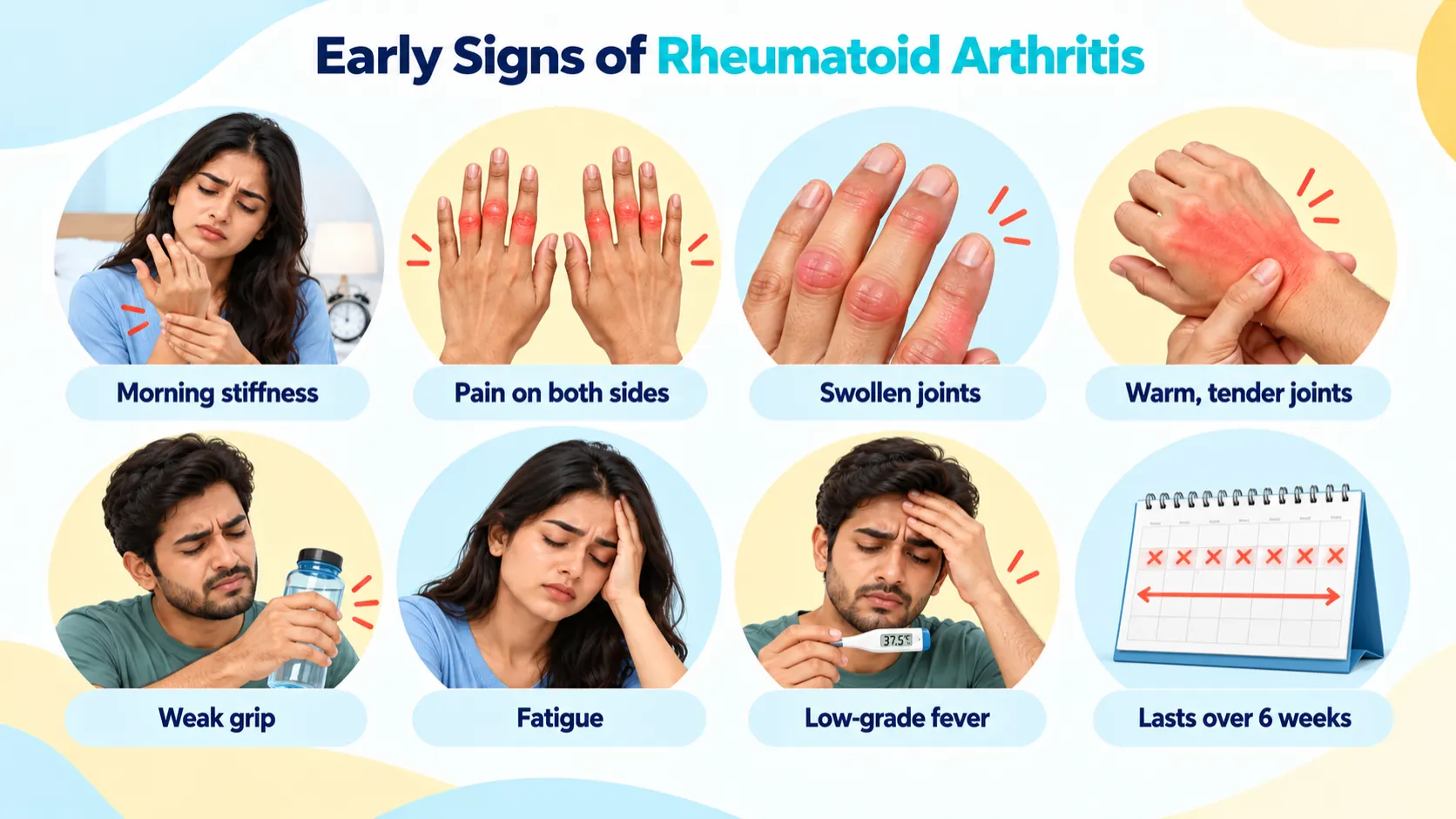
RA usually starts slowly, over weeks or months. Common early warning signs of RA include:
- Morning stiffness that lasts more than 30 minutes, often an hour or longer
- Pain and swelling in small joints, especially the knuckles and middle finger joints, wrists and the balls of the feet
- The same joints on both sides of the body being affected
- Tiredness, feeling generally unwell or a mild fever
- Difficulty with simple tasks, such as making a fist, opening jars or buttoning clothes
The key difference from ordinary aches is the pattern: inflammatory joint pain is often worse after rest and improves as you move, while wear-and-tear pain tends to get worse with use.
Common Symptoms in Joints and Beyond
As RA progresses, symptoms can include:
- Warm, swollen, tender joints
- Pain in larger joints such as knees, elbows, shoulders and ankles
- Firm lumps under the skin near joints (rheumatoid nodules)
- Reduced movement and, over time, joint deformity
RA can also affect the rest of the body, causing:
- Ongoing fatigue and low energy
- Dry eyes or dry mouth
- Anaemia (low haemoglobin)
- Inflammation in the lungs or around the heart, in some people
What Causes RA and Who Is at Higher Risk?
The exact cause of RA is not known. It is thought to result from a mix of genes and environmental triggers. Factors that increase the risk include:
- Being a woman: women are about two to three times more likely to develop RA
- Age: RA can start at any age but most often begins between 30 and 60
- Family history of RA or other autoimmune conditions
- Smoking: one of the strongest preventable risk factors
- Excess weight
- Gum disease, which has been linked to RA in research
How RA Differs from Osteoarthritis
How Do Doctors Diagnose RA?
There is no single test for RA. A doctor combines your symptoms, a joint examination and test results. Common tests used to diagnose RA include:
- Rheumatoid factor (RF) and anti-CCP antibodies: blood tests that are often positive in RA, though some people with RA test negative
- ESR and CRP: blood tests that show inflammation in the body
- Imaging: X-rays, and joint ultrasound or MRI, which can show joint inflammation and early damage
A normal blood test does not always rule out RA, which is why a rheumatologist's assessment matters.
How Is Rheumatoid Arthritis Treated?
There is no cure for RA yet, but modern treatment can control the disease very well. The aim is to reduce inflammation, protect the joints and, ideally, reach remission (little or no disease activity). Read more in our guide on RA treatment.
- DMARDs (disease-modifying anti-rheumatic drugs): the main treatment. They slow or stop the disease rather than just easing pain. Methotrexate is commonly used first.
- Biologic and targeted medicines: used when standard DMARDs are not enough.
- Steroids: sometimes used for a short time to control a flare quickly.
- Pain relief and anti-inflammatory medicines: help with symptoms but do not stop joint damage.
- Rehabilitation: physiotherapy and occupational therapy to keep joints moving and make daily tasks easier.
RA medicines need regular blood tests and follow-up. Never start or stop them without your doctor's advice.
Daily Habits, Exercise and Flare Management
- Stay active: regular, gentle exercise such as walking, swimming or cycling keeps joints flexible and muscles strong. A physiotherapist can design a safe plan.
- Stop smoking: smoking can make RA worse and treatment less effective.
- Maintain a healthy weight to reduce stress on joints.
- Eat a balanced diet with plenty of vegetables, fruits, whole grains and healthy fats.
- During a flare: rest the affected joints, use warm or cold packs, and contact your doctor if the flare does not settle.
Possible Complications and Long-Term Monitoring
If RA is not well controlled, it can lead to permanent joint damage and disability. It also increases the risk of heart disease, lung problems, osteoporosis and infections. Regular check-ups help your doctor track disease activity, adjust treatment and watch for side effects of medicines.
When Should You See a Rheumatologist?
See a rheumatologist if you have:
- Joint swelling that lasts more than a few weeks
- Morning stiffness lasting more than 30 minutes
- Pain in several small joints of the hands or feet
- Joint pain with fatigue, fever or weight loss
- A positive RF or anti-CCP test
Seek urgent care if a joint suddenly becomes hot, red and very painful, especially with fever.

