



If you have a sore throat, your doctor may call it pharyngitis. Pharyngitis means inflammation of the pharynx, the back of the throat, and it is one of the most common reasons for throat pain.
Most pharyngitis is caused by a viral infection, but bacteria and irritants can also cause it. Knowing the cause matters, because antibiotics help only in bacterial cases. This guide explains the causes, symptoms, diagnosis, treatment and prevention of pharyngitis.
What Is Pharyngitis?

The pharynx is the passage behind your nose and mouth that leads down to your voice box and food pipe. Pharyngitis is inflammation of this area, which causes pain, redness and swelling.
Doctors name throat problems by the part that is affected:
- Pharyngitis: the back of the throat
- Tonsillitis: the tonsils
- Laryngitis: the voice box, often causing hoarseness
These can happen together, for example when both the throat and tonsils are inflamed.
Inflammation and infection are not the same thing. Inflammation is the body's response to something harmful. An infection is one possible cause, but irritants such as smoke can also inflame the throat.
What Causes Pharyngitis?
Viral and Bacterial Causes
Viruses cause most cases of pharyngitis. Common ones include cold viruses, flu, COVID-19 and the Epstein-Barr virus, which causes glandular fever.
Bacteria cause fewer cases. The most important is group A Streptococcus, which causes strep throat. It is most common in children aged 5 to 15.
Both viral and bacterial pharyngitis spread through droplets from coughs and sneezes, and through contact with an infected person's saliva.
Non-Infectious Irritation
The throat can also become inflamed without any infection. Common causes include:
- Allergies with postnasal drip
- Acid reflux
- Smoking and secondhand smoke
- Pollution and dry air, including AC rooms
- Breathing through the mouth at night
- Overusing the voice
These causes are not contagious, and antibiotics do not help them.
Common Symptoms of Pharyngitis
- Sore, scratchy or painful throat
- Pain or discomfort when swallowing
- Redness at the back of the throat
- Fever
- Swollen, tender glands in the neck
- Hoarse voice
- Cough and runny nose, which are more common with viral infections
- Headache and body aches
- In children with strep throat: stomach pain, nausea or vomiting
Symptoms alone cannot reliably tell viral pharyngitis apart from strep throat.
How Is Pharyngitis Diagnosed and Treated?
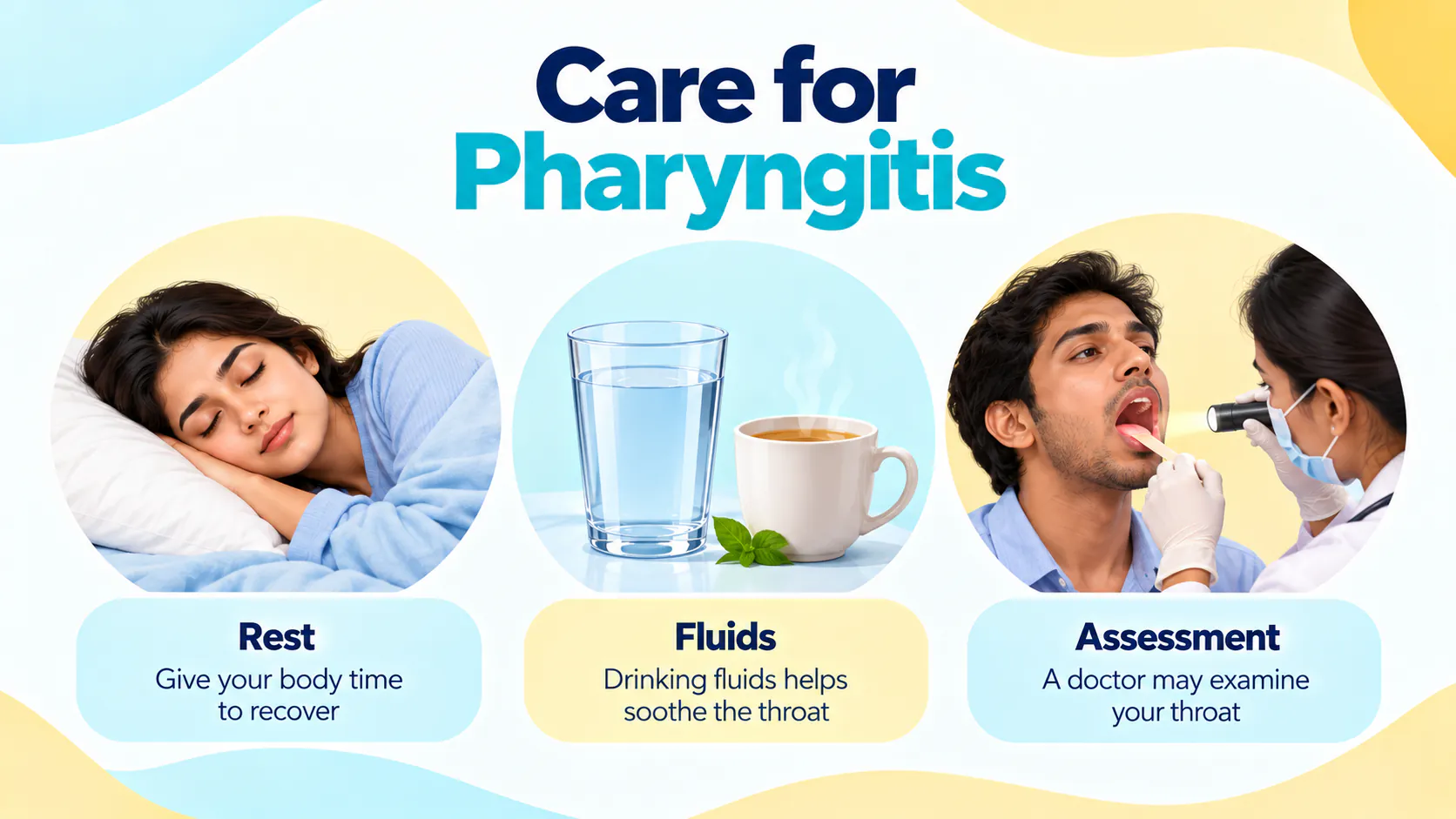
Examination and When a Throat Swab Helps
Your doctor will ask about your symptoms and examine your throat, tonsils, neck glands and ears. If strep throat is suspected, they may take a quick throat swab:
- Rapid strep test: gives results within minutes
- Throat culture: sent to a lab, with results in one to two days
Not everyone needs a test. If you have clear signs of a viral infection, such as a cough, runny nose and hoarse voice, testing is often not needed. If glandular fever is suspected, your doctor may suggest a blood test.
Supportive Care
Whatever the cause, these steps can ease discomfort:
- Rest and drink plenty of warm or cool fluids
- Gargle with warm salt water (for adults and older children)
- Take honey in warm water (never for babies under 1 year)
- Use lozenges for short-term relief (not for young children)
- Use a humidifier in dry or AC rooms
- Paracetamol or ibuprofen may help relieve pain and fever at an age-appropriate dose. Follow your doctor's or pharmacist's advice, and do not give aspirin to children or teenagers.
When Antibiotics Are Appropriate
Antibiotics are prescribed only when bacterial pharyngitis, such as strep throat, is confirmed or strongly suspected by a doctor. If prescribed, take them exactly as directed and complete the course.
Antibiotics do not help viral pharyngitis and can cause side effects. For non-infectious causes, treatment focuses on the trigger, such as managing allergies or reflux, or stopping smoking.
How to Reduce the Risk of Infectious Pharyngitis
- Wash your hands often with soap and water
- Don't share cups, bottles or cutlery
- Cover coughs and sneezes with a tissue or your elbow
- Stay away from people who are sick, and stay home when you are unwell
- Get your yearly flu vaccine
For non-infectious pharyngitis, avoid smoke, manage allergies and reflux, and keep indoor air from becoming too dry.
When Should You See a Doctor?
Get emergency care right away if you have difficulty breathing, cannot swallow your saliva or are drooling, cannot open your mouth fully, or have severe swelling on one side of the throat.
See a doctor if you have:
- Severe throat pain or a high fever
- A sore throat that is not better after a week
- Signs of dehydration, such as very little urine
- A rash or blood in your saliva
- A hoarse voice lasting more than two to three weeks
- Pharyngitis that keeps coming back
For repeated or long-lasting throat problems, an ENT specialist can look for the underlying cause.

