
Tonsillitis is inflammation of the tonsils, the two small pads of tissue at the back of your throat. It is usually caused by a viral or bacterial tonsil infection. Tonsillitis is very common in children, but adults can get it too.
The main signs are red, swollen tonsils and a sore throat that hurts when you swallow. Most cases get better within a week or so, but the right treatment depends on the cause. This guide explains the causes, symptoms, treatment and prevention of tonsillitis, and when to see an ENT specialist.
What Is Tonsillitis?
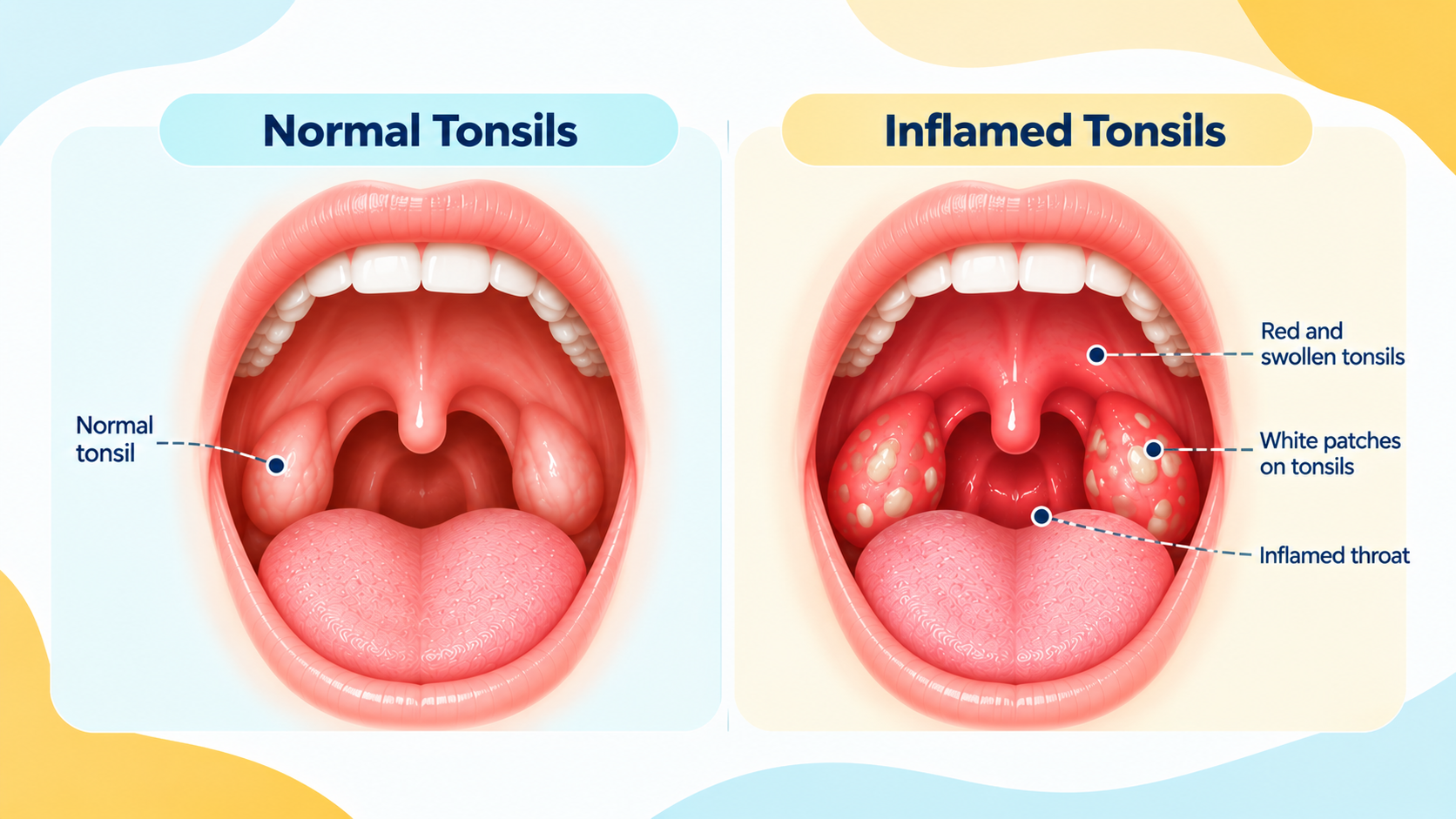
Your tonsils are two oval-shaped pads of tissue on each side of the back of your throat. They are part of your immune system and help trap germs that enter through your nose and mouth.
Sometimes the tonsils themselves get infected. When this happens, they become inflamed: red, swollen and painful. This is called tonsillitis.
Tonsillitis is a specific type of throat infection. The rest of the throat is often sore too, but the swelling and infection are mainly in the tonsils.
What Causes Tonsillitis?
Tonsillitis is caused by germs that infect the tonsils. They spread through droplets from coughs and sneezes, and through contact with the saliva of an infected person, for example by sharing cups or spoons.
Children get tonsillitis more often than adults. Their tonsils are more active in fighting germs, and they are in close contact with other children at school and play.
Viral Tonsillitis
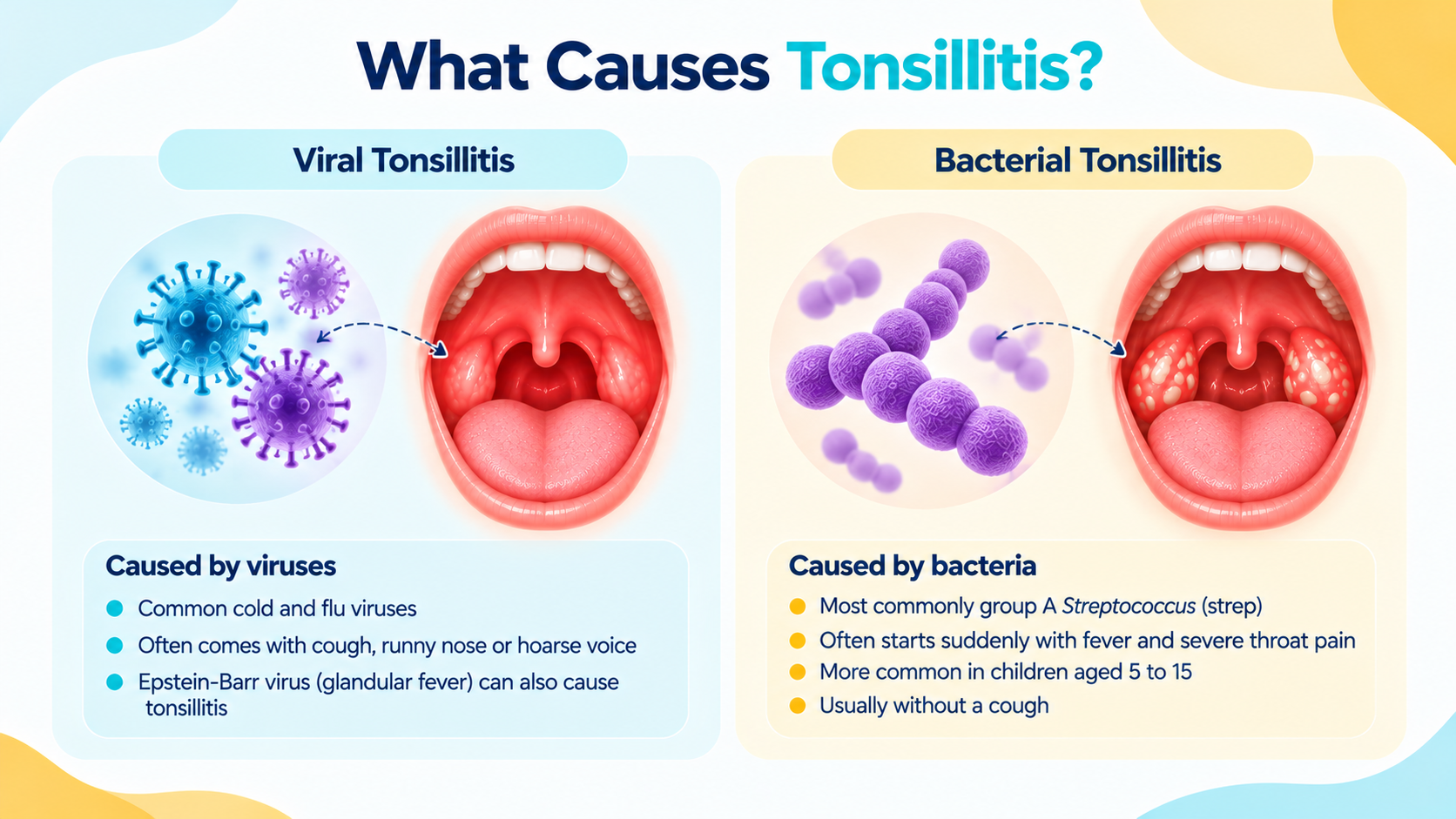
Viruses are the most common cause of tonsillitis. These include the viruses that cause colds and flu. Viral tonsillitis often comes with a cough, runny nose or hoarse voice. The Epstein-Barr virus, which causes glandular fever, can also cause tonsillitis, usually with heavy tiredness.
Bacterial Tonsillitis
The most common bacterial cause is group A Streptococcus, the same germ that causes strep throat. Bacterial tonsillitis is most common in children aged 5 to 15. It often starts suddenly with fever and very painful swallowing, usually without a cough.
Is tonsillitis the same as strep throat? Not always. Strep throat is a bacterial infection that often affects the tonsils, but most cases of tonsillitis are caused by viruses, not strep.
Common Symptoms of Tonsillitis
The most common symptoms of tonsillitis are:
- Red, swollen tonsils
- White or yellow patches or coating on the tonsils
- Sore throat and pain when swallowing
- Fever
- Swollen, tender glands in the neck
- Bad breath
- A scratchy or muffled voice
- Headache and tiredness
Symptoms in children: Young children may not be able to explain throat pain. Watch for refusing to eat or drink, drooling, unusual fussiness or crying while swallowing. Some children with strep tonsillitis also have stomach pain or vomiting. If you are worried about your child, consult a paediatrician.
How Is Tonsillitis Treated?
Treatment depends on whether the tonsil infection is caused by a virus or bacteria.
Treatment for Viral and Bacterial Tonsillitis
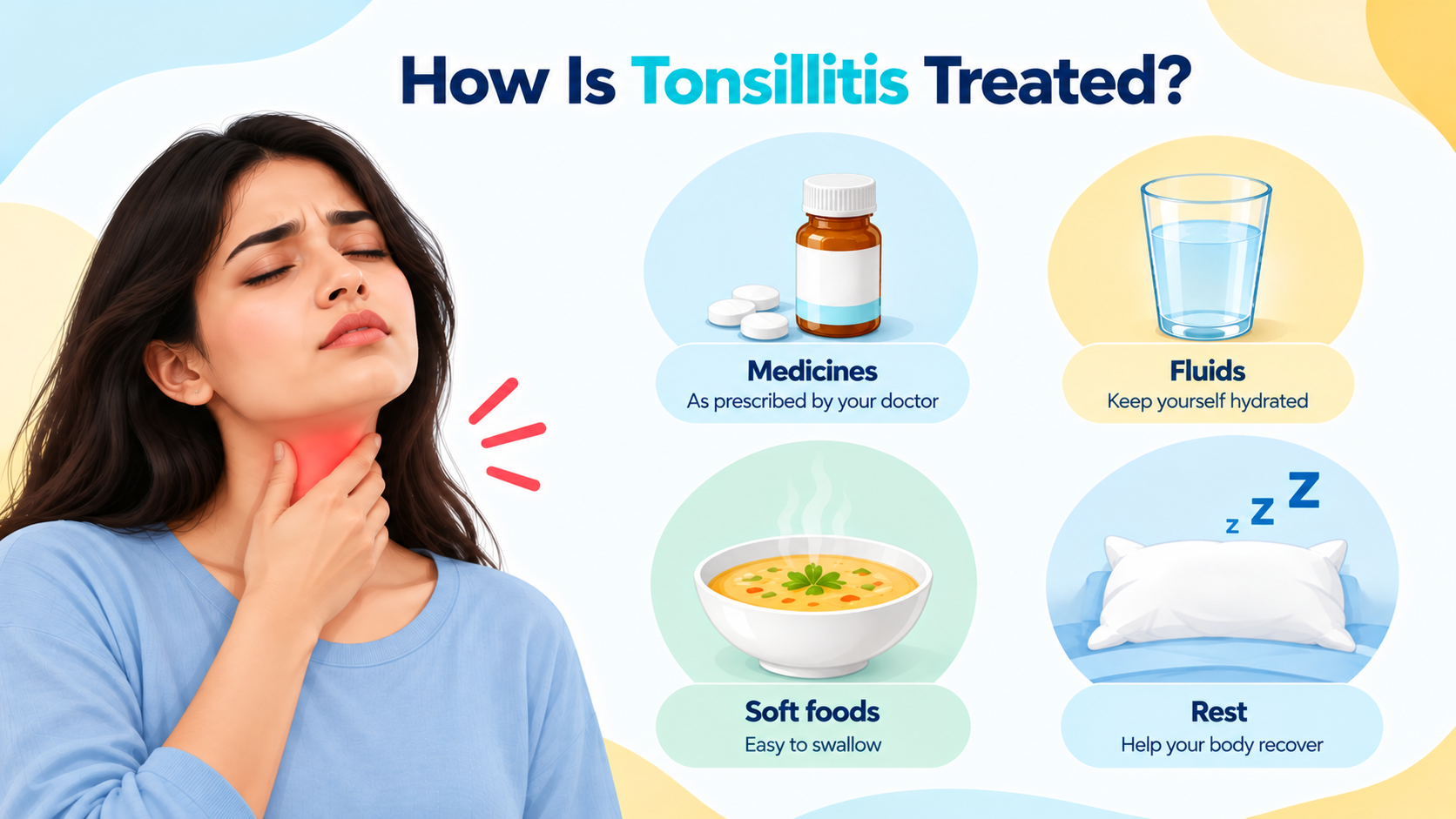
Viral tonsillitis does not need antibiotics, as they do not work on viruses. It usually gets better on its own within 7 to 10 days. Paracetamol or ibuprofen may help relieve pain and fever when used at an age-appropriate dose. Follow your doctor's or pharmacist's advice, especially for children. Do not give aspirin to children or teenagers.
Bacterial tonsillitis needs a doctor's check-up. If your doctor suspects strep, they may do a quick throat swab test. If strep is confirmed, your doctor will prescribe antibiotics. Symptoms often start to improve within 24 to 48 hours. Take antibiotics exactly as prescribed and complete the recommended course, even if you start feeling better. Proper treatment helps clear the infection and reduces the risk of complications.
Home Care for Symptom Relief
Whatever the cause, these steps can ease discomfort while you recover:
- Drink plenty of warm or cool fluids to stay hydrated
- Eat soft foods such as soups, khichdi or curd rice
- Gargle with warm salt water (for older children and adults)
- Take a spoonful of honey in warm water (never for babies under 1 year)
- Get adequate rest and avoid straining your voice
- Use a humidifier in dry or AC rooms
When Is Tonsil Removal Needed?
Surgery to remove the tonsils is called a tonsillectomy. Most people with tonsillitis do not need it. An ENT specialist may suggest it if:
- Tonsillitis keeps coming back often, for example 7 or more times in one year, 5 or more times a year for 2 years, or 3 or more times a year for 3 years
- Enlarged tonsils cause breathing problems, or loud snoring with pauses in breathing during sleep
- A pus pocket near the tonsil (peritonsillar abscess) keeps coming back or does not get better with treatment
These are general guidelines for children, not automatic requirements for surgery. An ENT specialist will consider the severity of infections, medical records and overall health before recommending tonsil removal.
Tonsillectomy is an established surgical procedure, but it carries risks such as bleeding and dehydration. Recovery usually takes one to two weeks.
How to Prevent Tonsillitis
You cannot prevent every case, but these habits lower the risk of catching or spreading a tonsil infection:
- Wash your hands often with soap and water, especially before eating
- Teach children to wash their hands after school and play
- Don't share cups, bottles, spoons or toothbrushes
- Cover your coughs and sneezes with a tissue or your elbow
- Keep away from people who are sick, and keep children home from school when they have a fever
- Avoid smoking and secondhand smoke
When Should You See a Doctor for Tonsillitis?
Get emergency care right away if you or your child has difficulty breathing, cannot swallow saliva or is drooling, cannot open the mouth fully, or has severe pain and swelling on one side of the throat with a muffled voice.
See a doctor if you have:
- A sore throat with fever lasting more than two days
- Very painful swallowing, or trouble drinking enough fluids
- Symptoms that are not getting better after a few days
- A child who refuses fluids or seems unusually sleepy
- Tonsillitis that keeps coming back
For recurrent tonsillitis or tonsils that stay enlarged, an ENT (ear, nose and throat) specialist can check whether further treatment is needed.
Conclusion
Tonsillitis is a common infection of the tonsils, especially in children. Most cases are viral and get better within a week or so with rest and home care. Bacterial tonsillitis needs a doctor's check-up, as antibiotics help only when bacteria are the cause.
If tonsillitis keeps coming back, or your symptoms are severe, Docube's ENT specialists in Bengaluru can help. Book a consultation with a Docube ENT doctor today.
Disclaimer: This article is for general information only and does not replace professional medical advice. Please consult a qualified doctor for diagnosis and treatment.