



Have you woken up with a hoarse voice, or lost your voice completely? This is often caused by laryngitis, an inflammation of the voice box. It is usually caused by a viral infection or by overusing your voice, and it normally gets better within one to two weeks with good voice care.
This guide explains what laryngitis is, its causes and symptoms, how to treat it and support recovery, and when a hoarse voice needs to be checked by an ENT specialist.
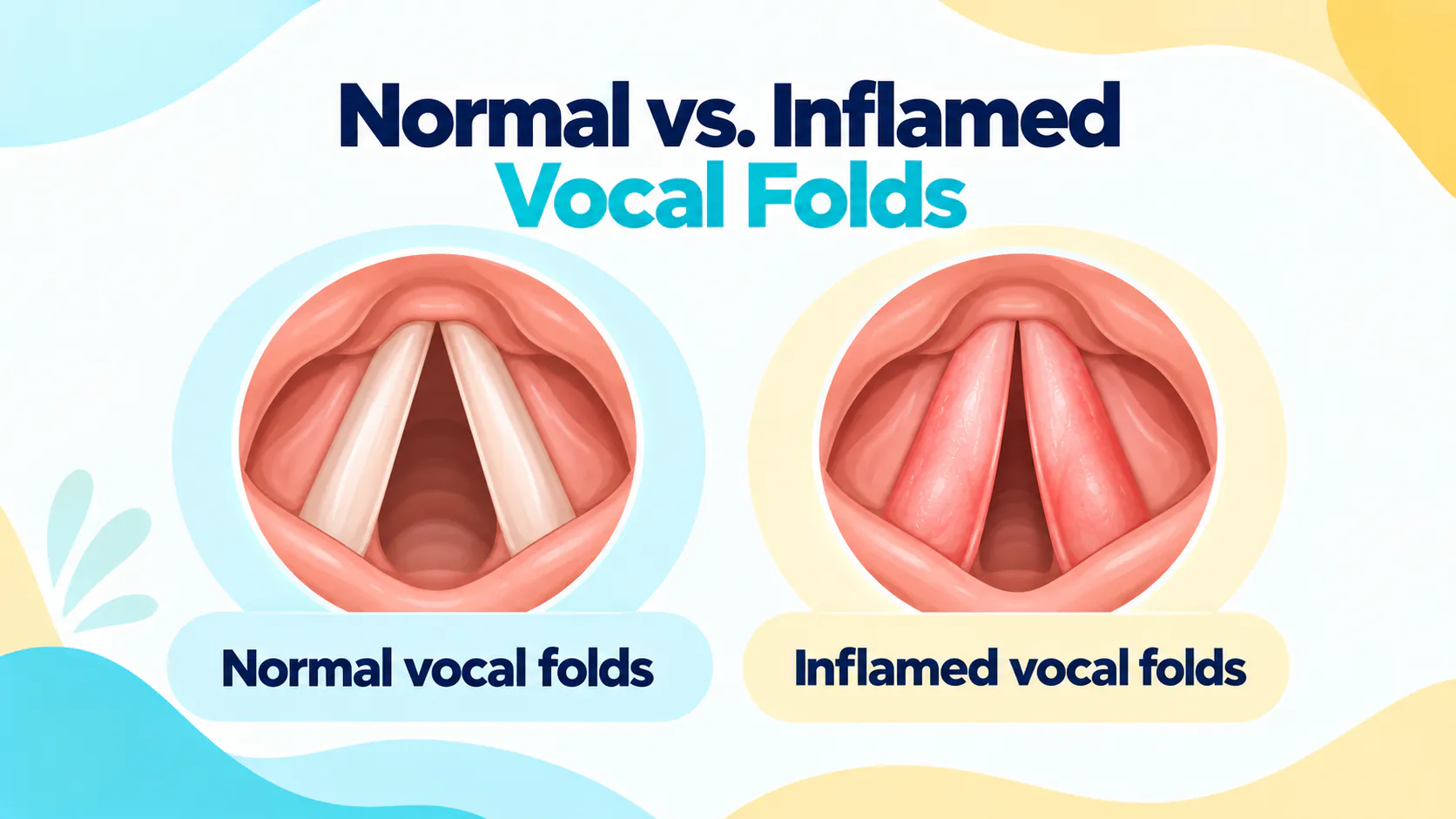
What Is Laryngitis?
Your larynx, or voice box, sits at the top of your windpipe in the neck. Inside it are two vocal cords that vibrate when air passes over them to make your voice.
In laryngitis, the vocal cords become swollen and irritated. They cannot vibrate normally, so your voice sounds hoarse, weak or croaky, or may disappear for a while.
What Causes Laryngitis?
Acute laryngitis comes on suddenly and usually lasts less than three weeks. Common causes are:
- Viral infections: colds and flu are the most common cause, known as viral laryngitis
- Voice strain: shouting, cheering, singing or talking loudly for a long time
- Bacterial infections: these are less common
Chronic laryngitis lasts more than three weeks or keeps coming back. It is usually caused by long-term irritation, such as:
- Acid reflux reaching the throat
- Smoking or secondhand smoke
- Regular voice overuse, common in teachers, singers and call-centre workers
- Allergies, pollution or chemical fumes
- Using inhaled steroid medicines for asthma without rinsing the mouth afterwards
Rarely, long-lasting hoarseness is caused by growths on the vocal cords, which is why it should always be checked.
Common Symptoms of Laryngitis
- Hoarse, weak or croaky voice
- Loss of voice
- Dry, scratchy or tickly throat
- Mild throat pain
- Dry cough
- Frequent need to clear the throat
If laryngitis is caused by a cold, you may also have a runny nose, fever or a sore throat from pharyngitis.
How Is Laryngitis Treated?

Voice Rest and Home Care
- Rest your voice: talk as little as possible, and speak gently at a normal, quiet level when you must
- Don't whisper: whispering can strain the vocal cords more than soft speaking
- Avoid shouting and singing until your voice recovers
- Drink plenty of fluids to keep your throat moist
- Breathe moist air: a warm shower or a clean humidifier can help
- Avoid smoke, and limit alcohol and caffeine, which can dry the throat
- Sip water instead of clearing your throat repeatedly
Paracetamol may help if you have throat pain or fever, used at an age-appropriate dose as advised by your doctor or pharmacist.
Treating the Underlying Cause
Treatment depends on the cause:
- Viral laryngitis: antibiotics do not help, and it usually settles on its own
- Acid reflux: changes to eating habits, and medicines if your doctor prescribes them
- Allergies: avoiding triggers and allergy treatment as advised
- Smoking: stopping smoking helps the voice box heal
- Voice overuse: voice therapy with a speech and language therapist can teach healthier ways to use your voice
How Long Does Recovery Take?
Acute laryngitis usually gets better on its own within one to two weeks. Your voice may return gradually, so avoid pushing it too hard too soon.
If your voice has not improved after two weeks, see a doctor. Long-lasting hoarseness can have other causes that need to be checked, especially in people who smoke.
How to Reduce Repeated Voice Irritation
- Drink enough water through the day
- Avoid smoking and smoky places
- Use a microphone when speaking to groups, and take regular voice breaks
- Avoid shouting across rooms or over loud noise
- Avoid eating late at night if you have reflux
- Manage allergies with your doctor's advice
When Should You See an ENT Specialist?
Get emergency care right away if you have difficulty breathing, noisy or high-pitched breathing, cannot swallow your saliva, or cough up blood. In children, noisy breathing, a barking cough with breathing difficulty, or drooling needs urgent attention.
See an ENT specialist if:
- Your hoarseness has not improved after two weeks
- Your voice problems keep coming back
- You have pain when swallowing or a lump in your neck
- You smoke and have a hoarse voice
- Voice problems are affecting your work
An ENT specialist may look at your vocal cords using a thin camera passed through the nose or mouth (laryngoscopy).

