

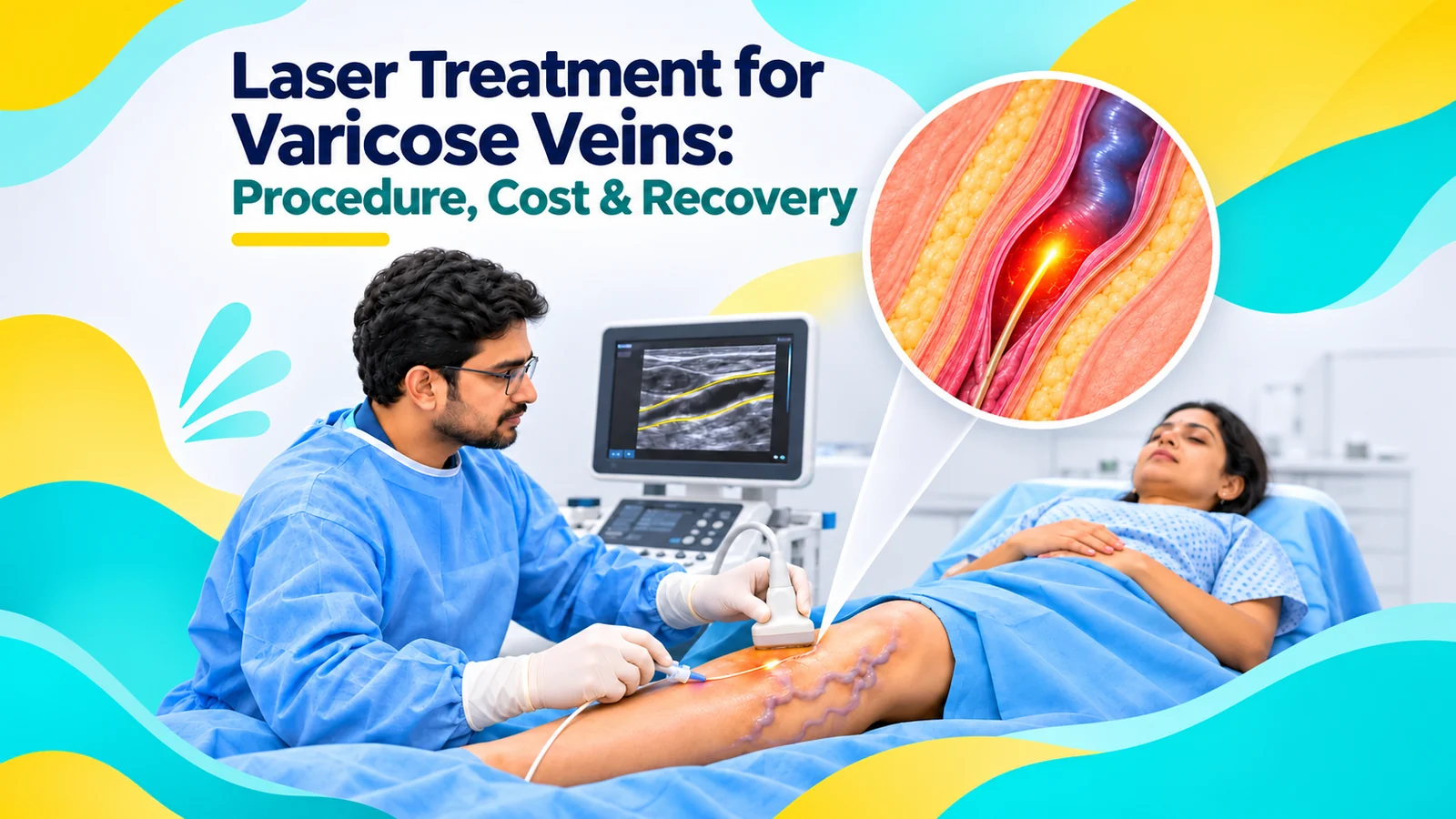
Laser treatment has changed the way varicose veins are treated. Instead of surgery with cuts and general anaesthesia, a thin laser fibre seals the faulty vein from the inside through a single needle puncture. Most people walk out the same day.
This guide explains how laser treatment for varicose veins works, who it suits, what recovery looks like, and the factors that affect its cost.
What Is EVLA or EVLT?
EVLA stands for endovenous laser ablation, also called EVLT (endovenous laser treatment). "Endovenous" means inside the vein.
A thin laser fibre is placed inside the leaking vein under ultrasound guidance. The laser heats the vein wall, which seals the vein shut. Over the following months, the closed vein shrinks and is absorbed by the body, and blood flows through healthy veins instead.
Who May Be Suitable for Laser Treatment?
EVLA may be suitable if you have:
- Varicose veins caused by a leaking main vein in the thigh or calf, confirmed on Doppler
- Symptoms such as aching, heaviness, swelling or night cramps
- Skin changes or a leg ulcer linked to vein problems
- A vein that is straight enough for the fibre to pass through
It may not be suitable if you are pregnant, have a current deep vein clot, cannot walk, or if the vein is very twisted or very close to the skin. Your doctor will advise on alternatives.
Pre-Procedure Doppler Assessment
Before treatment, a venous Doppler ultrasound maps which veins leak, their size and depth, and confirms that the deep veins are healthy. This scan decides whether EVLA is the right choice and plans exactly where the fibre will go.
How EVLA Is Performed Step by Step
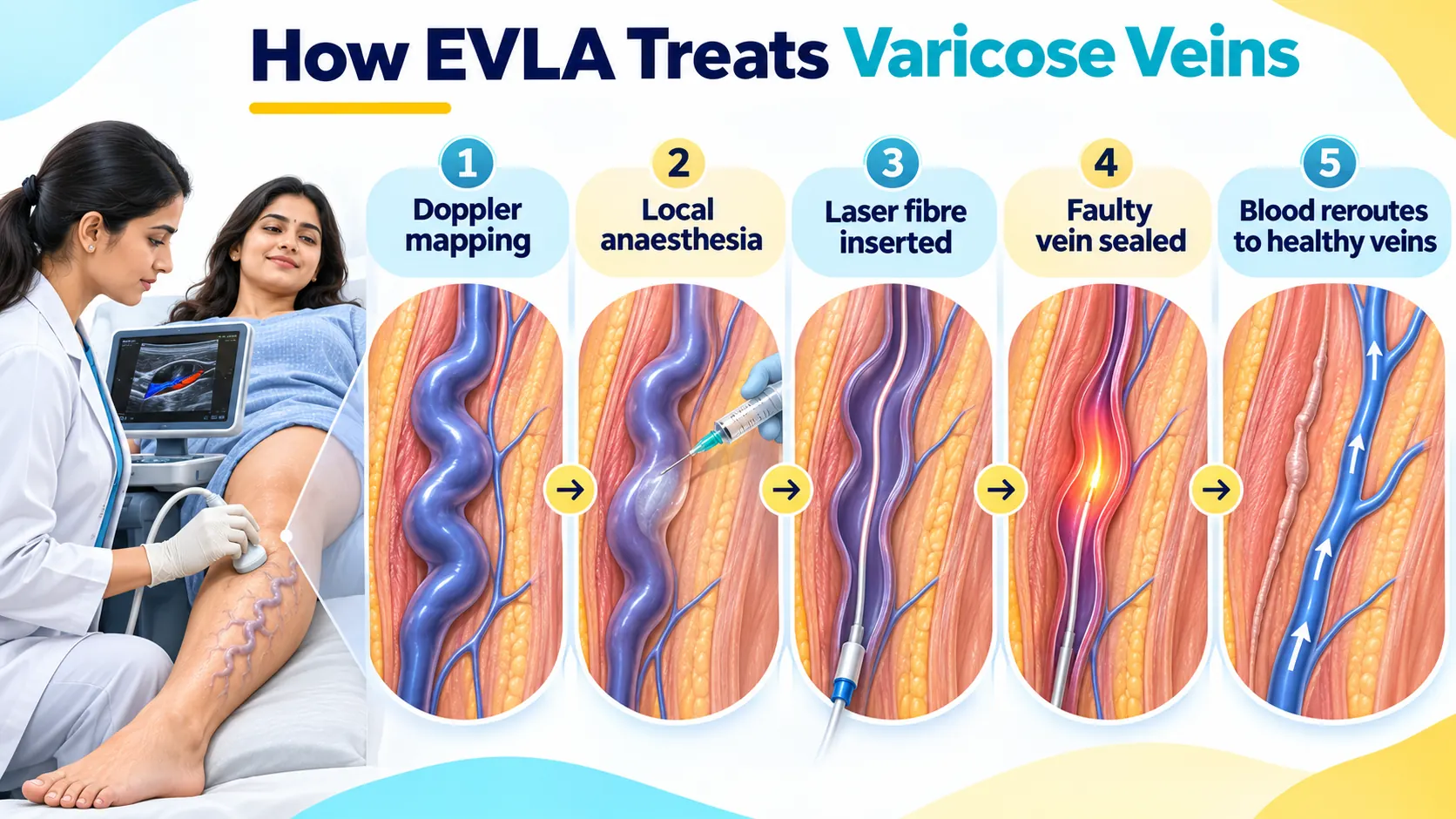
- Mapping: the vein is marked on your leg using ultrasound.
- Numbing: a small amount of local anaesthetic is injected at the entry point, usually near the knee or calf.
- Access: a needle and a thin tube are placed into the vein, and the laser fibre is passed up to the correct position.
- Protective fluid: a dilute anaesthetic fluid is injected around the vein. It numbs the area, protects nearby tissue from heat and squeezes the vein around the fibre.
- Sealing: the laser is switched on and the fibre is slowly pulled back, sealing the vein along its length.
- Finishing: the fibre is removed, a small dressing is applied and compression stockings are put on.
Anaesthesia and Procedure Duration
EVLA is done under local anaesthesia, so you are awake. You may feel pressure and the sting of numbing injections, but the procedure itself is not usually painful. It typically takes about 30 to 60 minutes per leg, and you can usually go home within an hour or two.
Benefits Compared with Vein-Stripping Surgery
- No groin cut, and usually no general anaesthesia
- Less pain and bruising for most people
- Faster return to work and daily activities
- Usually performed as a day-care procedure
- Good long-term outcomes, with faster early recovery than traditional surgery
Risks and Possible Side Effects
EVLA is safe, but side effects can occur:
- Common: bruising, tenderness and a tight, pulling feeling along the treated vein for one to two weeks
- Less common: inflammation of the surface veins, skin discolouration, or numbness or tingling from irritation of nearby nerves, which usually improves over time
- Rare: skin burns, or a blood clot extending into the deep veins
Your follow-up scan helps detect any problems early.
Recovery Timeline
First 24 Hours
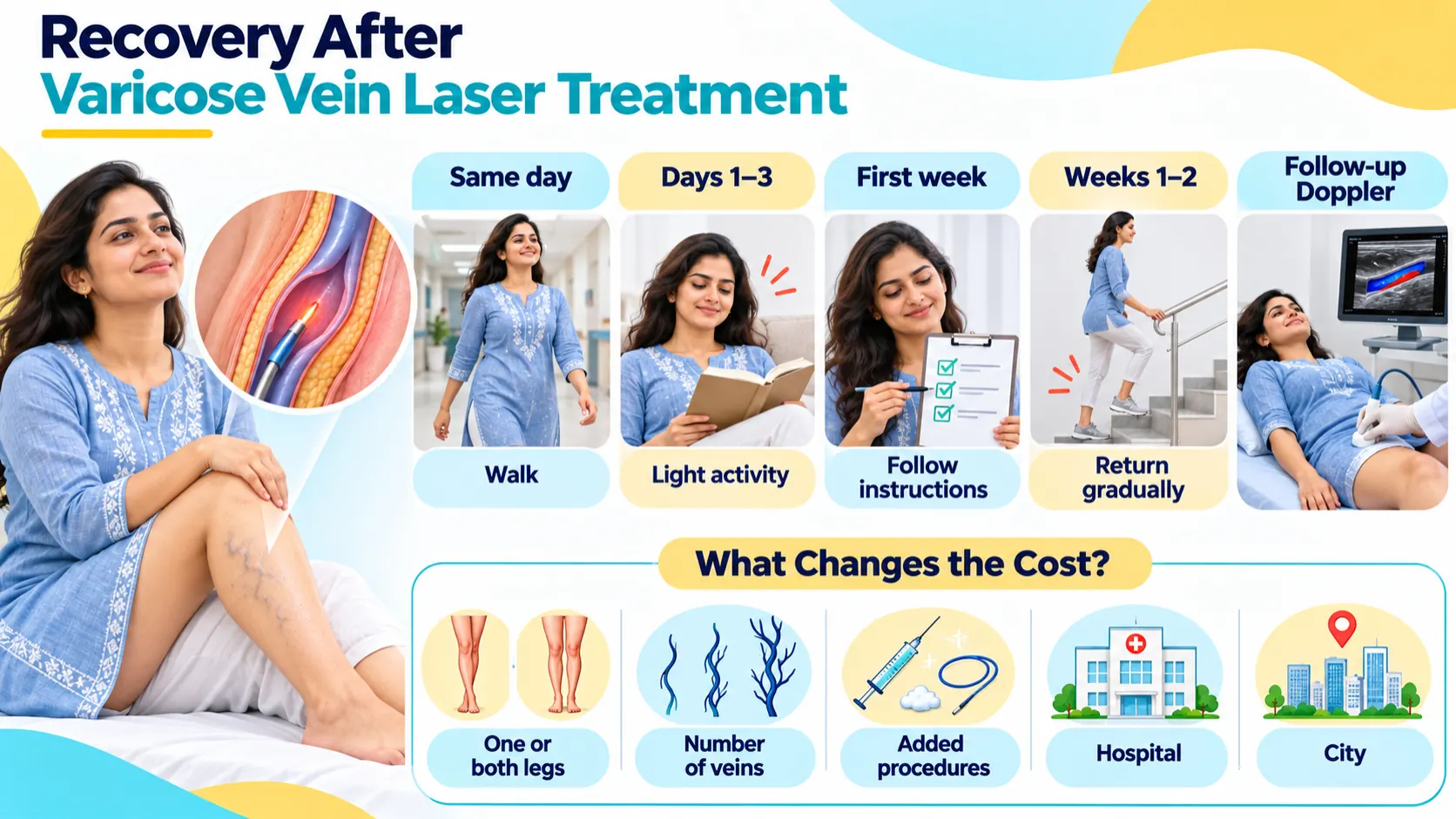
Walk for a few minutes every hour while awake. Keep the compression stocking on as advised and the dressing dry. Mild aching is normal and can be managed with simple pain relief advised by your doctor.
First Week
Bruising and a tight feeling along the vein are common and usually peak in the first week. Continue walking daily and wear compression as advised. Avoid long periods of sitting or standing still.
Returning to Work and Exercise
Most people return to desk work in one to two days. Avoid heavy lifting, intense exercise, hot baths and saunas for about one to two weeks, or as your doctor advises.
Compression and Follow-Up Ultrasound
Compression stockings are usually worn for a short period after EVLA, as advised by your doctor. A follow-up Doppler scan may be arranged according to the treating centre's protocol and your clot risk, to confirm the vein has closed and check for clots.
EVLA Cost in India
The cost of laser treatment for varicose veins varies widely, so it is best to ask for a clear, itemised estimate. Factors that affect cost include:
- Whether one or both legs, and how many veins, need treatment
- Whether extra procedures such as sclerotherapy or phlebectomy are needed
- The type of laser equipment and fibre used
- Doppler scans before and after treatment
- Compression stockings and medicines
- Whether the procedure is done as day care or with an overnight stay
Insurance coverage depends on your insurer and policy, whether treatment is medically necessary, and pre-authorisation. Purely cosmetic treatment is usually not covered. Check with your insurer before treatment.
EVLA vs Radiofrequency Ablation
Radiofrequency ablation (RFA) works in a similar way but uses radiofrequency energy instead of laser. Both have high success rates. Some studies suggest RFA may cause slightly less bruising and pain, although newer laser systems have narrowed this difference. Your doctor will choose based on your veins and experience. Read about other non-surgical options.
Can Varicose Veins Return After EVLA?
A vein sealed by EVLA usually stays closed. However, new varicose veins may develop over time in other veins. Follow-up allows any new veins to be checked, and they can usually be treated with simple procedures.
Warning Signs After Treatment
Contact your doctor or the interventional radiology team if you have:
- Increasing calf pain, swelling or warmth
- Spreading redness, fever or pus at the puncture site
- Severe pain not eased by pain relief
- Numbness that is getting worse
Get emergency care right away if you have chest pain or sudden breathlessness.

