

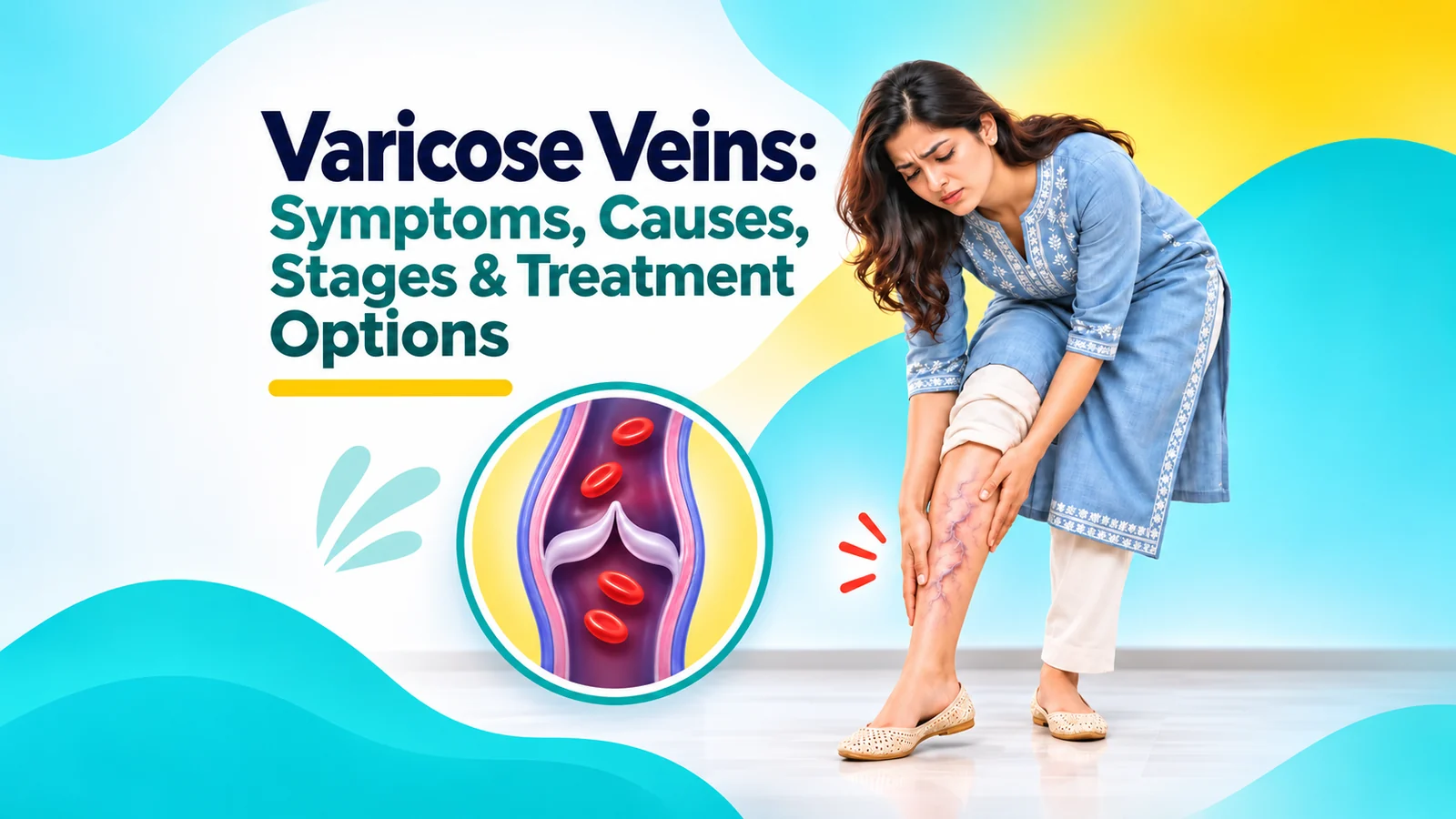
Do your legs feel heavy and tired by evening? Have you noticed blue, bulging veins on your calves? These may be varicose veins, one of the most common vein problems, especially among people who stand or sit for long hours at work.
For many people, varicose veins are mainly a cosmetic concern. For others, they cause aching, swelling and skin changes that can get worse over time. This guide explains what varicose veins are, why they form, the stages of vein disease, and the treatment options available today.
What Are Varicose Veins?
Varicose veins are enlarged, twisted veins just under the skin, most often on the legs. They usually look blue or purple and may bulge above the skin surface. They are generally 3 mm or wider.
They are not usually dangerous, but they are a sign that the veins are not carrying blood back to the heart as well as they should.
How Healthy Leg Veins Work
Leg veins carry blood upwards, against gravity, back to the heart. Two things make this possible:
- The calf muscle pump: every time you walk, your calf muscles squeeze the deep veins and push blood upwards
- One-way valves: small valves inside the veins open to let blood flow up and close to stop it falling back down
When these valves weaken, blood flows backwards (called reflux) and pools in the veins. The pressure stretches the veins, and they become varicose.
What Causes Varicose Veins?
The main cause is weak or damaged valves in the superficial leg veins. Often this happens without a single clear reason, as part of how the vein walls and valves are built. Less often, varicose veins develop after a deep vein thrombosis (DVT), which can damage the valves.
Risk Factors
- Family history: varicose veins often run in families
- Age: valves and vein walls weaken over time
- Hormonal changes: women are more often affected
- Pregnancy: increased blood volume and pressure on pelvic veins; some veins improve after delivery
- Excess weight: adds pressure on leg veins
- Long hours of standing or sitting: common in jobs such as teaching, retail, security, nursing, traffic duty and desk-based IT work
Symptoms of Varicose Veins
Some people have no symptoms. Others notice:
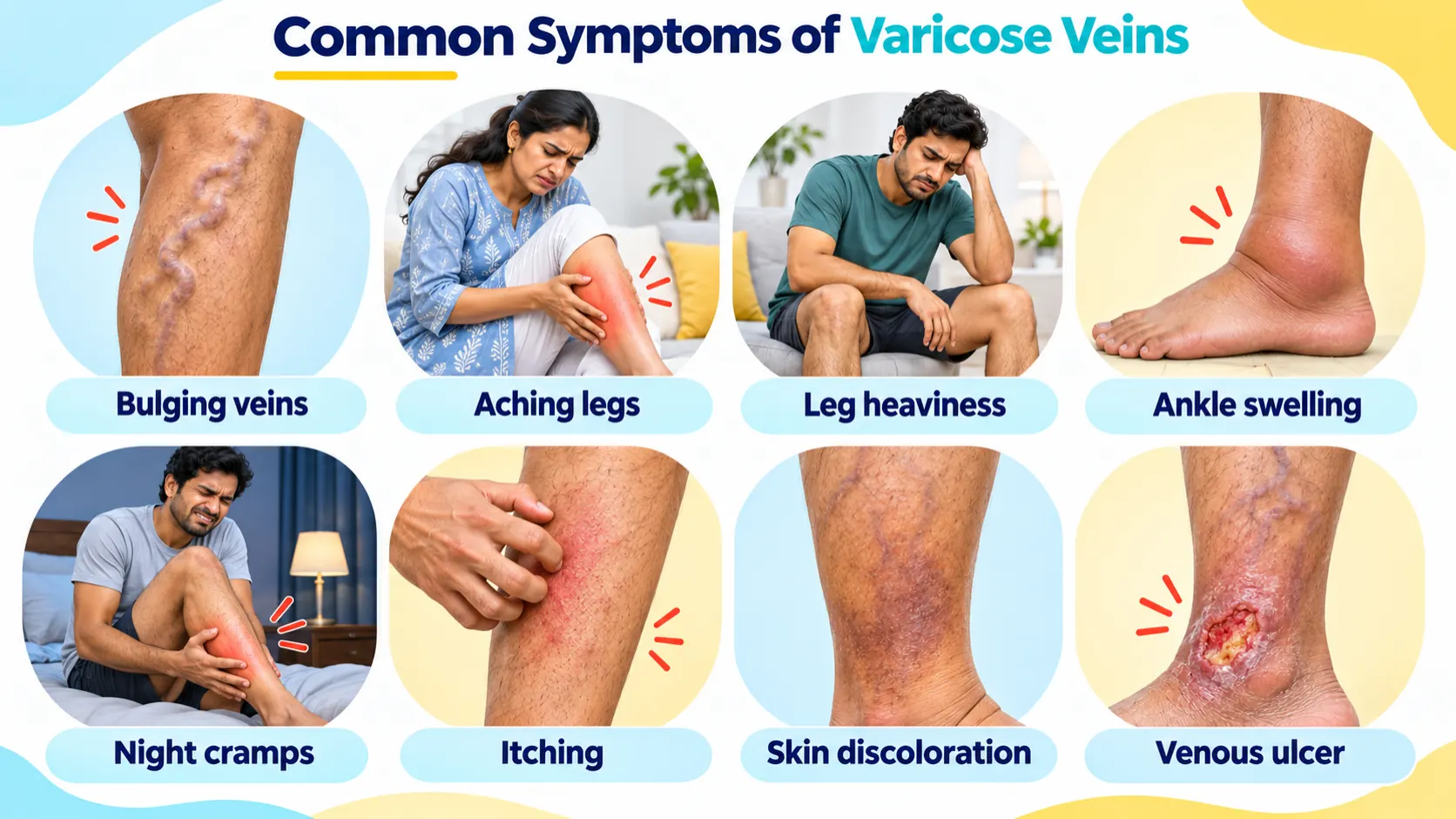
- Visible, twisted, bulging veins
- Heavy, aching or tired legs, often worse at the end of the day
- Swelling around the ankles
- Itching over the veins
- Night cramps or restless legs
- Brown or dark discolouration of the skin near the ankle
Symptoms often improve when you raise your legs or walk, and get worse after standing still for long periods. Varicose veins that cause these problems are called symptomatic varicose veins.
Stages of Chronic Venous Disease
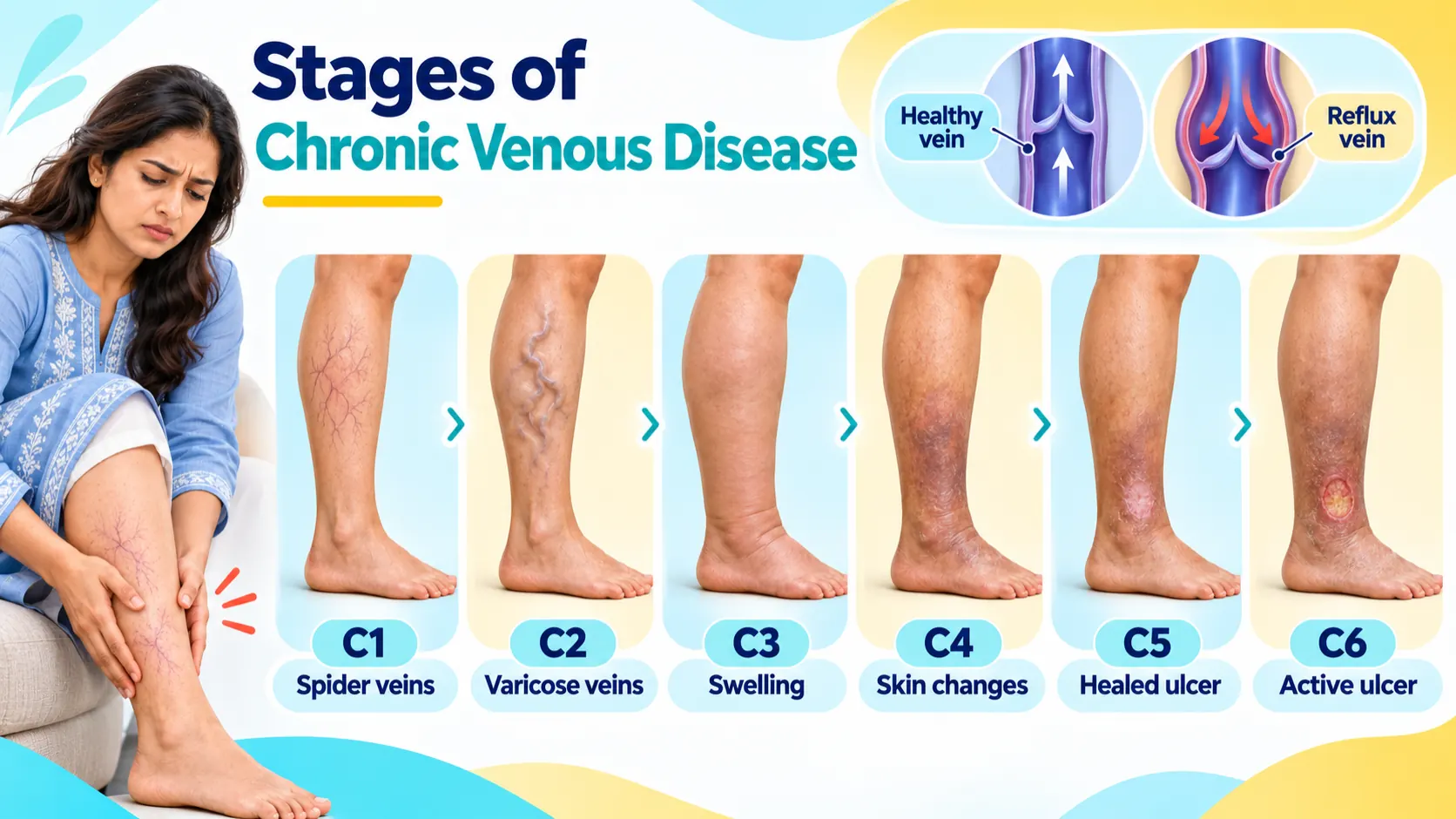
Doctors use a system called CEAP to describe how advanced vein disease is. In simple terms:
Higher stages generally indicate more advanced venous disease and warrant specialist assessment.
Varicose Veins vs Spider Veins
Spider veins are tiny red, blue or purple lines (less than 1 mm) that sit flat on the skin, often in a web pattern. They are usually a cosmetic concern. Varicose veins are larger, raised and twisted, and are more likely to cause symptoms. Some people have both.
How Varicose Veins Are Diagnosed
Clinical examination: a doctor looks at your legs while you stand and asks about symptoms, family history and past clots.
Venous Doppler ultrasound: a painless venous Doppler ultrasound shows which veins have faulty valves, how blood is flowing and whether there are any clots. It is recommended before planning treatment for symptomatic varicose veins or when a leaking main vein is suspected, because it shows which veins need treatment and how. It is not always needed for small, isolated cosmetic spider veins. Learn more about how a venous Doppler works.
Treatment Options by Severity
Treatment depends on your symptoms, Doppler findings and personal goals. Learn more in our guide to non-surgical treatment options.
- Lifestyle and compression: walking, leg elevation, weight control and compression stockings ease symptoms but do not remove the veins.
- Sclerotherapy: an injection that closes smaller varicose and spider veins.
- Endovenous laser ablation (EVLA): a thin laser fibre placed inside the faulty vein under ultrasound guidance seals it with heat.
- Radiofrequency ablation (RFA): works like EVLA but uses radiofrequency energy.
- Medical glue and mechanochemical ablation (MOCA): close the vein without heat.
- Phlebectomy: removal of bulging surface veins through tiny cuts.
- Surgery: traditional vein stripping is now used less often, mainly when minimally invasive options are not suitable.
Modern non-surgical procedures are usually done under local anaesthesia, as day-care procedures, with a quick return to normal activity.
Possible Complications
Without treatment, some people develop:
- Superficial thrombophlebitis: a painful, red, hard vein caused by a clot near the skin
- Bleeding: a varicose vein near the skin can bleed if injured. Lie down, raise the leg and press firmly on it, and seek medical help.
- Skin changes: darkening, eczema and hardening of the skin around the ankle
- Leg ulcers: slow-healing wounds near the ankle, known as a varicose ulcer
When to Consult a Vein Specialist
See an interventional radiologist or vein specialist if you have:
- Aching, heavy or swollen legs that affect daily life
- Skin changes, darkening or eczema near the ankle
- A wound that is slow to heal
- A varicose vein that has bled
- A painful, red, hard vein
Get urgent care if one calf suddenly becomes painful, swollen and warm, or if you have chest pain or sudden breathlessness, as these can be signs of a blood clot.
Can Varicose Veins Be Prevented?
You cannot fully prevent varicose veins, especially if they run in your family. These habits can ease symptoms and support general vein health, although new veins may still develop:
- Walk regularly and do calf exercises
- Take short movement breaks if you sit or stand for long periods
- Raise your legs when resting
- Maintain a healthy weight
- Wear compression stockings if your doctor recommends them

