


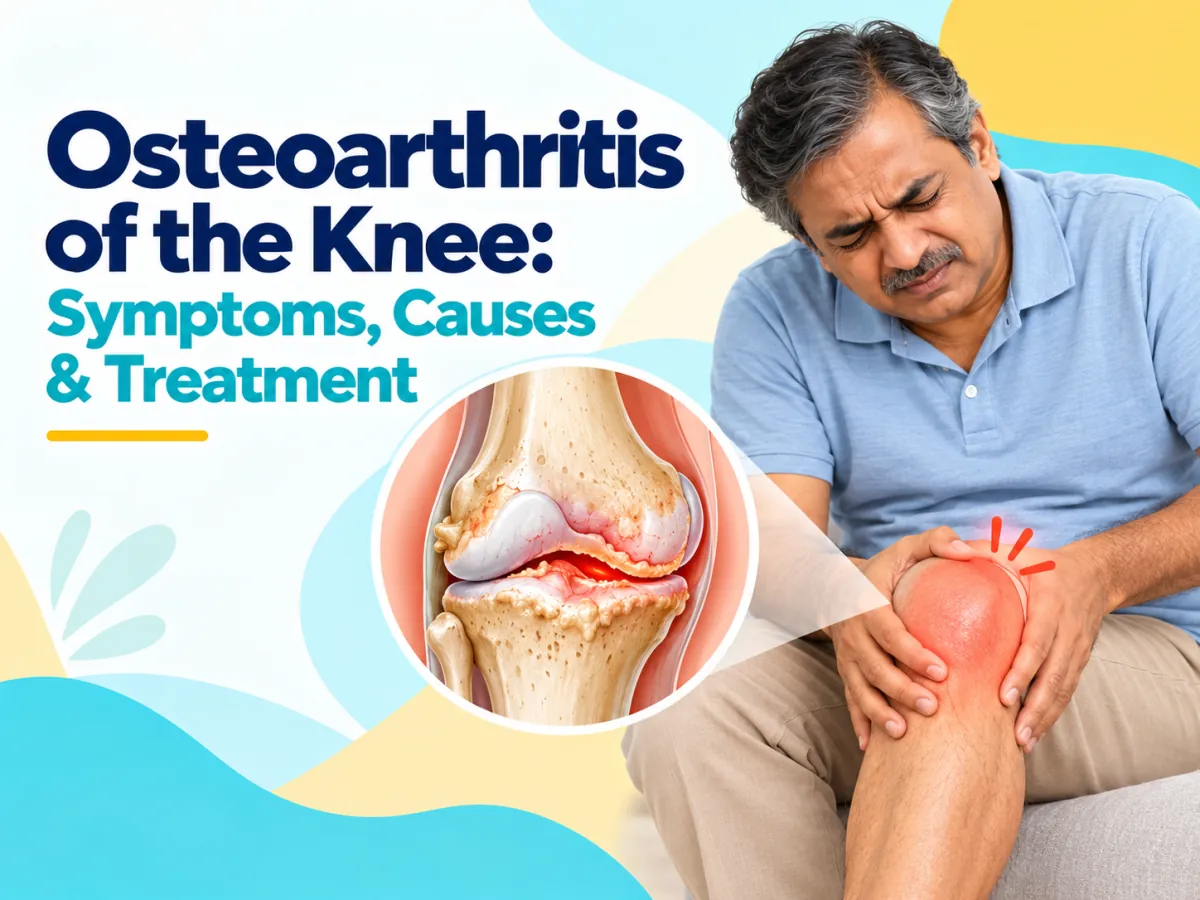
Knee pain while climbing stairs, getting up from the floor or after a long walk is very common, especially after the age of 50. Often, the cause is osteoarthritis of the knee, the most common type of arthritis.
Knee osteoarthritis cannot be reversed, but there is a lot you can do to reduce pain and stay active. This guide explains the symptoms and causes of knee osteoarthritis, and how treatment usually builds step by step, from exercise to surgery when needed.
What Is Knee Osteoarthritis?
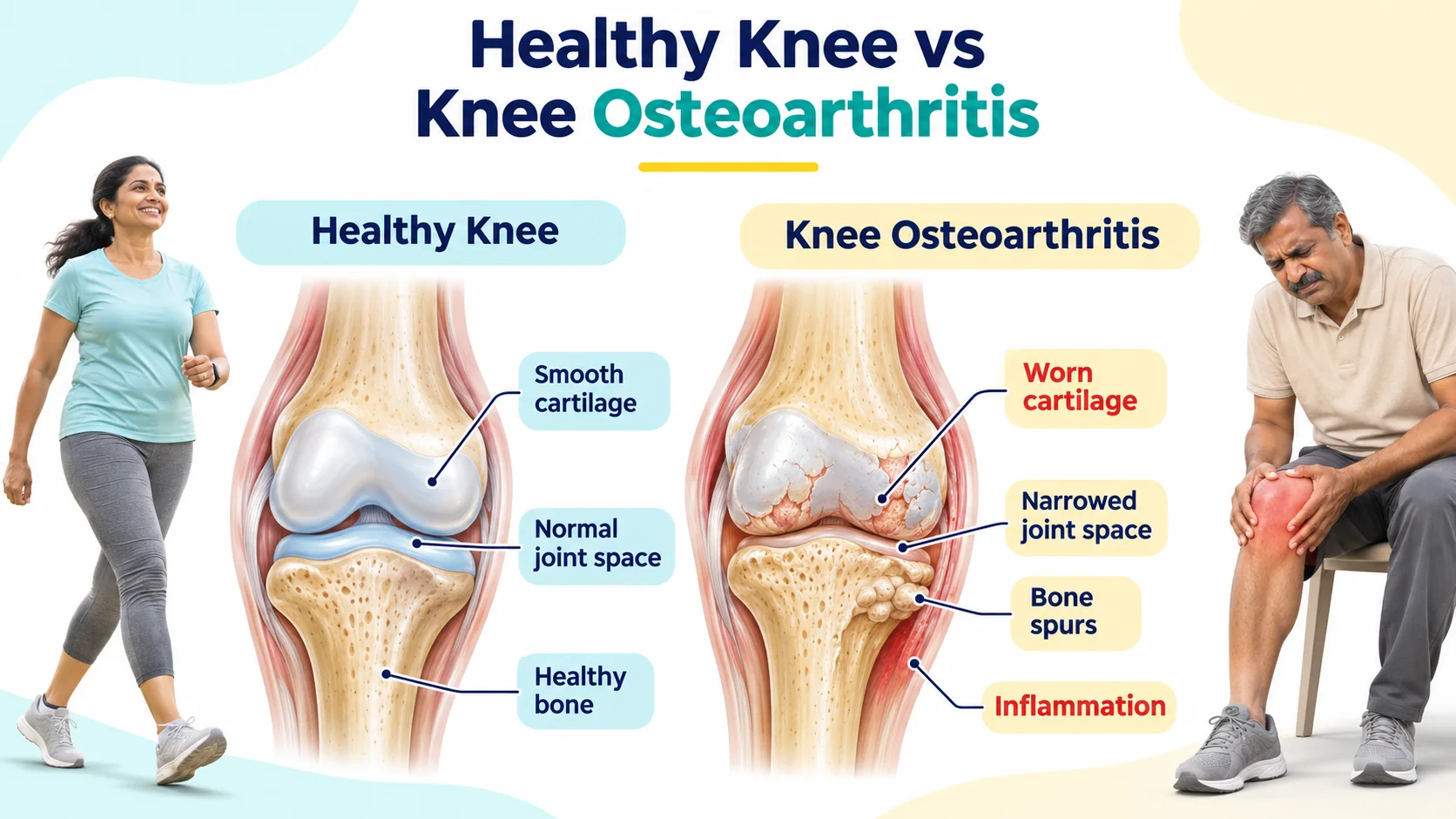
Knee osteoarthritis (OA) is a condition in which the cartilage that cushions the ends of the bones in the knee gradually wears and thins. The whole joint is affected: the bone underneath changes, small bony growths (bone spurs) can form, and the joint lining can become mildly inflamed.
It usually develops slowly over years and can affect one or both knees.
Symptoms and Functional Changes
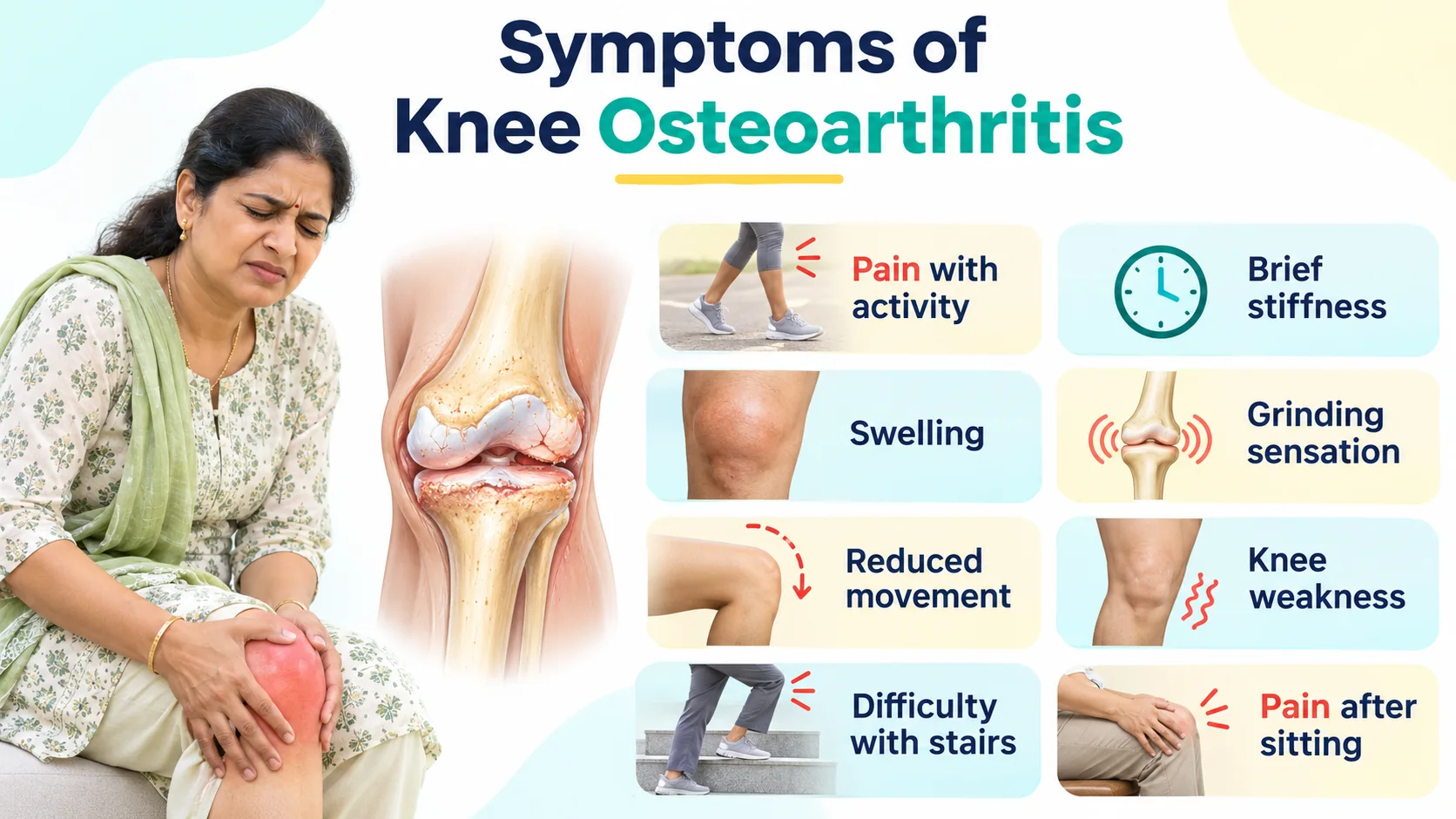
- Pain that is worse with activity, such as climbing stairs, squatting or walking long distances
- Stiffness after rest or in the morning, usually lasting less than 30 minutes
- Swelling around the knee
- A grinding or crackling feeling when moving the knee
- Reduced bending or straightening
- A feeling that the knee may give way
- Over time, a change in knee shape, such as bow legs
Many people notice difficulty sitting cross-legged, squatting or getting up from the floor.
Causes and Risk Factors
- Age: the risk rises after 50
- Being a woman
- Excess weight: adds load to the knees and increases inflammation
- Previous knee injury: such as a ligament or meniscus tear
- Repeated stress: frequent kneeling, squatting or heavy lifting
- Family history
- Knee alignment: bow legs or knock knees
How Is Knee OA Diagnosed?
Knee OA is usually diagnosed from your symptoms and a physical examination. Your doctor may also arrange:
- X-rays: taken while standing, to look at joint space and bone spurs
- Imaging such as joint ultrasound or MRI: in selected cases, to check for fluid, soft tissue problems or other causes
- Blood tests: to rule out other types of arthritis
X-ray findings are often described in stages, from mild to severe. However, the amount of change on an X-ray does not always match how much pain you feel or how well your knee works.
OA vs Inflammatory Arthritis and Other Knee Problems
Not all knee pain is osteoarthritis. Other causes include:
- Inflammatory arthritis, such as rheumatoid arthritis, which usually affects several joints and causes long morning stiffness
- Gout or similar crystal conditions, which cause sudden, very painful, hot swelling
- Meniscus or ligament injuries, often after a twist or sports injury
- Joint infection, which needs urgent care
A proper assessment helps make sure you get the right treatment.
First-Line Treatment: Education, Exercise and Weight Management
These are the most important parts of treatment for almost everyone with knee OA:
- Exercise: knee arthritis exercises that strengthen the thigh and hip muscles take load off the joint. Low-impact activities such as walking, cycling, swimming and water exercise are helpful. A physiotherapist can create a safe plan.
- Weight management: even modest weight loss can reduce knee pain and improve function if you are overweight.
- Understanding your condition: knowing that movement is safe and helpful makes it easier to stay active.
Pain Medicines and Topical Options
- Anti-inflammatory gels or creams (topical NSAIDs): often tried first for knee pain, with fewer side effects than tablets
- Anti-inflammatory tablets (oral NSAIDs): may help for short periods, but can affect the stomach, kidneys and heart, so use them only as advised by your doctor
- Paracetamol: may help some people, although its benefit is often small
Avoid long-term painkiller use without medical advice.
Injections, Braces and Physiotherapy
- Steroid injections: can reduce pain and swelling for a few weeks during a flare
- Other knee injections: such as hyaluronic acid or platelet-rich plasma (PRP), have mixed evidence. Discuss the possible benefits and costs with your doctor.
- Braces and insoles: may help some people with alignment-related pain
- Walking aids: a walking stick, held in the hand opposite the painful knee, can reduce load
- Physiotherapy: includes strengthening, balance and flexibility exercises
When Surgery May Be Considered
Surgery is usually considered when pain and stiffness seriously affect your daily life and sleep despite a good trial of non-surgical treatment. The decision depends on your symptoms and function, not on X-ray appearance alone.
- Knee replacement (total or partial): replaces the damaged joint surfaces
- Osteotomy: reshaping the bone to shift load, in selected younger, active people
Arthroscopic "washout" of the knee is not usually recommended for osteoarthritis alone. An orthopaedic surgeon can discuss whether surgery is right for you.
Daily Joint-Protection Strategies
- Use a chair instead of sitting on the floor, and a Western-style toilet if squatting is painful
- Use handrails on stairs
- Wear comfortable, supportive footwear
- Break long walks or tasks into shorter sessions
- Avoid kneeling and deep squatting for long periods
When Knee Pain Needs Prompt Assessment
See a doctor promptly or get urgent care if you have:
- A hot, red, swollen knee with fever
- Inability to bear weight after an injury
- The knee locking or suddenly giving way
- Sudden, severe swelling
- Calf pain and swelling
- Knee pain with unexplained weight loss or night pain

