


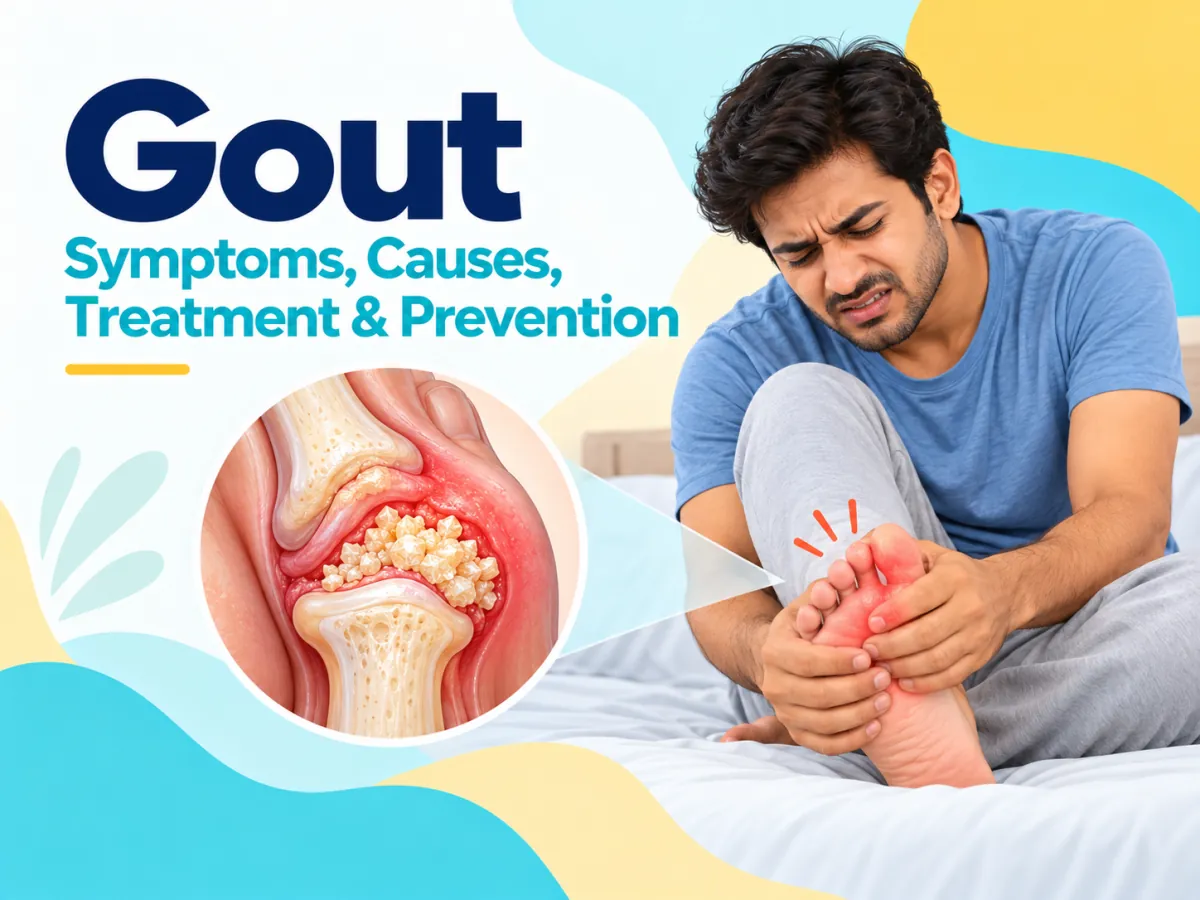
Imagine waking up at night with sudden, severe pain in your big toe, so bad that even a bedsheet touching it hurts. This is how many people describe their first gout attack.
Gout is a common and very treatable form of arthritis. It is managed in two parts: easing the pain of an attack, and controlling uric acid over the long term to stop attacks from coming back. This guide explains gout symptoms, causes, treatment and ways to prevent attacks.
What Is Gout and Why Do Urate Crystals Form?
Gout is a type of inflammatory arthritis caused by uric acid crystals in the joints. Uric acid is a normal waste product made when the body breaks down substances called purines. It is usually removed by the kidneys.
When there is too much uric acid in the blood for a long time, known as high uric acid, it can form sharp, needle-like crystals in and around the joints. The immune system reacts to these crystals, causing a sudden, painful attack of inflammation.
What Does a Gout Attack Feel Like?
A gout attack (flare) usually:
- Starts suddenly, often at night or early morning
- Causes intense pain that peaks within 12 to 24 hours
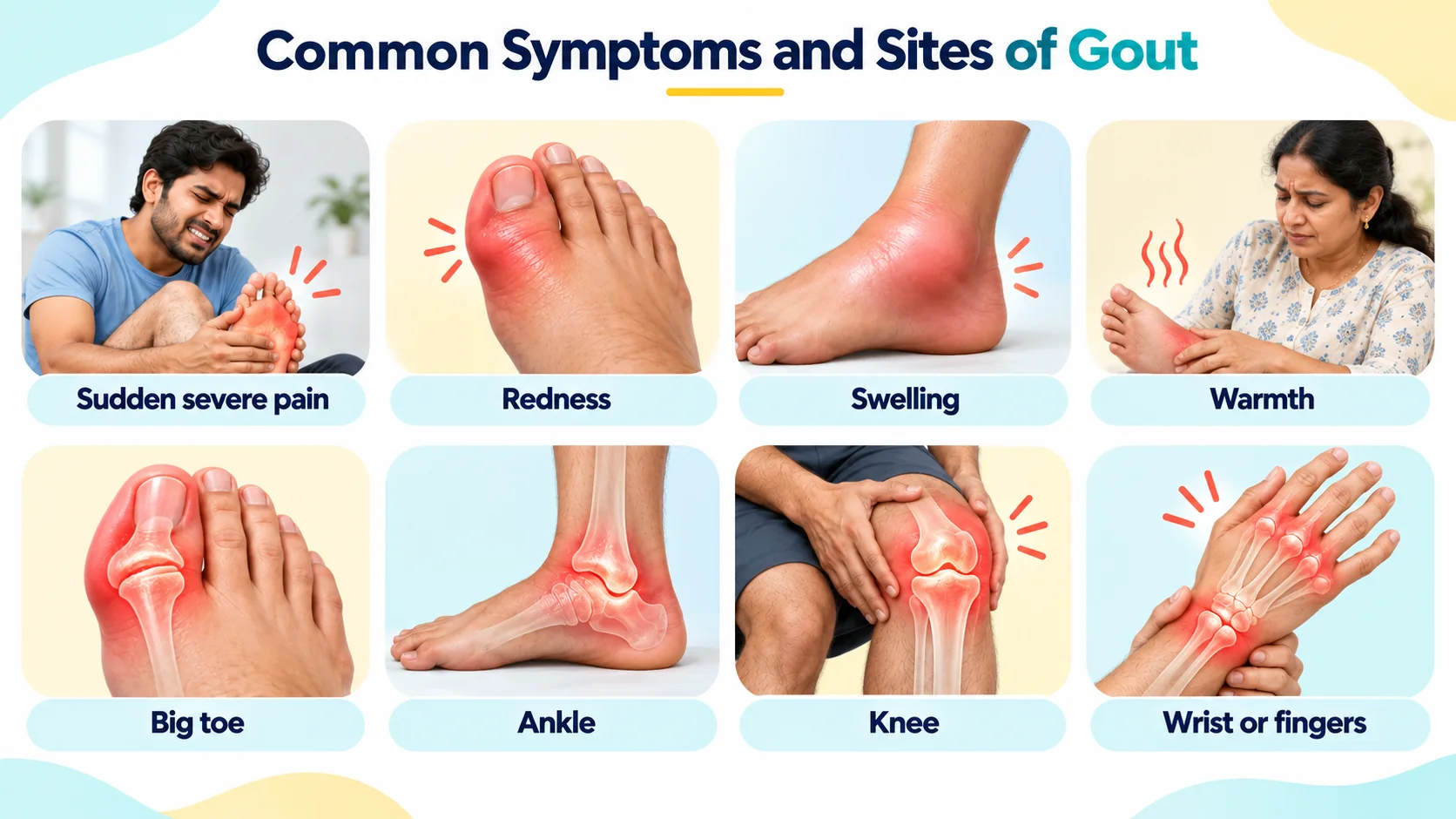
- Makes the joint red, hot, swollen and extremely tender
- Improves over one to two weeks, even without treatment
Between attacks, there may be no symptoms at all. Without treatment, attacks often become more frequent, last longer and affect more joints.
Which Joints Does Gout Commonly Affect?
The big toe is the most common site, especially for the first attack. Gout symptoms in the feet can also affect the ankle and the top of the foot. Other joints include the knee, wrist, fingers and elbow.
Over years, uncontrolled gout can cause tophi, firm lumps of uric acid crystals under the skin, often on the fingers, elbows, ears or toes.
Causes and Risk Factors
Gout is more likely if you:
- Are a man, or a woman after menopause
- Have a family history of gout
- Are overweight
- Drink alcohol, especially beer and spirits
- Have a diet high in red meat, organ meats or seafood, or drink sugary drinks often
- Have high blood pressure, diabetes, kidney disease or heart disease
- Take certain medicines, such as some water tablets (diuretics) or low-dose aspirin
Diet plays a part, but gout is not caused by food alone. Genes and how your kidneys handle uric acid matter just as much.
How Is Gout Diagnosed?
- Joint fluid test: a small amount of fluid is taken from the swollen joint with a needle and checked for uric acid crystals. This is the most reliable test.
- Blood uric acid test: useful, but uric acid can be normal during an attack, so it may need to be repeated later.
- Imaging: a joint ultrasound can show crystal deposits, and X-rays can show long-term joint damage.
What to Do During an Acute Flare
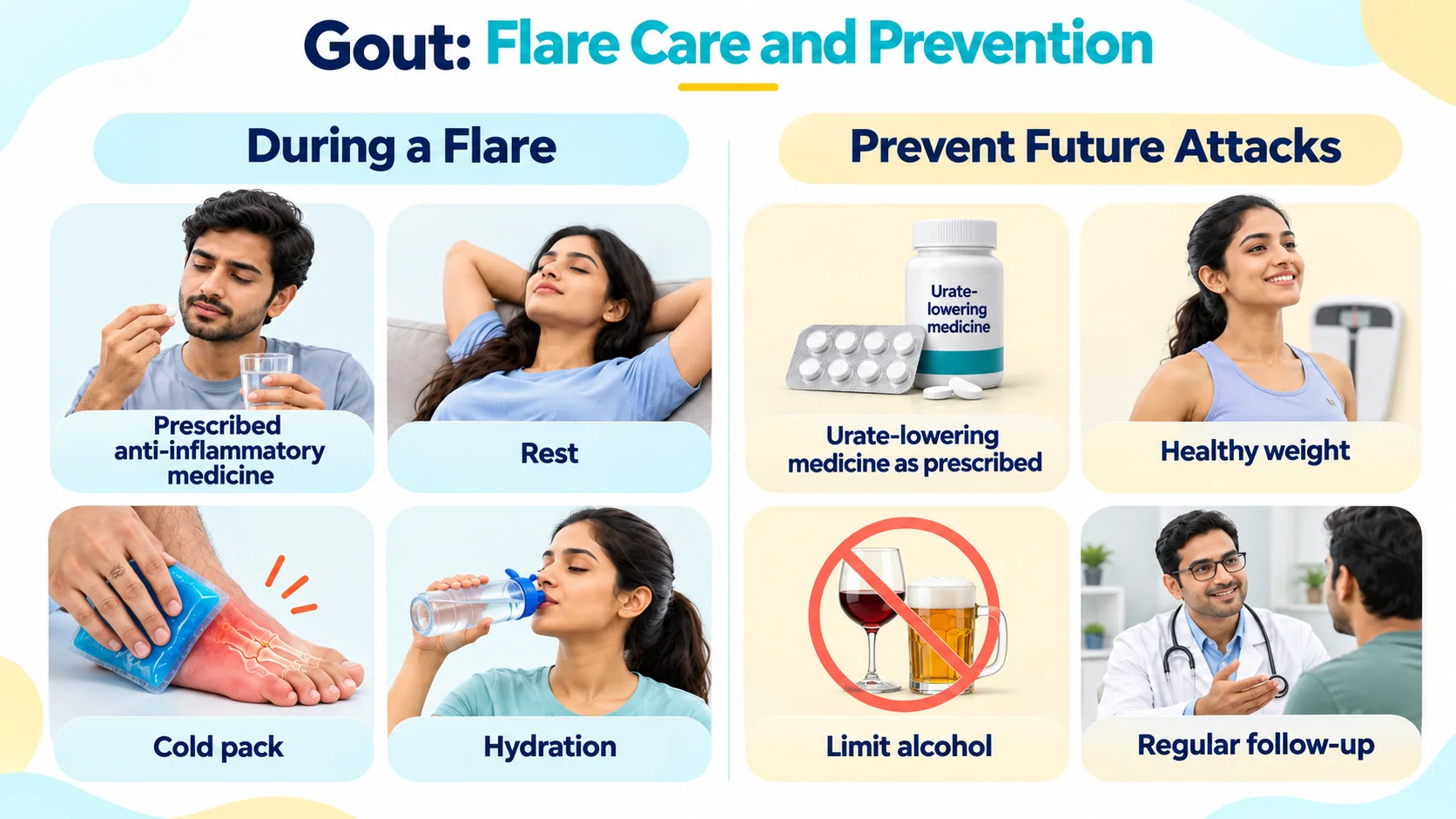
- Rest the affected joint and keep it raised
- Apply an ice pack wrapped in a cloth for about 20 minutes at a time
- Drink plenty of water
- Avoid alcohol and sugary drinks
- Start the treatment your doctor has advised as early as possible
If you already take a long-term uric acid medicine, do not stop it during a flare unless your doctor tells you to.
Medicines Used for a Flare
Your doctor may prescribe one of these to reduce pain and inflammation:
- Anti-inflammatory painkillers (NSAIDs)
- Colchicine
- Steroids, as tablets or an injection into the joint
These work best when started early. The right choice depends on your kidney function, other health conditions and medicines. Learn more in our guide on gout treatment.
Long-Term Urate-Lowering Treatment
If you have frequent attacks, tophi, kidney stones or joint damage, your doctor may recommend a daily medicine to lower uric acid, such as allopurinol or febuxostat.
The aim is to keep uric acid below a target set by your doctor, often below 6 mg/dL. Over time, this dissolves the crystals and stops attacks. In the first few months, attacks can sometimes increase, so your doctor may also give a preventive medicine. These medicines usually need to be taken long term, and you should not stop them without medical advice.
Food, Alcohol, Hydration and Weight Management
Lifestyle changes support treatment but are rarely enough on their own:
- Limit organ meats, red meat and seafood such as prawns
- Cut down on alcohol, especially beer and spirits
- Avoid sugary drinks and packaged juices high in fructose
- Drink plenty of water
- Lose weight gradually if you are overweight
Complications of Untreated Gout
Without proper treatment, gout can lead to frequent, longer attacks, tophi, permanent joint damage, kidney stones and kidney disease. Gout is also linked with heart disease, so overall health checks are important.
When Should You Seek Urgent Care?
Get urgent medical help if a hot, swollen joint comes with fever or chills, as this could be a joint infection, which can look like gout. Also see a doctor promptly for your first suspected attack, very severe pain, or an attack that does not improve within a few days.
For repeated attacks or tophi, a rheumatologist can plan long-term treatment.

