



A gout flare can be one of the most painful experiences, often starting suddenly at night. The good news is that gout is very treatable.
Gout treatment works on two tracks: calming today's flare quickly, and lowering uric acid over the long term so that flares stop coming back. This guide explains both, along with important medicine-safety points.
How to Recognise a Gout Flare
- Sudden, intense pain in a joint, often starting at night or early morning
- Redness, warmth and swelling
- Extreme tenderness, so that even a bedsheet touching the joint hurts
- Most often in the big toe, but also the ankle, foot, knee, wrist or fingers
Pain usually peaks within 12 to 24 hours.
Track 1: Managing Today's Flare
What to Do in the First 24 Hours
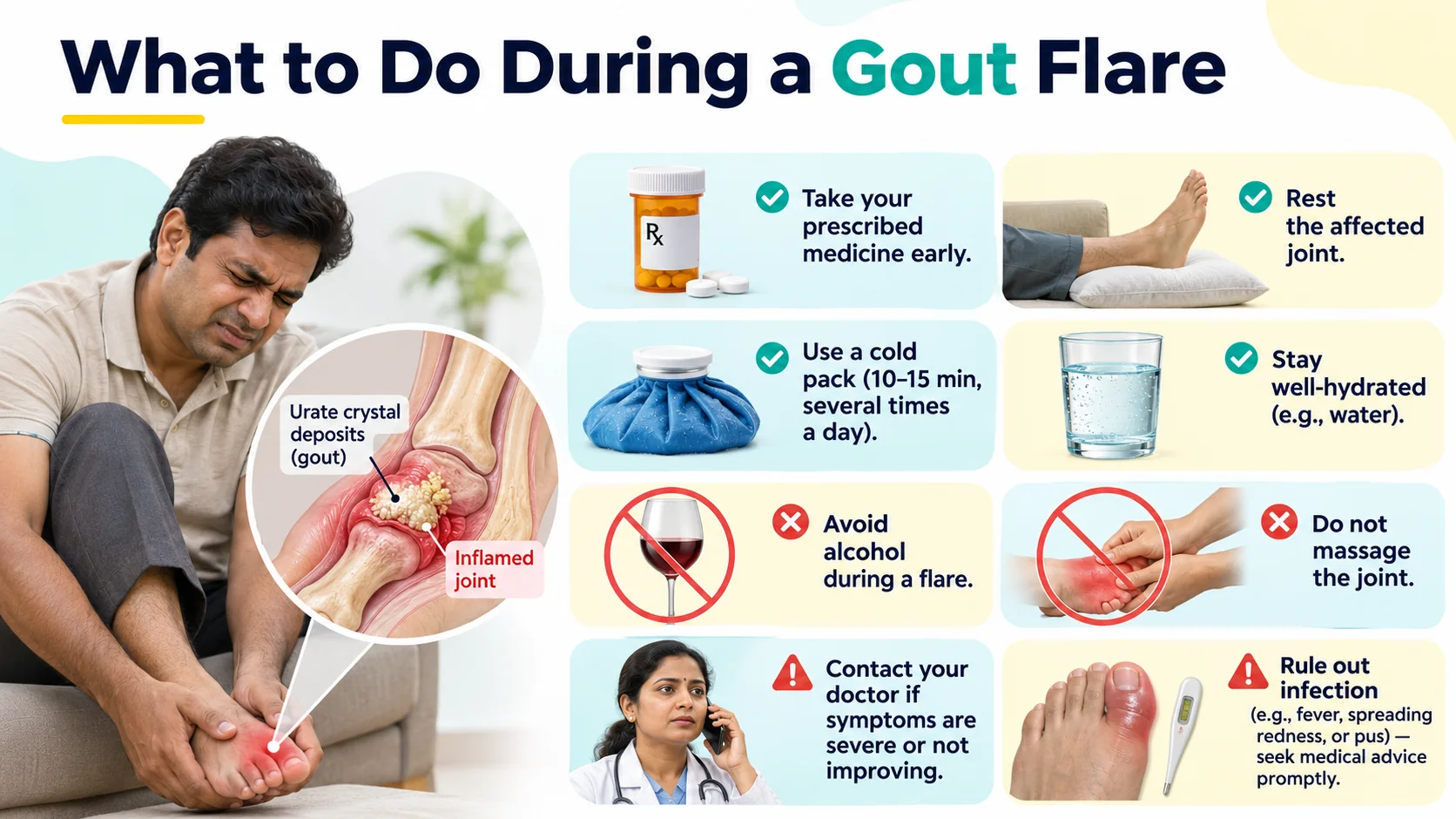
- Start treatment early: flare medicines work best when taken as soon as possible after symptoms begin. If you already have a flare plan from your doctor, follow it.
- Contact a doctor: especially if this is your first attack, or if you are unsure it is gout.
- Rest and raise the joint.
Medicines Doctors Use for Acute Gout
Your doctor may prescribe one of these for gout flare treatment:
- NSAIDs for gout: anti-inflammatory painkillers that reduce pain and swelling
- Colchicine: reduces gout inflammation, and works best when started early
- Steroids: as tablets or an injection into the joint, often used when NSAIDs or colchicine are not suitable
The right choice depends on your kidney function, stomach, heart health, diabetes and other medicines. Take these medicines only as prescribed, as some, including colchicine, can interact with other drugs.
Rest, Cold Packs and Hydration
- Rest the affected joint and keep it raised
- Apply an ice pack wrapped in a cloth for about 20 minutes at a time
- Drink plenty of water
- Use a frame or pillow to keep bedsheets off a painful toe
What Not to Do During a Flare
- Do not stop your long-term uric acid medicine unless your doctor tells you to
- Do not take aspirin for gout pain
- Avoid alcohol and sugary drinks
- Do not use leftover steroids or someone else's medicines
- Do not ignore a fever with a hot, swollen joint
Track 2: Preventing Future Attacks
When Long-Term Urate-Lowering Therapy Is Considered
Your doctor may recommend a daily medicine to lower uric acid if you have:
- Two or more flares a year
- Tophi (lumps of uric acid crystals under the skin)
- Joint damage seen on imaging
- Uric acid kidney stones
- Sometimes, after a first flare, in people with kidney disease or very high uric acid
Starting and Monitoring Urate-Lowering Medicine
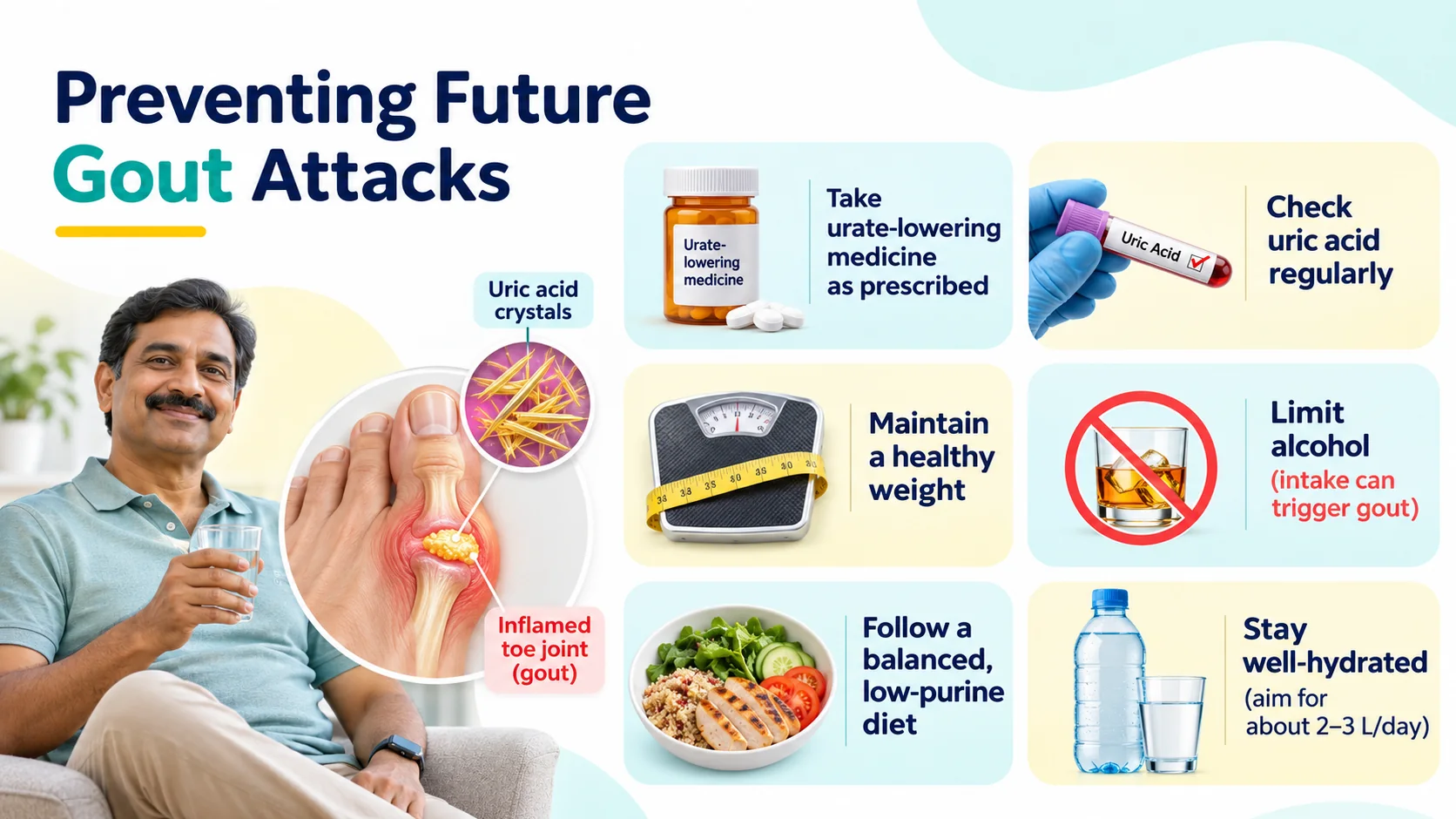
- Allopurinol is usually the first choice, and febuxostat is an alternative.
- Treatment usually starts at a low dose and is increased gradually until uric acid reaches the target.
- Regular uric acid blood tests check progress, along with kidney and liver function.
- The urate target is usually below 6 mg/dL, and lower for people with tophi, as set by your doctor.
- These medicines are usually taken long term. Stopping them often allows uric acid to rise and flares to return.
If you develop a skin rash after starting allopurinol, stop taking it and seek medical advice urgently, as rarely it can cause a serious reaction.
Preventive Medicine During Initiation
In the first few months of lowering uric acid, flares can temporarily become more frequent as crystals dissolve. Your doctor may prescribe a low-dose preventive medicine, such as colchicine, for several months to reduce this risk. This does not mean the treatment is failing.
Diet, Alcohol, Weight and Comorbidities
Gout prevention also involves lifestyle changes, although these are usually not enough on their own:
- Limit red meat, organ meats and seafood
- Cut down on alcohol, especially beer and spirits
- Avoid sugary drinks and juices high in fructose
- Drink plenty of water
- Lose weight gradually if you are overweight
- Manage blood pressure, diabetes, cholesterol and kidney health, and ask your doctor whether any of your medicines raise uric acid
Read more about high uric acid.
When Severe Joint Pain May Be an Emergency
Get urgent medical help if you have:
- A hot, swollen joint with fever or chills, which could be a joint infection
- Several swollen joints with fever
- Severe pain that does not improve within a few days of treatment
- A rash, blistering or feeling very unwell after starting a new gout medicine

