



Your blood test report shows high uric acid, and now you are wondering what it means. Is it serious? Do you have gout? Do you need medicines?
The good news is that a high uric acid result on its own is common, and many people never develop any problems from it. This guide explains what uric acid is, what counts as a high level, the common causes, its link with gout and kidney stones, and when treatment is and is not needed.
What Is Uric Acid?
Uric acid is a natural waste product. Your body makes it when it breaks down purines, substances found in your own cells and in some foods. Most uric acid dissolves in the blood, passes through the kidneys and leaves the body in urine.
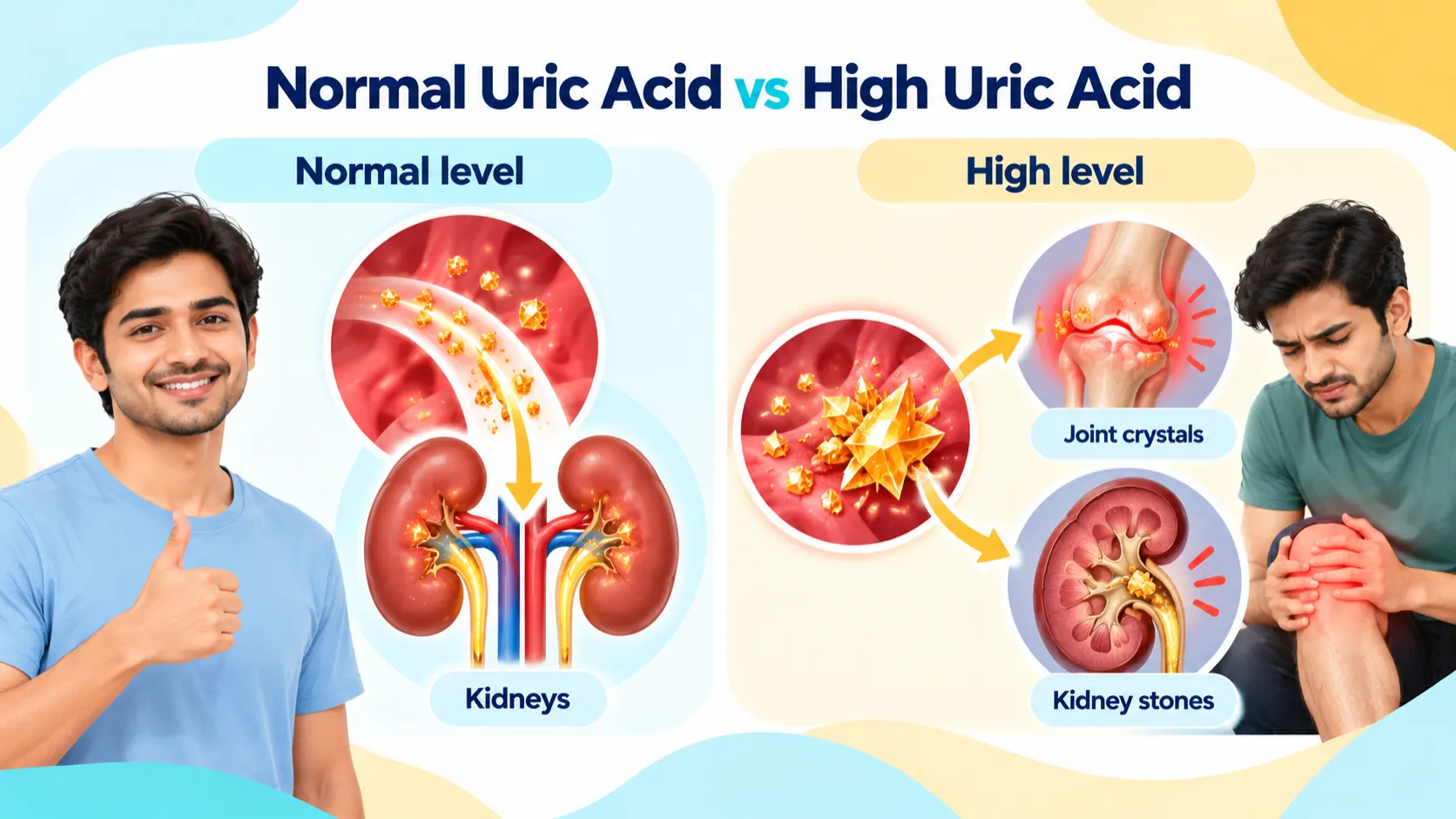
When the body makes too much uric acid, or the kidneys remove too little, the level in the blood rises. This is called hyperuricemia.
What Counts as a High Result, and Why Lab Ranges Differ
The normal uric acid level is often reported around these ranges:
These are only examples. Each laboratory sets its own reference range, so always compare your result with the range printed on your report.
Doctors also consider whether the level is high enough for crystals to form. Uric acid starts to form crystals above about 6.8 mg/dL, which is why that number matters in gout care.
Does High Uric Acid Cause Symptoms?
Usually not. Most people with high uric acid feel completely well. This is called asymptomatic hyperuricemia.
High uric acid symptoms appear only if crystals form and cause a problem, such as:
- Sudden, severe joint pain and swelling, often in the big toe (gout)
- Pain in the side or back, or blood in the urine (kidney stones)
General body aches or tiredness are not usually caused by high uric acid.
Common Causes and Risk Factors

- A diet high in red meat, organ meats and seafood
- Alcohol, especially beer
- Sugary drinks and packaged juices high in fructose
- Being overweight, or having insulin resistance or diabetes
- Kidney disease, which reduces uric acid removal
- Certain medicines, such as some water tablets (diuretics) and low-dose aspirin
- High blood pressure
- Family history and genes
- Dehydration
- Conditions with high cell turnover, such as psoriasis or some cancer treatments
High Uric Acid, Gout and Kidney Stones
High uric acid is the main risk factor for gout, a painful form of arthritis caused by uric acid crystals in the joints. It can also lead to uric acid kidney stones.
However, high uric acid is not the same as gout. Most people with high uric acid never develop gout.
How Doctors Evaluate an Abnormal Result
If your uric acid is high, your doctor may:
- Repeat the test to confirm the result
- Ask about joint pain, kidney stones, diet, alcohol and medicines
- Check kidney function, blood sugar, cholesterol and blood pressure with blood tests
- Look for related conditions such as obesity or diabetes
When Treatment Is and Is Not Usually Needed
Usually not needed with medicines: if you have high uric acid but no gout, tophi or kidney stones, most guidelines do not recommend uric acid-lowering medicines. Lifestyle changes and monitoring are usually advised instead.
Usually needed: if you have gout with repeated attacks, tophi, joint damage or uric acid kidney stones. Your doctor may also recommend treatment in certain special situations.
The decision should always be made with your doctor, based on your overall health.
Medicines That Lower Uric Acid
When treatment is needed, doctors commonly use:
- Allopurinol or febuxostat, which reduce how much uric acid the body makes
- Other medicines that help the kidneys remove more uric acid, in some cases
These medicines are usually taken long term, with regular blood tests. Take them only on a doctor's advice, and do not stop them on your own.
Diet and Lifestyle Changes
- Limit red meat, organ meats and seafood
- Cut down on alcohol, especially beer
- Avoid sugary drinks and fruit juices with added sugar
- Drink plenty of water through the day
- Lose weight gradually if you are overweight
- Ask your doctor whether any of your medicines raise uric acid
When Should You Consult a Doctor?
See a doctor if:
- Your uric acid is high on more than one test
- You have sudden joint pain and swelling
- You have kidney stones or pain in the side or back
- You have a family history of gout or kidney disease
A rheumatologist can help if you have gout or are unsure whether you need treatment.

