


.png)
A throat infection occurs when viruses or bacteria infect the throat, causing inflammation, soreness and pain while swallowing. It usually starts with a sore throat and pain while swallowing, sometimes with fever or a cough. Most throat infections are caused by viruses and get better on their own, but some are caused by bacteria and need antibiotics. That is why the right treatment depends on the cause.
This guide explains the causes, symptoms, treatment and prevention of a throat infection, and when to see a doctor or an ENT specialist.
What Is a Throat Infection?
Your throat (pharynx) is the tube that carries air and food from your nose and mouth to your voice box and food pipe. When a virus or bacteria infects it, the throat becomes inflamed. Doctors call this pharyngitis. When the tonsils are mainly affected, it is called tonsillitis.
A sore throat and a throat infection are not the same thing. A sore throat is a symptom: the pain or scratchiness you feel. A throat infection is one possible cause of it. A sore throat can also come from allergies, acid reflux or smoke, which is why antibiotics do not help every sore throat.
What Causes a Throat Infection?
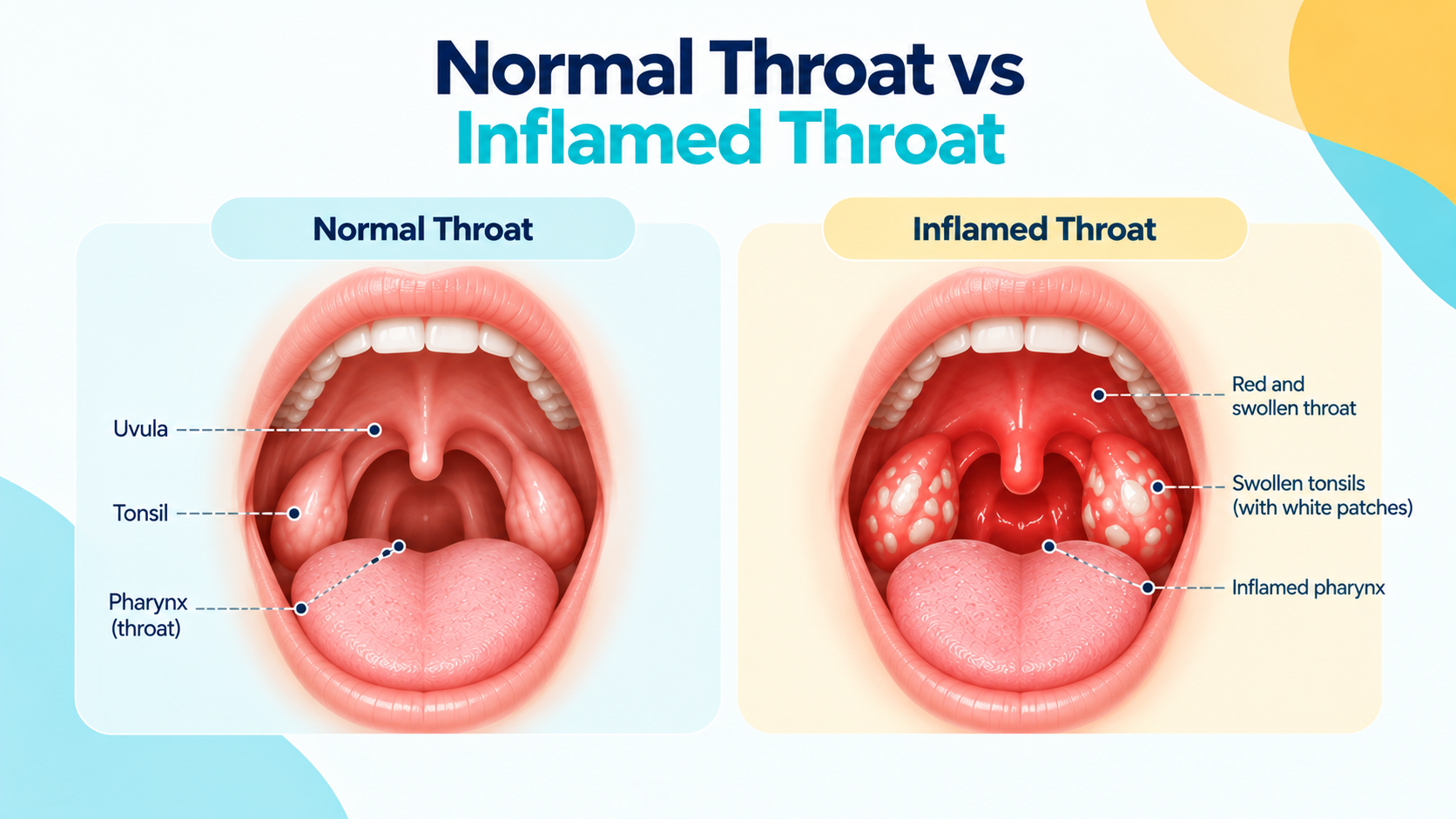
Viruses cause most throat infections. Common ones are cold viruses, flu and COVID-19. A viral infection usually comes with a cough, runny nose or hoarse voice.
Bacteria cause fewer cases. The main one is group A Streptococcus, which causes strep throat. It is most common in children aged 5 to 15 and often starts suddenly with severe throat pain, fever and swollen tonsils, usually without a cough.
These infections spread through droplets from coughs and sneezes, and through contact with the saliva or mucus of an infected person.
Some sore throats are not infections at all:
- Allergies: mucus dripping down the back of the throat causes a scratchy throat and cough.
- Acid reflux: stomach acid coming up irritates the throat, often worse in the morning.
- Irritants: smoke, pollution, dry AC air and voice strain.
Common Symptoms of a Throat Infection
- Sore or scratchy throat
- Pain or difficulty swallowing
- Fever
- Red, swollen tonsils, sometimes with white patches
- Cough, runny or blocked nose
- Hoarse voice
- Swollen, tender glands in the neck
- Headache and tiredness
Throat pain can sometimes be felt in the ears, especially while swallowing. In young children, watch for refusing food or drinks, drooling or crying while swallowing, and consult a paediatrician if you are worried.
Viral or bacterial? A quick comparison
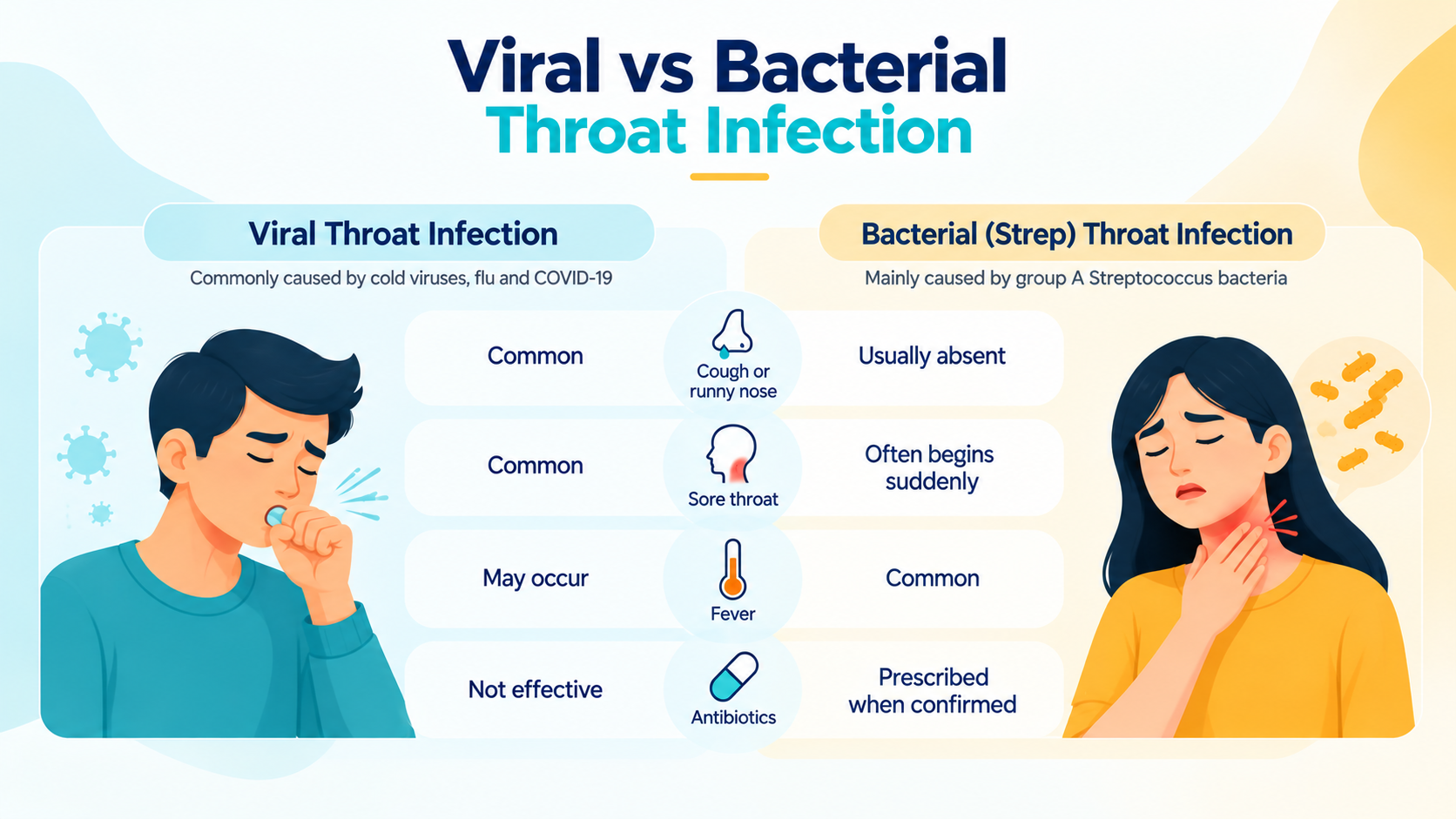
Symptoms can overlap. A doctor may recommend a rapid strep test or throat culture to confirm strep throat.
How Is a Throat Infection Treated?
Treatment depends on the cause.
Viral throat infections do not need antibiotics. They usually get better on their own with rest and home care. For flu or COVID-19, a doctor may sometimes prescribe antiviral medicine, especially for people at higher risk. Paracetamol or ibuprofen can ease pain and fever, used as advised by your doctor. Do not give aspirin to children or teenagers.
Confirmed strep throat is treated with prescribed antibiotics. If your doctor suspects strep, they may do a quick throat swab test to confirm it. If antibiotics are prescribed, take them exactly as directed and finish the full course, even if you feel better. Never take leftover antibiotics or buy them without a prescription.
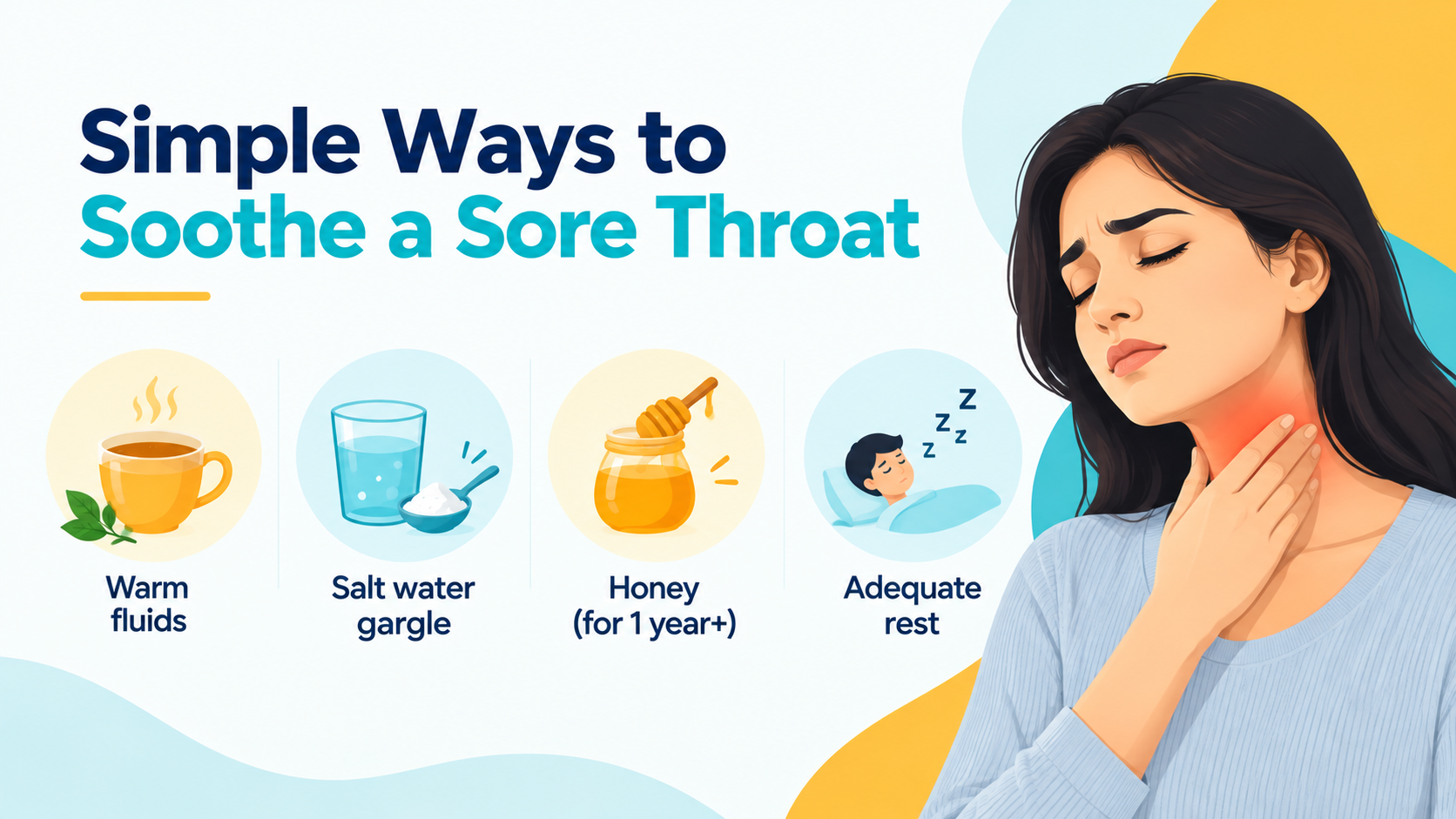
Home care to ease symptoms:
- Drink plenty of warm fluids, like warm water, ginger tea or soup
- Gargle with salt water (half a teaspoon of salt in a glass of warm water)
- Take a spoonful of honey in warm water (never for babies under 1 year)
- Use lozenges for short-term relief (not for young children)
- Get adequate rest and avoid straining your voice
- Use a humidifier in dry or AC rooms
If allergies, reflux or smoke are behind your sore throat, treating that trigger brings relief.
How to Prevent Throat Infections
- Wash your hands often with soap and water
- Don't share cups, bottles or cutlery
- Keep away from people who are sick, and stay home when you are unwell
- Cover coughs and sneezes with a tissue or your elbow
- Avoid smoking and secondhand smoke
- Get your yearly flu vaccine
When Should You See a Doctor?
Get emergency care right away if you have difficulty breathing, cannot swallow your saliva or are drooling (especially in children), or have severe swelling in the neck.
See a doctor if you have:
- Severe throat pain, or pain on one side only
- A high fever, or a fever lasting more than two to three days
- A sore throat that is not better after a week
- Blood in your saliva, a skin rash or signs of dehydration
- Throat infections that keep coming back
For repeated throat infections, tonsillitis or a lump in the neck, an ENT (ear, nose and throat) specialist can find the cause.
Conclusion
Most throat infections are caused by viruses and get better within a week with rest and home care. Antibiotics help only when bacteria are the cause, so see a doctor if your symptoms are severe, last longer than a week or keep coming back.
For frequent sore throats or tonsillitis, Docube's ENT specialists in Bengaluru can help. Book a consultation with a Docube ENT doctor today.
Disclaimer: This article is for general information only and does not replace professional medical advice. Please consult a qualified doctor for diagnosis and treatment.

