


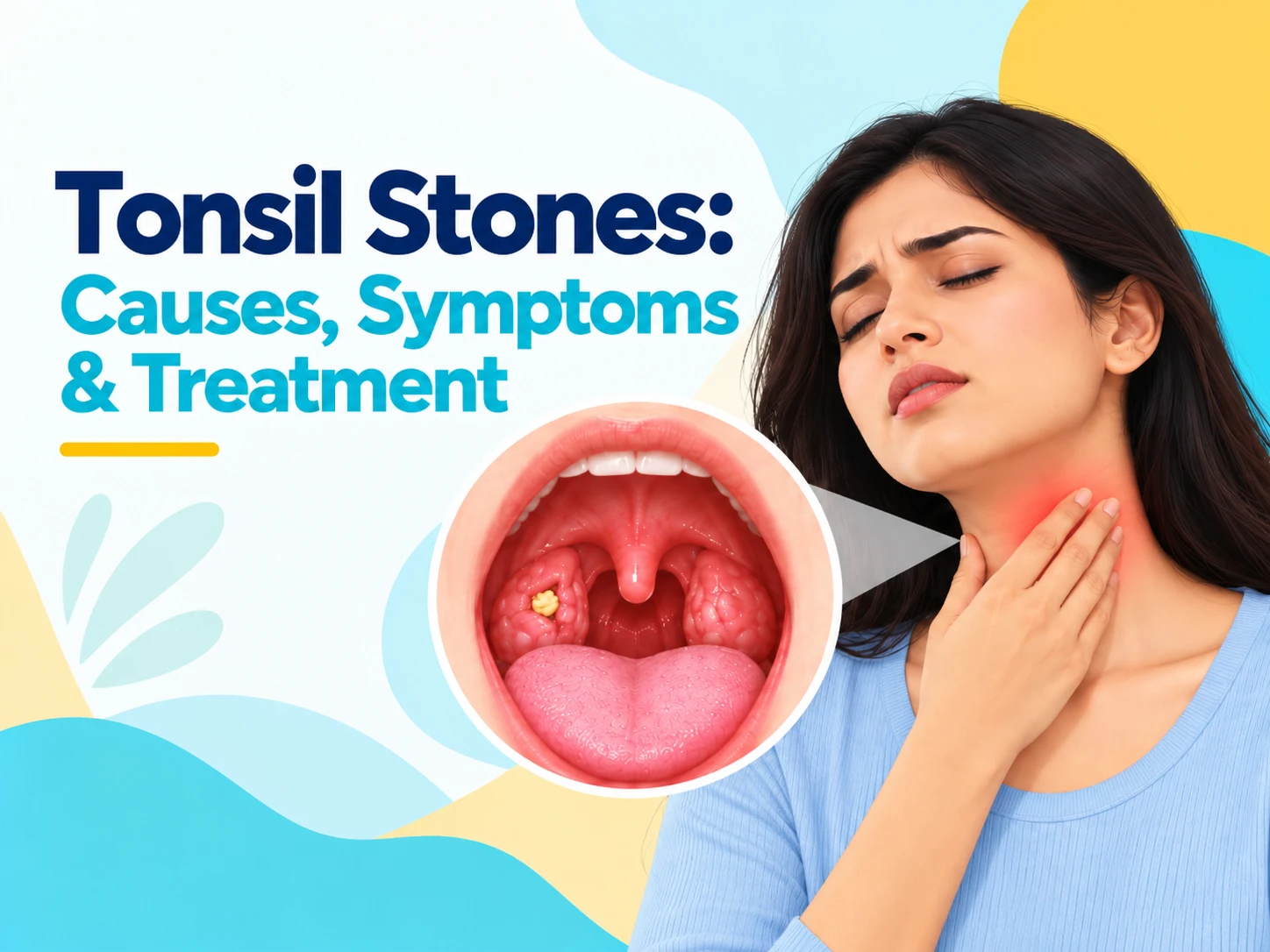
Have you noticed small white or yellow lumps at the back of your throat, or bad breath that does not go away even after brushing? These may be tonsil stones. They are common, usually harmless, and often go away on their own.
This guide explains what tonsil stones are, why they form, how to recognise them, safe treatment options and when to see an ENT specialist.
What Are Tonsil Stones?
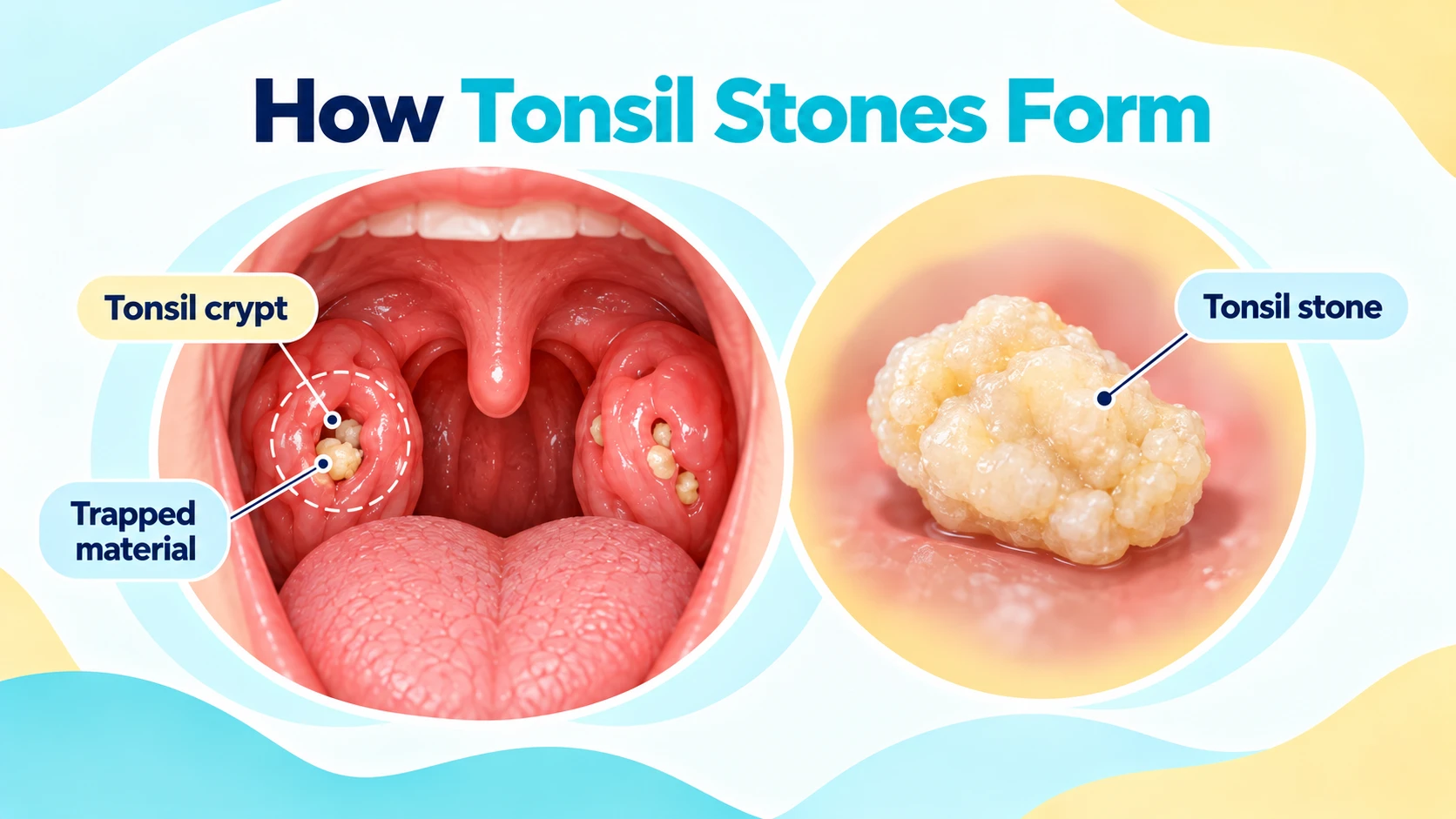
Tonsil stones, medically called tonsilloliths, are small deposits that form on the tonsils. Your tonsils have small pits and folds on their surface called crypts. Food particles, dead cells, mucus and bacteria can collect in these crypts and slowly harden into white or yellow lumps.
Most tonsil stones are about the size of a grain of rice, though some are larger. They are not an infection and are not contagious.
What Causes Tonsil Stones?
The main reason tonsil stones form is the shape of the tonsils. Deep crypts trap material more easily, and this material can harden over time.
Some things may make tonsil stones more likely, although they are not proven direct causes:
- Repeated tonsillitis, which can make the crypts deeper
- Larger tonsils with deep crypts
- Poor oral hygiene
- Postnasal drip from allergies or sinus problems
- A dry mouth
Tonsil stones are more common in teenagers and adults. They can form even in people with good oral hygiene.
Symptoms of Tonsil Stones
Many people with tonsil stones have no symptoms and find them by chance. When symptoms do occur, they can include:
- Bad breath that does not improve with brushing, which is the most common symptom
- White or yellow lumps on the tonsils
- A feeling that something is stuck at the back of the throat
- Mild throat pain or irritation
- Coughing up small, bad-smelling lumps
- Discomfort when swallowing, with larger stones
- Occasional ear pain, as the throat and ear share nerves
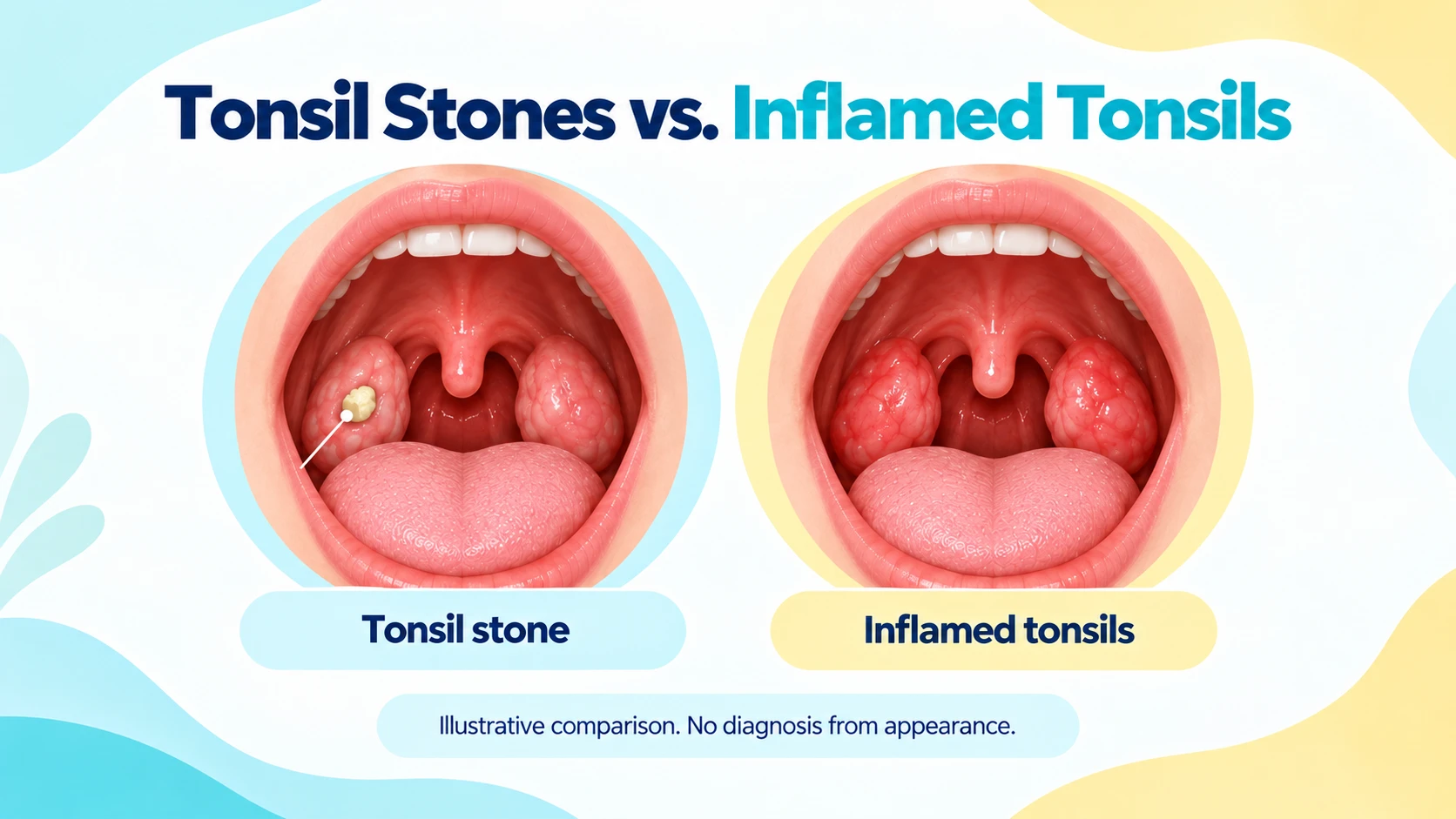
White spots on the tonsils are not always stones. This table shows general differences, but it is not a diagnosis:
Follicular tonsillitis, a type of tonsil infection, can cause white spots that look similar to stones. If you have a fever, severe throat pain or swollen neck glands, see a doctor.
How Are Tonsil Stones Treated?
Home Care and Observation
Small tonsil stones that cause no symptoms often need no treatment. Many come out on their own when you eat, cough or gargle. These steps can help:
- Gargle with warm salt water, especially after meals
- Brush your teeth twice a day and clean your tongue
- Drink plenty of water
- Cough gently, which can loosen a stone
Do not poke at tonsil stones with toothbrush handles, fingers, cotton buds or sharp objects, and avoid forceful water jets. These can injure the tonsils and cause bleeding or infection.
Removal by a Clinician
If a stone is large, uncomfortable or will not come out, an ENT specialist can remove it safely in the clinic using proper instruments, sometimes after a numbing spray.
Antibiotics are usually not needed for tonsil stones. They do not stop stones from coming back and are used only if there is an infection.
When Surgery May Be Considered
If tonsil stones keep coming back and cause ongoing bad breath or discomfort despite good care, or if you also have repeated tonsillitis, an ENT specialist may discuss other options. These can include procedures to reduce the tonsil crypts or, in selected cases, removal of the tonsils (tonsillectomy). Surgery carries risks such as bleeding, so it is considered only when the benefits clearly outweigh them.
How Can You Reduce Recurring Tonsil Stones?
- Brush twice a day, clean your tongue and floss regularly
- Gargle with salt water after meals
- Drink enough water through the day
- Avoid smoking
- Treat postnasal drip or allergies with your doctor's advice
Because the shape of the tonsils is the main cause, stones can still come back even with good care.
When Should You See an ENT Specialist?
See an ENT specialist if you have:
- Stones that are large, painful or do not come out
- Stones that keep coming back
- Bad breath that continues despite good oral care
- Uncertainty about whether the lumps are stones or something else
- One tonsil that looks much larger than the other
- Difficulty swallowing, bleeding, or a lump in your neck
See a doctor promptly if you have a fever, severe throat pain or swollen glands, as these suggest an infection.
Conclusion
Tonsil stones are common and usually harmless. Most can be managed with good oral hygiene and salt-water gargles, and many come out on their own. Avoid poking at them, and see a doctor if they cause pain, keep coming back or come with signs of infection. For persistent or recurring tonsil stones, Docube's ENT specialists in Bengaluru can help. Book a consultation with a Docube ENT doctor today.
Disclaimer: This article is for general information only and does not replace professional medical advice. Please consult a qualified doctor for diagnosis and treatment.

