


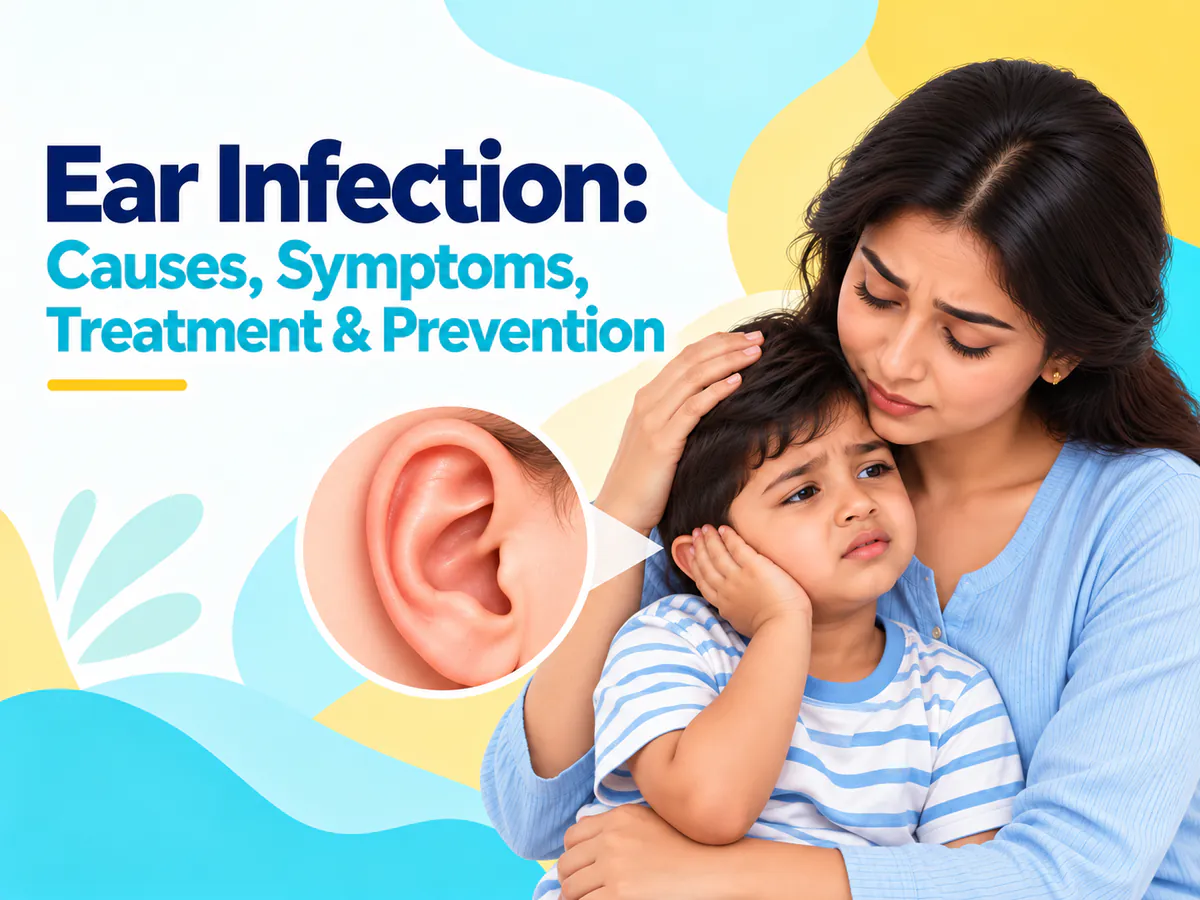
Ear pain is one of the most common reasons parents take a child to the doctor, and adults get ear infections too. Most ear infections get better within a few days, but some need medical treatment, and babies need extra care.
Important for parents: if a baby under 3 months has a fever of 38°C (100.4°F) or higher, contact a doctor immediately.
This guide explains the types of ear infection, their causes and symptoms, how they are treated and when to seek medical care.
What Is an Ear Infection?
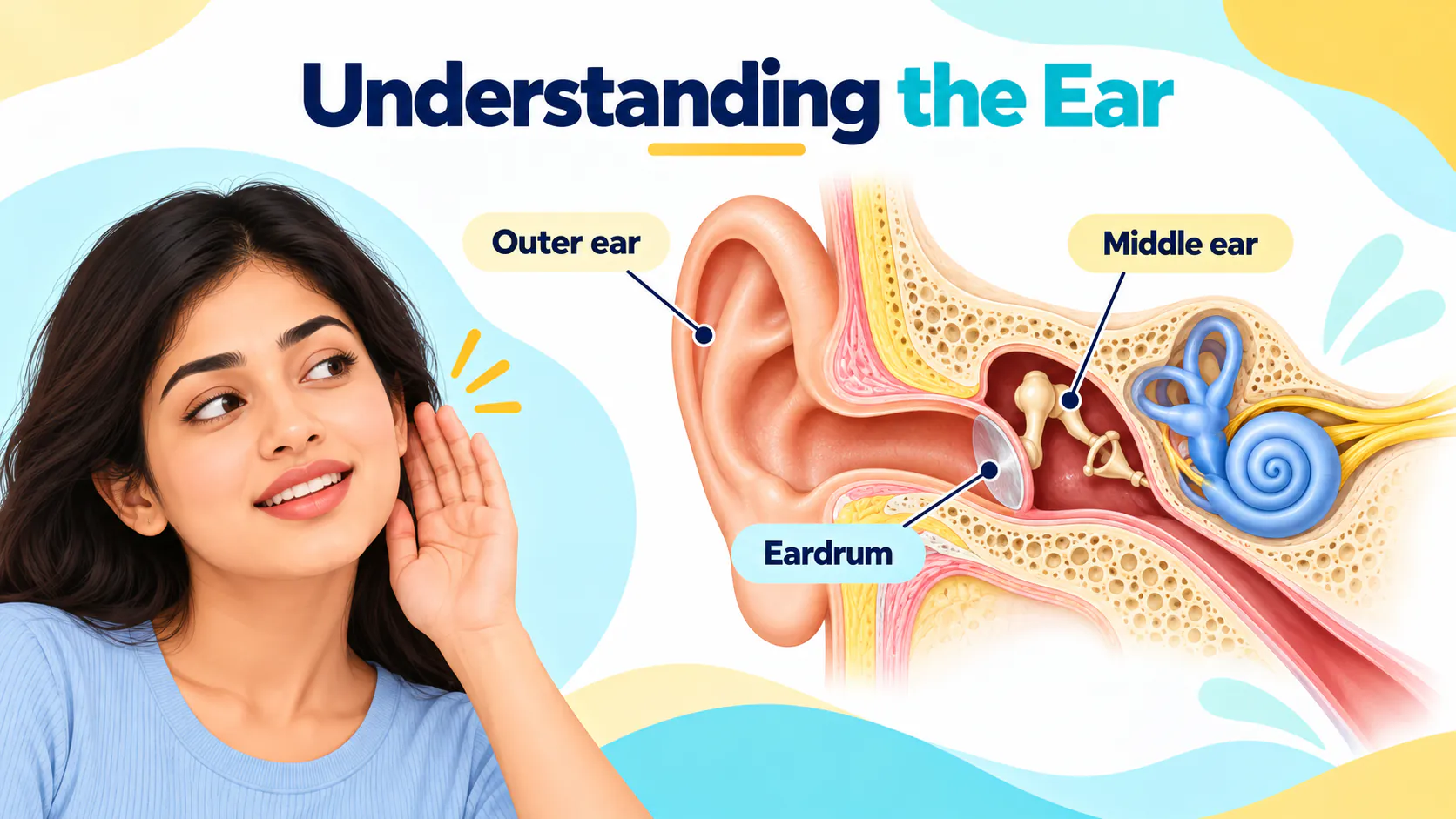
Your ear has three parts: the outer ear, the middle ear behind the eardrum, and the inner ear. Ear infections usually affect the outer or middle ear.
- Outer ear infection (otitis externa): an infection of the ear canal, often after water stays trapped in the ear or the canal is scratched. Touching or pulling the ear is usually painful.
- Middle ear infection (acute otitis media): an infection behind the eardrum, very common in children, often after a cold.
- Fluid behind the eardrum without infection (otitis media with effusion): fluid that stays after a cold or infection. It can cause muffled hearing but often no pain, and it frequently clears on its own.
What Causes Ear Infections?
The Eustachian tube connects the middle ear to the back of the nose. A cold, flu or allergy can make this tube swell and block, trapping fluid in the middle ear. Viruses or bacteria can then grow in this fluid and cause an infection.
Children get middle ear infections more often because their Eustachian tubes are shorter and flatter. Large adenoids can also block the tubes; read more in our guide on enlarged adenoids.
Other risk factors include exposure to cigarette smoke, frequent colds, attending day care, and bottle-feeding a baby while lying flat. Outer ear infections are more likely after swimming, using cotton buds, or scratching the ear canal.
Common Symptoms of an Ear Infection
In adults and older children, symptoms can include:
- Ear pain, often worse when lying down
- A feeling of fullness or blockage in the ear
- Muffled or reduced hearing
- Fever
- Fluid or discharge from the ear
- Itching and pain when the outer ear is touched (outer ear infection)
- Ringing in the ear (tinnitus) or mild dizziness
Discharge from the ear can sometimes mean a small hole has formed in the eardrum. This usually heals, but it should be checked by a doctor.
Ear Infection in Infants and Newborns
Babies cannot tell you that their ear hurts, so an infant ear infection can be hard to spot. Watch for:
- Crying more than usual, especially when lying down
- Irritability and trouble sleeping
- Fever
- Difficulty feeding, as sucking and swallowing can hurt
- Fluid coming from the ear
- Not responding to sounds as usual
- Tugging or rubbing the ear
Ear tugging alone does not confirm an ear infection, as babies also do this when teething or out of habit. A doctor needs to examine the ear to confirm it.
If you suspect an ear infection in a newborn or a baby under 3 months, see a doctor promptly. A fever of 38°C or higher in this age group needs immediate medical attention.
Do not put oil, garlic or onion juice, or any drops into a baby's ear, do not use cotton buds, and do not give any medicine without a doctor's advice. Consult a paediatrician or ENT specialist.
How Are Ear Infections Diagnosed and Treated?

Ear Examination and Pain Relief
A doctor examines the ear canal and eardrum with a small lighted instrument called an otoscope. They may also check how well the eardrum moves.
Pain relief is an important part of treatment. Paracetamol or ibuprofen may help at an age-appropriate dose. Follow your doctor's or pharmacist's advice, and for babies, give only medicines your doctor recommends.
When Observation or Antibiotics May Be Appropriate
Many middle ear infections get better within two to three days without antibiotics. For older children and adults with mild symptoms, a doctor may suggest watching for 48 to 72 hours with pain relief, and starting antibiotics if symptoms do not improve. This decision should always be made by a doctor. It is not suitable for young babies or severe infections.
Antibiotics are usually prescribed for babies, severe infections, ear discharge, or symptoms that are not improving. Outer ear infections are usually treated with prescribed ear drops, and the doctor may gently clean the ear canal.
Recurrent Infections and Hearing Follow-Up
If ear infections keep coming back, fluid stays behind the eardrum for more than three months, or hearing seems affected, see an ENT specialist. A hearing check, such as an audiometry test, may be recommended. In some children, the ENT specialist may discuss small ear tubes (grommets) or checking the adenoids.
How to Reduce the Risk of Ear Infections
- Keep children away from cigarette smoke
- Follow the recommended vaccination schedule, including pneumococcal and flu vaccines
- Breastfeed where possible, and don't bottle-feed a baby while lying flat
- Wash hands often to reduce colds
- Keep ears dry after swimming or bathing
- Don't put cotton buds or other objects in the ears
When Should You Seek Medical Care?
Get urgent medical care if:
- A baby under 3 months has a fever of 38°C or higher
- There is swelling, redness or pain behind the ear, or the ear is pushed forward
- There is a severe headache, stiff neck, confusion or weakness of the face
- A child is very drowsy, floppy or seems very unwell
See a doctor if:
- Ear pain lasts more than two to three days or is getting worse
- There is fluid or discharge from the ear
- Hearing remains muffled after the infection
- Ear infections keep coming back
- There is dizziness or balance trouble

