


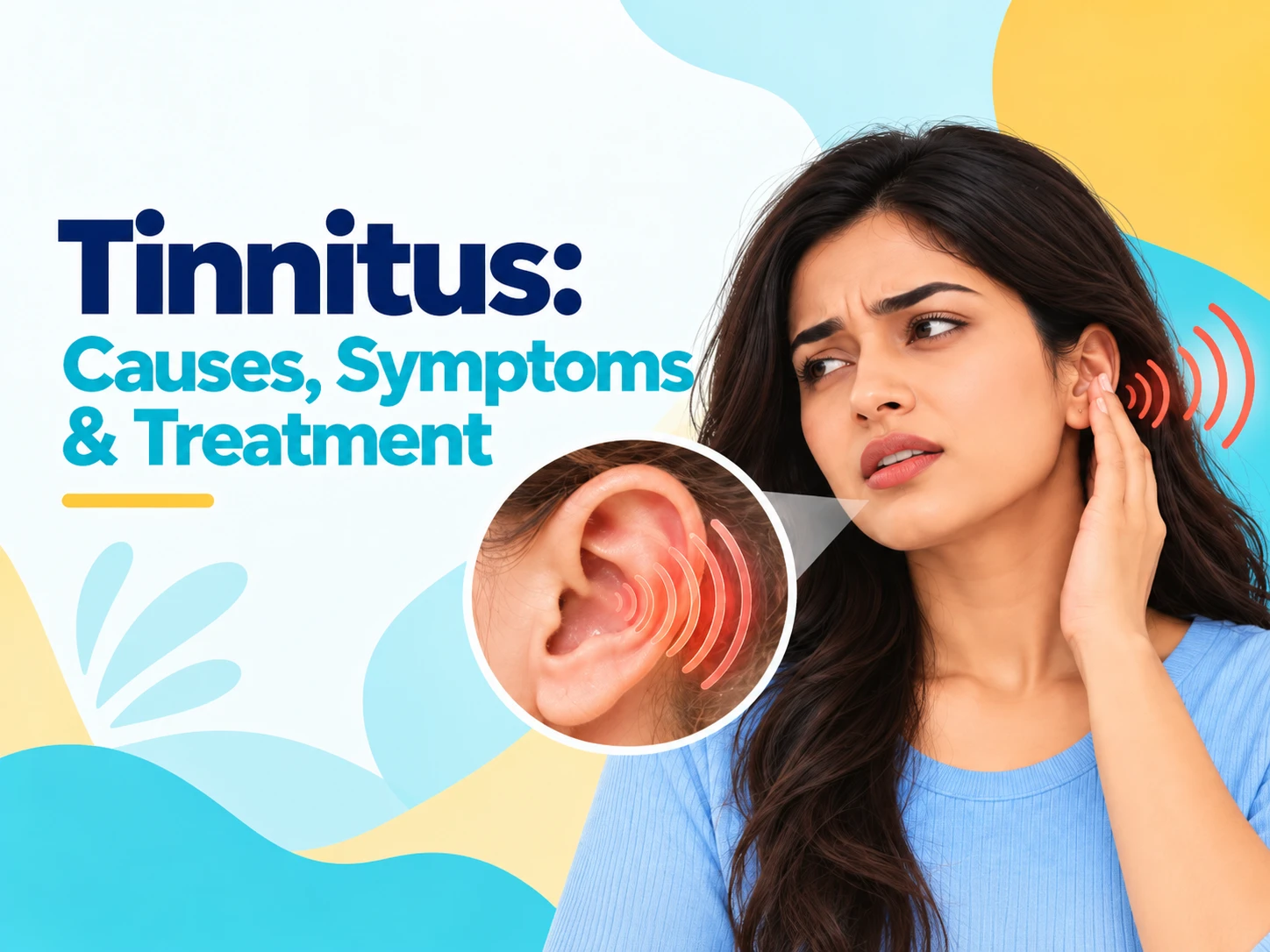
Do you hear ringing, buzzing or hissing in your ears when there is no sound around you? This is called tinnitus. It is very common and often harmless, but for some people it can affect sleep, concentration and mood.
Important: If you suddenly lose hearing in one or both ears, with or without tinnitus, get medical help the same day. Early treatment can make a difference.
This guide explains what tinnitus is, its common causes, how it is assessed and treated, and when to see an ENT specialist.
What Is Tinnitus?
Tinnitus is hearing a sound when there is no outside source of that sound. People describe it as ringing, buzzing, humming, hissing, whistling or clicking. It can be in one ear, both ears or feel like it is inside the head, and it can be constant or come and go.
Tinnitus is a symptom, not a disease on its own. It usually means something is affecting the hearing system.
A less common type, pulsatile tinnitus, is a rhythmic sound that beats in time with your heartbeat. It can be linked to blood flow near the ear and should always be checked by a doctor.
What Causes Tinnitus?
Tinnitus has many possible causes, including:
- Hearing loss: age-related hearing loss is one of the most common causes
- Loud noise: loud music, headphones at high volume, firecrackers or noisy machinery
- Earwax blockage
- Ear problems: ear infections, fluid behind the eardrum or Ménière's disease (which also causes dizziness and hearing changes)
- Certain medicines: some antibiotics, high doses of aspirin and some cancer medicines. Do not stop a prescribed medicine on your own; talk to your doctor first.
- Jaw or neck problems, such as jaw joint (TMJ) disorders
- Blood vessel conditions, which can cause pulsatile tinnitus
- Rarely, a non-cancerous growth on the hearing nerve, which usually causes tinnitus in one ear only
In many people, no single cause is found. Stress and tiredness can make tinnitus more noticeable.
Symptoms and Effects on Daily Life
Tinnitus is often most noticeable in quiet places or at night. Apart from the sound itself, it can lead to:
- Difficulty falling asleep
- Trouble concentrating
- Stress, anxiety or low mood
- Difficulty hearing clearly, if there is also hearing loss
How loud the tinnitus is does not always match how much it affects you. A soft sound can be very distressing for one person, while another person barely notices a louder one. That is why support for the impact of tinnitus is just as important as checking its cause.
How Is Tinnitus Assessed?
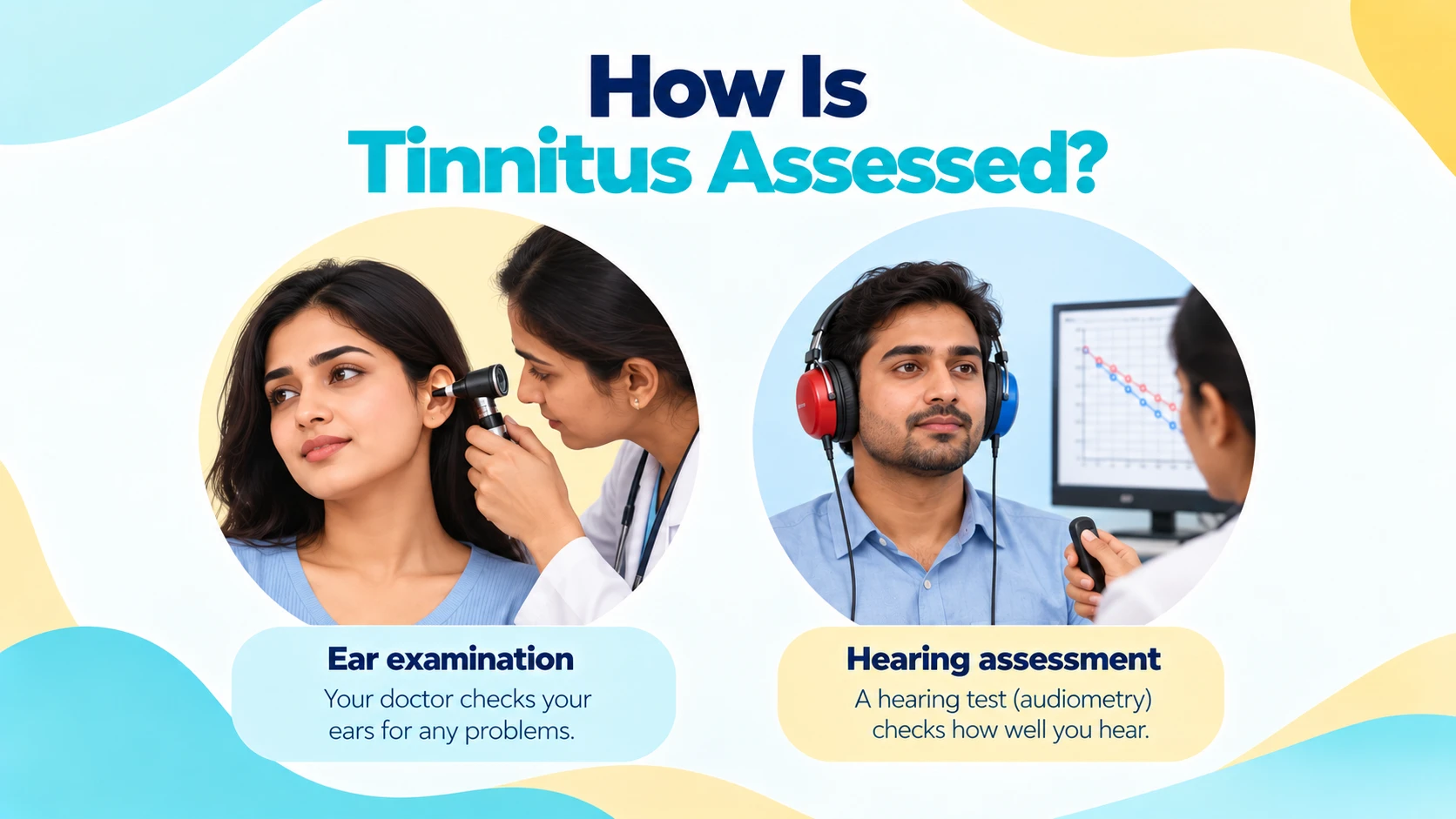
An ENT specialist will usually:
- Ask when the tinnitus started, whether it is in one or both ears, whether it pulses, and about noise exposure, medicines and other symptoms
- Examine your ears for wax, infection or other problems
- Arrange a hearing test, such as an audiometry test, to check for hearing loss
- Check how your middle ear is working, if needed
Further tests, such as a scan, are needed only in selected cases, for example when tinnitus is in one ear only, pulses with your heartbeat, or comes with other neurological symptoms.
What Treatments Can Help?
There is no single cure that works for everyone. However, many people find that tinnitus improves over time, and there are effective ways to reduce how much it bothers you.
Treating an Identifiable Cause
If a cause is found, treating it may reduce or stop the tinnitus. Examples include removing earwax safely in the clinic, treating an ear infection, reviewing medicines with your doctor, or managing conditions such as Ménière's disease.
Hearing Aids and Sound Approaches
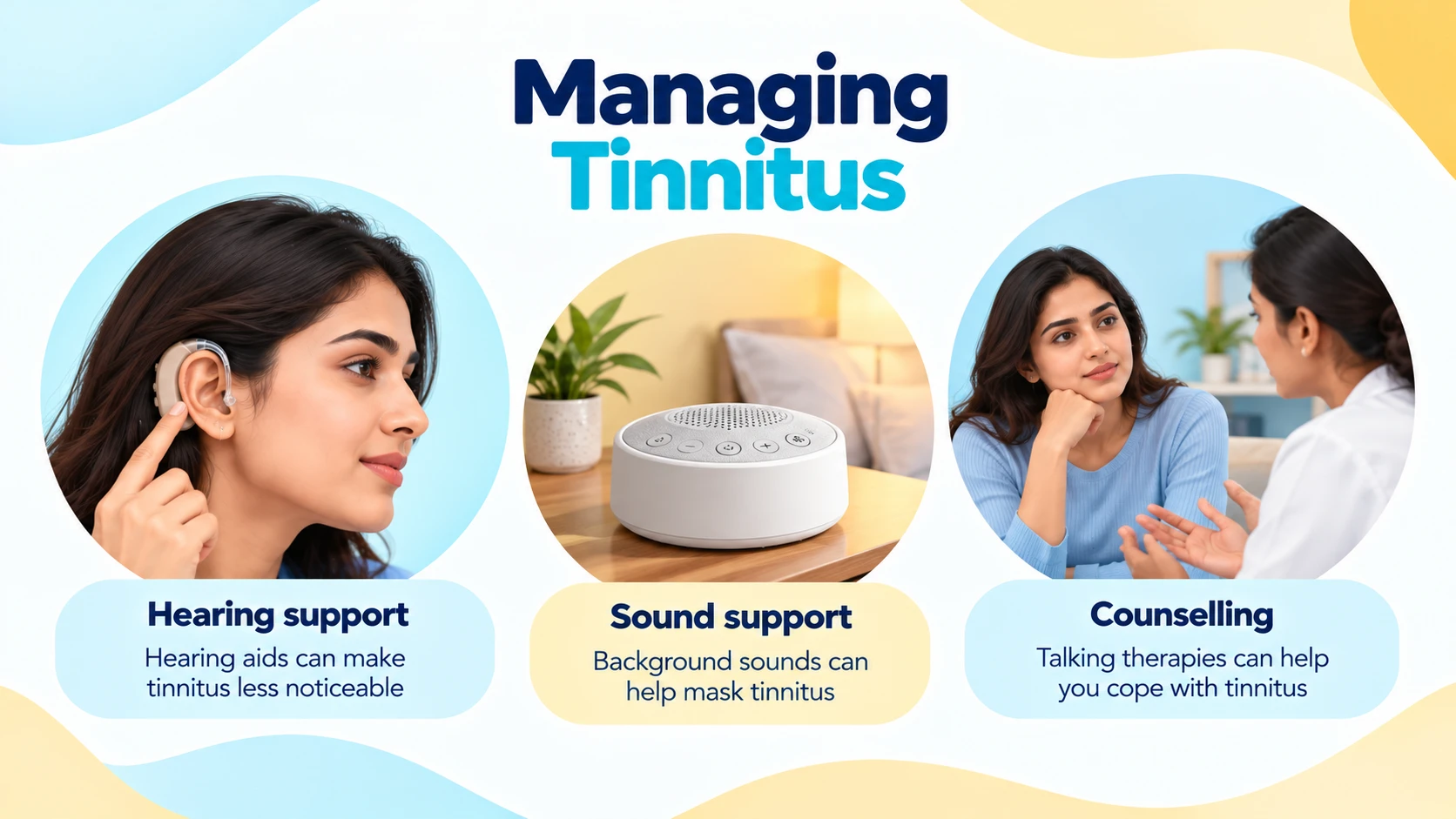
If you have hearing loss, hearing aids can make outside sounds easier to hear. This often makes tinnitus less noticeable. Not everyone with tinnitus needs a hearing aid; a hearing test shows whether one may help you.
Sound therapy uses gentle background sound, such as a fan, soft music, nature sounds or a sound generator, to make tinnitus less noticeable, especially at night. Some programmes combine sound therapy with counselling.
Counselling and Cognitive Behavioural Therapy
Cognitive behavioural therapy (CBT) is a type of talking therapy that helps you change how you react to tinnitus. It does not remove the sound, but it can reduce distress and improve sleep and daily life. Relaxation techniques and good sleep habits can also help.
Be cautious of supplements or products that promise a cure for tinnitus, as there is little evidence that they work.
When Should You See an ENT Specialist?
Get urgent medical help the same day if you have:
- Sudden hearing loss in one or both ears
- Tinnitus after a head injury
- Tinnitus with sudden weakness of the face, vision changes, severe dizziness or a severe headache
Book an appointment with an ENT specialist soon if you have:
- Tinnitus in one ear only
- Tinnitus that pulses in time with your heartbeat
- Tinnitus with hearing loss or dizziness
- Tinnitus that is getting worse or does not go away
- Tinnitus that affects your sleep, work or mood
How to Protect Your Hearing
- Keep headphone and earphone volume moderate, and take regular listening breaks
- Wear earplugs or earmuffs at loud events, near firecrackers or around noisy machinery
- Move away from loud sounds when you can
- Don't clean inside your ears with cotton buds
- Get regular hearing checks if you work in a noisy place
Use ear protection in loud places only. Wearing earplugs in ordinary quiet settings can make tinnitus more noticeable.
Conclusion
Tinnitus is common, and while it can be frustrating, it is often manageable. Treating any cause, protecting your hearing, and using approaches such as hearing aids, sound therapy and CBT can make a real difference. If you have tinnitus that is new, one-sided or affecting your daily life, Docube's ENT specialists in Bengaluru can assess your hearing and guide your next steps. Book a consultation with a Docube ENT doctor today.
Disclaimer: This article is for general information only and does not replace professional medical advice. Please consult a qualified doctor for diagnosis and treatment.

