



A nosebleed can be frightening, but most are not serious and can be stopped at home. The most common nosebleed causes are dry air, nose picking and irritation from colds or allergies.
If your nose is bleeding right now, go straight to How to Stop a Nosebleed Safely below. This guide also explains why noses bleed, how repeated nosebleeds are treated and when you need urgent care.
When Does a Nosebleed Need Urgent Care?
Go to the nearest emergency department, or call 112 or 108 for an ambulance, if:
- The bleeding does not stop after 10 to 15 minutes of continuous pressure
- The bleeding is very heavy, or you are swallowing a lot of blood and vomiting
- The nosebleed started after a head injury, fall or blow to the face
- You feel faint, dizzy, very weak or have difficulty breathing
- You take blood-thinning medicine and the bleeding is heavy or will not stop
See a doctor promptly if a child under 2 years has a nosebleed.
What Is a Nosebleed?
A nosebleed, medically called epistaxis, is bleeding from the inside of the nose. The lining of the nose has many tiny blood vessels close to the surface, especially at the front of the wall between the nostrils. These vessels are easily damaged.
There are two main types:
- Front-of-nose (anterior) nosebleeds: the most common type. Blood usually comes from one nostril, and these are easier to stop at home.
- Deeper (posterior) nosebleeds: less common and often heavier. Blood may flow down the throat. They are more common in older adults and usually need medical treatment.
Common Nosebleed Causes
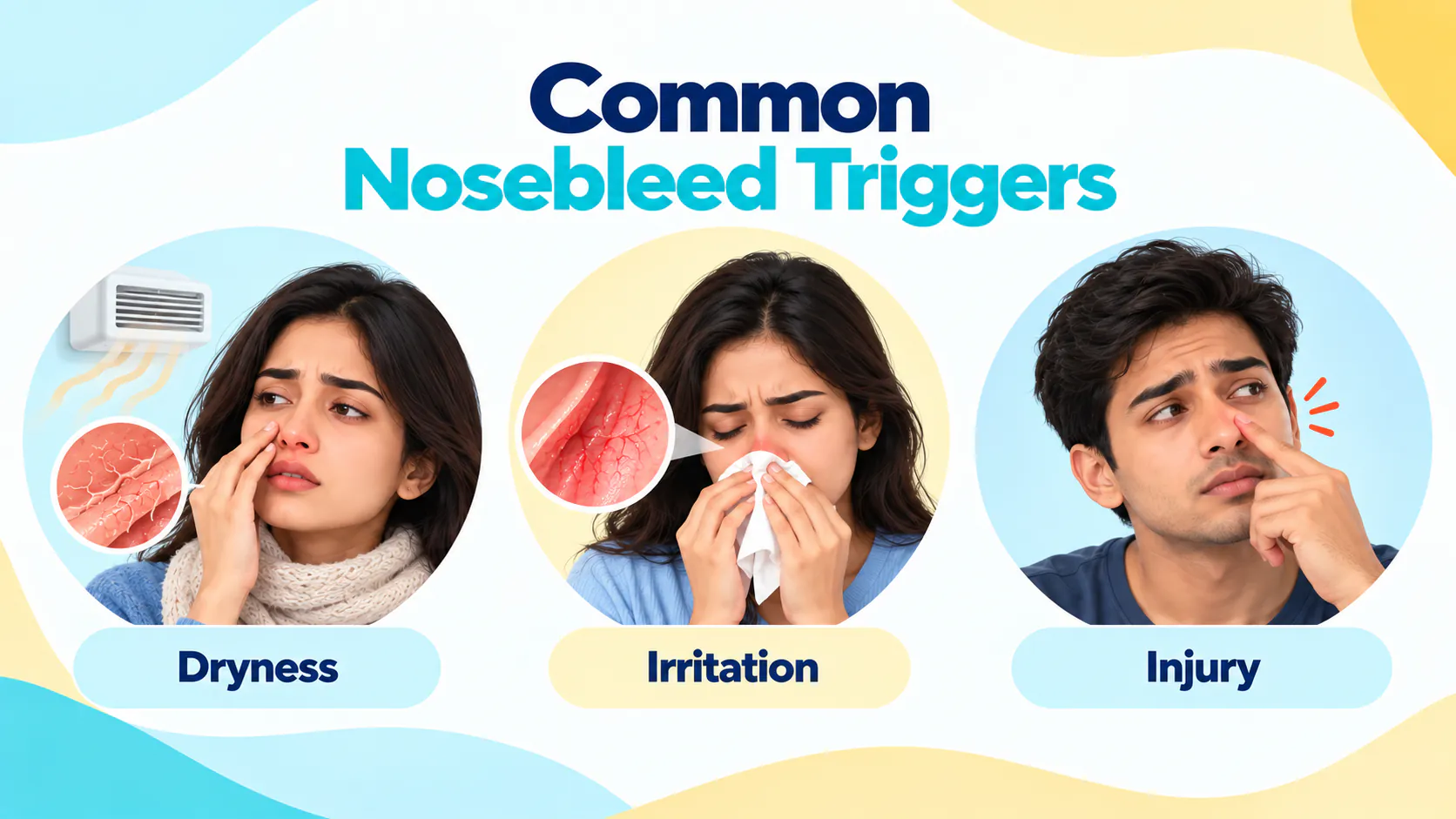
Common Local Triggers
Most nosebleeds start with something that dries, irritates or injures the inside of the nose:
- Dry air: from AC, winter or dry weather, which can crack the nasal lining
- Nose picking: especially common in children
- Blowing the nose hard
- Colds, allergic rhinitis or a sinus infection: these irritate the lining and lead to frequent nose-blowing
- Injury to the nose
- Nasal sprays used often or incorrectly
- A small object pushed into the nose, especially by young children
Medicines and Other Medical Causes
Less commonly, a bloody nose can be linked to:
- Blood-thinning medicines, such as aspirin, clopidogrel or warfarin. Do not stop these on your own; speak to your doctor.
- High blood pressure, which can make bleeding harder to stop
- Bleeding disorders or liver disease
- Rare inherited conditions that affect blood vessels
- Rarely, a growth in the nose, especially when bleeding keeps happening from one side along with a blocked nose
How to Stop a Nosebleed Safely
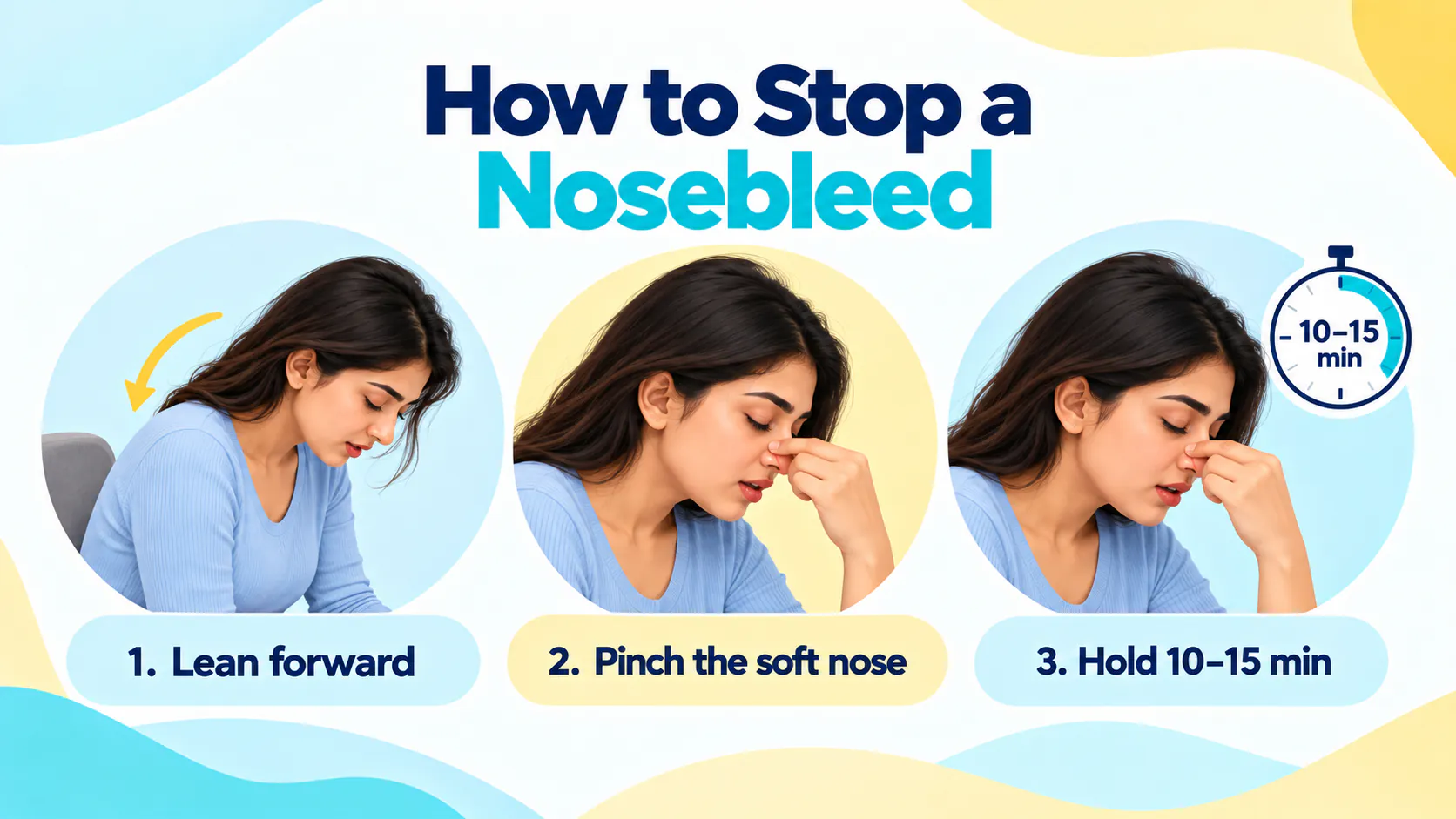
- Sit up and lean slightly forward. This stops blood from running down your throat. Do not lie down or tilt your head back.
- Pinch the soft part of your nose, just above the nostrils, not the bony bridge.
- Keep pressing for 10 to 15 minutes without letting go. Breathe through your mouth, and don't release the pressure to check whether the bleeding has stopped.
- Spit out any blood rather than swallowing it.
- Hold a cold pack or ice wrapped in a cloth on the bridge of your nose, if it helps.
If the bleeding has not stopped after 10 to 15 minutes, get urgent medical help.
For 24 hours after a nosebleed, avoid blowing or picking your nose, lifting heavy things, strenuous exercise, hot drinks and alcohol. Do not push cotton, tissue or anything else deep into the nose.
How Are Repeated Nosebleeds Treated?
If nosebleeds keep happening, an ENT assessment can find the cause. The doctor will look inside your nose to find the bleeding point, check your blood pressure and review your medicines. Blood tests may be needed in some cases.
Treatment may include:
- Cautery: sealing the bleeding blood vessel with a chemical or gentle heat, after numbing the nose
- Nasal packing: placing a special pack inside the nose to stop heavier bleeding
- Treating the cause: such as dryness, allergies or a medicine-related problem
How Can You Reduce Nosebleeds?
- Keep the inside of your nose moist with saline sprays, or a thin layer of petroleum jelly as advised by your doctor
- Use a humidifier in dry or AC rooms
- Avoid picking your nose, and keep children's nails short
- Blow your nose gently, one nostril at a time
- Use nasal sprays correctly, aiming away from the middle wall of the nose
- Wear protective gear during contact sports
- Manage allergies and blood pressure with your doctor's advice

